
A mid-sized online retailer was relying on a generic “trending products” feed that failed to reflect individual shopper preferences, leaving significant engagement and revenue on the table. Our recommendation engine development team built a personalized recommendation system tailored to the retailer’s catalog and shopper behavior. This case study covers the client’s challenge, our approach, and the business results the engine delivered after launch.
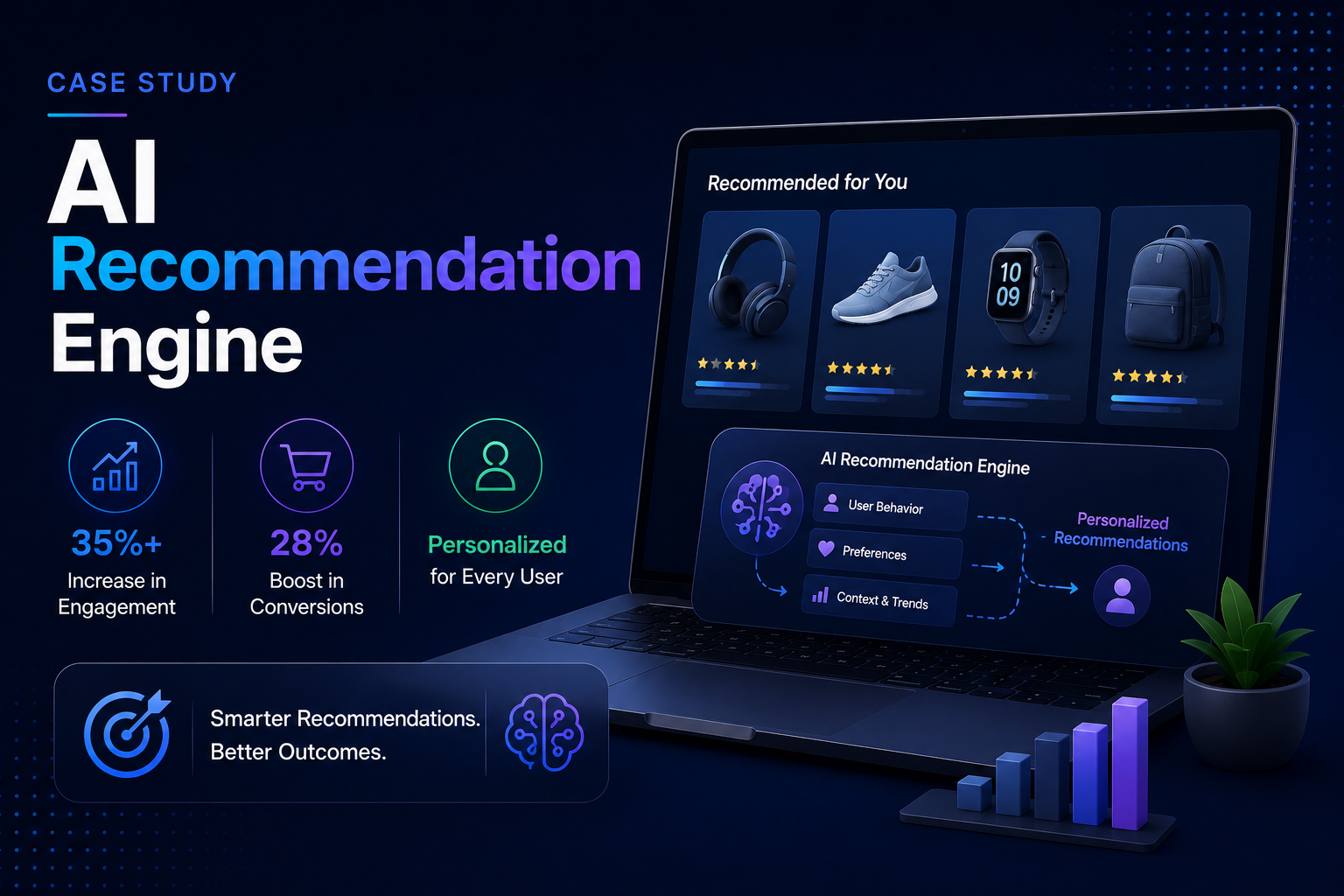
The client’s platform showed every visitor the same generic trending products regardless of browsing or purchase history, missing clear opportunities to surface items shoppers were actually likely to want.
Every shopper saw the same trending products list, regardless of their individual browsing history or past purchases, missing obvious opportunities for relevant cross-sell and upsell.
The client was collecting substantial browsing and purchase data but had no system translating that data into personalized product suggestions that could drive additional revenue.
Without relevant complementary product suggestions at the right moment in the shopping journey, average order value had plateaued despite steady overall traffic growth.
We built a hybrid recommendation system combining collaborative filtering and content-based approaches, designed specifically around the client’s catalog structure and shopper behavior patterns.
We implemented collaborative filtering that learned from shopper behavior patterns, recommending products based on what similar shoppers browsed and purchased together.
We built content-based filtering to handle new and less-established catalog items without sufficient behavioral data yet, ensuring new products weren’t disadvantaged in recommendations.
We implemented specific strategies for recommending to first-time visitors with no browsing history, avoiding a poor initial experience while the system gathered enough data to personalize further.
We built A/B testing infrastructure that measured recommendation performance against the client’s previous generic trending feed, continuously refining the algorithm based on real conversion data.
Following launch, the client saw measurable improvements across engagement and revenue metrics tied directly to the new recommendation system:
The client’s e-commerce team noted that the shift from a one-size-fits-all trending feed to genuinely personalized recommendations was the most impactful single change made to the platform that quarter.
Rather than relying on a single recommendation technique, the hybrid approach ensured both established products with rich behavioral data and newer catalog items could be recommended effectively. Combined with ongoing A/B testing, the system continuously improved rather than remaining static after initial launch.