
A regional fleet operator managing a large number of commercial vehicles was relying on reactive maintenance and manual tracking methods, leading to unexpected breakdowns and inefficient routing decisions. Our IoT app development team built a connected fleet management platform combining live vehicle tracking with predictive maintenance analytics. This case study covers the client’s challenge, our approach, and the operational results the platform delivered.
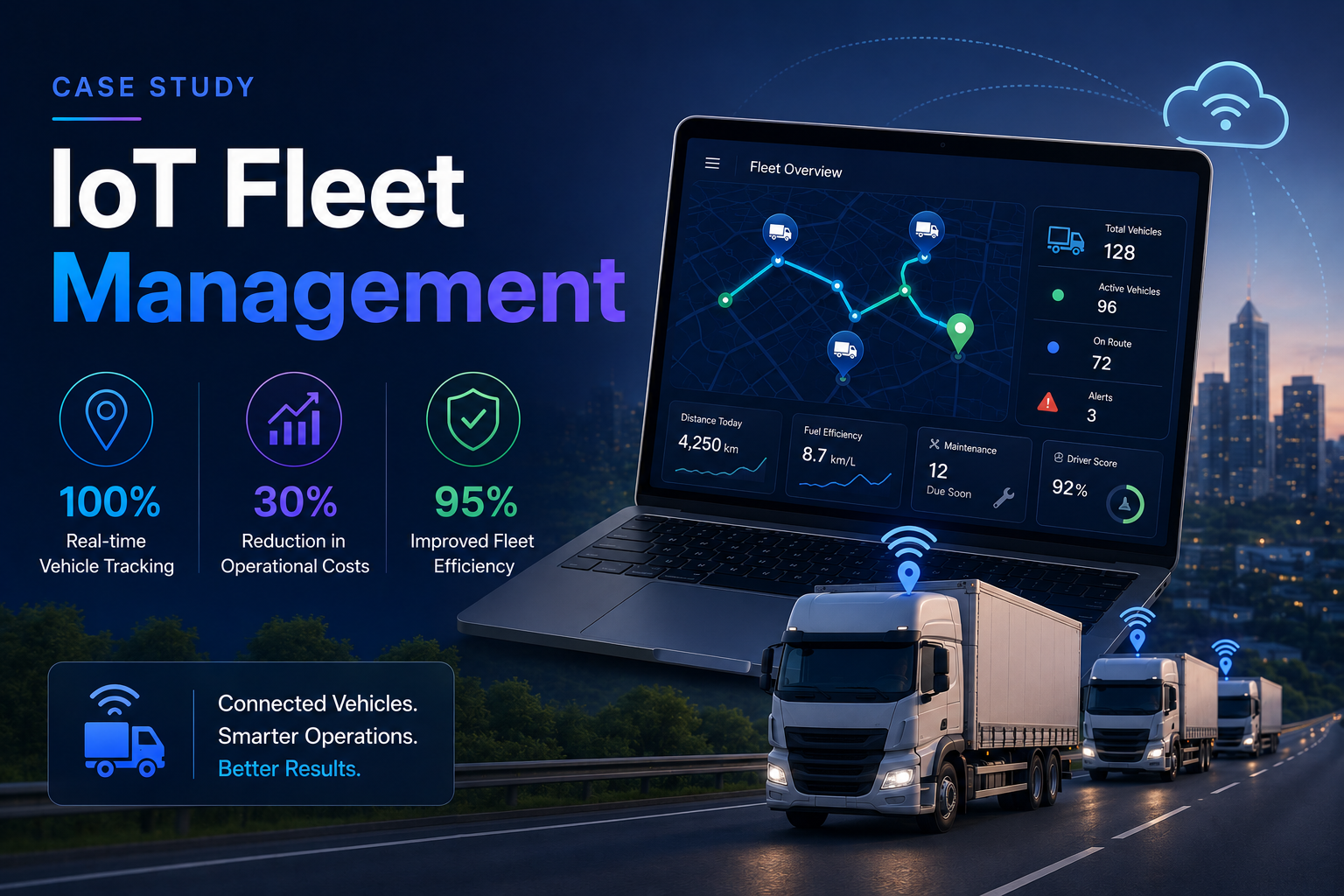
The client’s fleet managers had limited real-time visibility into vehicle location and condition, discovering mechanical issues only after a breakdown occurred, which created costly unplanned downtime and disrupted delivery schedules.
Vehicles were serviced on a fixed schedule rather than based on actual condition, meaning some vehicles received unnecessary maintenance while others broke down unexpectedly between scheduled services.
Fleet managers had no live view of vehicle location or status, making it difficult to respond quickly to delays, reroute around problems, or provide customers with accurate delivery estimates.
Unexpected vehicle breakdowns were creating significant operational disruption and repair costs that a more proactive maintenance approach could have avoided entirely.
We designed and built an IoT-connected fleet platform that integrated vehicle sensor data with a real-time tracking dashboard and predictive maintenance analytics, giving fleet managers the visibility they’d been missing.
We built live tracking that gave fleet managers an up-to-date view of every vehicle’s location, letting them respond quickly to delays and provide customers with accurate status updates. Our logistics app development team contributed core tracking infrastructure to this platform.
We integrated onboard vehicle sensors monitoring engine performance and key mechanical indicators, feeding real-time condition data into the central platform.
We built analytics that identified patterns preceding mechanical issues, flagging vehicles needing attention before a breakdown occurred rather than relying solely on fixed maintenance schedules.
We built a unified dashboard giving fleet managers visibility into vehicle location, condition, and maintenance status across the entire fleet from a single interface.
Following rollout, the client saw measurable improvements in both operational efficiency and maintenance costs:
The client’s operations team noted that the shift from reactive to predictive maintenance was the single biggest factor in reducing the costly unplanned downtime that had been affecting delivery reliability.
Combining real-time location tracking with predictive maintenance analytics addressed both sides of the client’s core problem: visibility into where vehicles were right now, and foresight into which vehicles needed attention before they broke down. Together, these capabilities shifted the client’s fleet operations from reactive firefighting to proactive management.