
A regional freight and delivery company needed a way to give customers accurate, real-time visibility into shipment status without overwhelming their support team with manual “where is my order” inquiries. This case study covers how we built a logistics tracking app that connected directly to their existing fleet and warehouse systems, and the impact it had on customer inquiries and delivery transparency.
The company’s existing shipment tracking process created a specific, recurring operational burden.
Customers had no self-service way to check shipment status, meaning every status inquiry became a support ticket requiring a team member to manually look up information in an internal system.
Shipment status information lived across multiple internal systems, warehouse management, fleet GPS, delivery confirmation, that weren’t connected to any customer-facing view, making real-time tracking impossible without new integration work.
As the company’s shipment volume grew, the manual status-checking burden on the support team grew proportionally, becoming an increasingly unsustainable use of team time.
We built a tracking app designed around the company’s existing operational systems rather than requiring a separate, disconnected tracking process.
We connected the app directly to the company’s warehouse management and fleet GPS systems, pulling real shipment and location data rather than requiring manual status entry anywhere in the process.
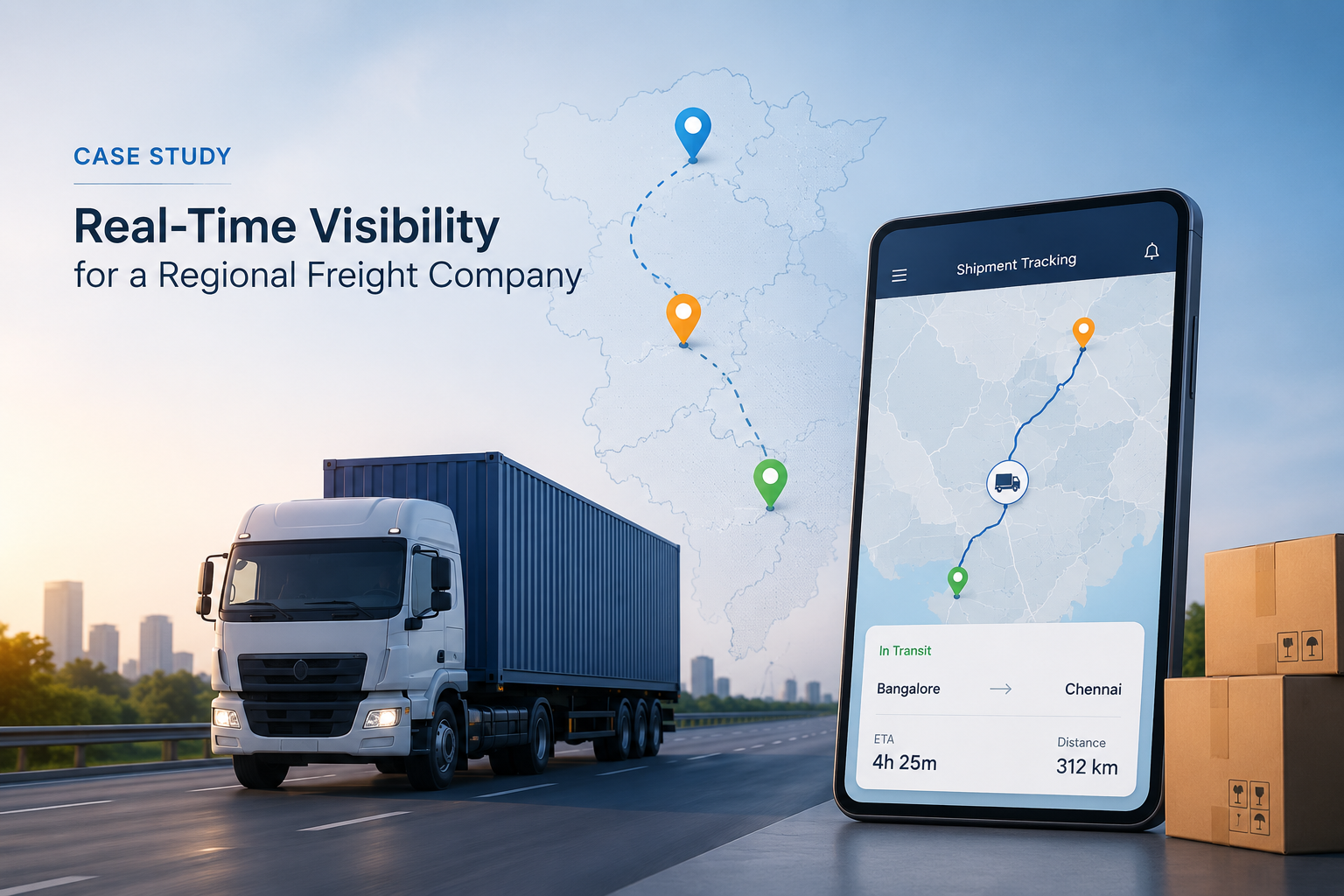
Customers gained a self-service tracking view showing accurate, real-time shipment location and estimated delivery windows, updating automatically as the underlying fleet data changed.
Beyond passive tracking, we built proactive push and email notifications for key shipment milestones and delays, reducing the likelihood customers would reach out with status questions in the first place.
Following launch, the company saw meaningful improvements in both customer experience and internal support efficiency.
Status-related support tickets dropped considerably as customers gained direct, self-service access to accurate real-time tracking information.
Customer satisfaction scores related to delivery communication improved, reflecting the value of proactive updates over passive, request-only status checking.
With routine status inquiries handled by self-service tracking, the support team redirected capacity toward genuinely complex delivery issues requiring human judgment.
This result reflects a pattern common across logistics and delivery-dependent businesses: real-time tracking integrated with existing operational systems reduces support burden while directly improving the customer experience. If your business faces similar shipment visibility challenges, our logistics app development team can help scope a similarly integrated tracking solution.
Connecting a tracking app directly to existing fleet and warehouse systems produces more accurate results than a separate, manually updated tracking process. Proactive notifications reduce support inquiries more effectively than passive tracking views alone. Support ticket reduction and delivery transparency improvements are measurable outcomes worth tracking explicitly, and the approach scales with shipment volume rather than becoming a growing operational burden.