App development cost in the USA depends on what you are building, who you are building it for, how complex the app is, and how many systems it needs to connect with.
A basic MVP may cost far less than a full enterprise mobile platform with user roles, payments, CRM integration, AI features, admin dashboards, and advanced security. At TechEsperto, we help businesses estimate app development cost clearly before they commit to a build.
Whether you need a startup MVP, customer app, ecommerce app, healthcare app, fintech app, enterprise mobile app, or CRM-connected platform, this guide explains what affects cost and how to plan your budget wisely.
The cost to build an app usually depends on complexity.
A simple app with limited screens and basic functionality may start from a lower budget range. A mid-level app with user accounts, APIs, payments, dashboards, and admin features costs more. A complex app with multiple user roles, custom workflows, AI, CRM, real-time features, and enterprise security requires a larger investment.
A practical way to estimate app cost is to look at:
Below is a practical cost breakdown for planning purposes.
| App Type | Estimated Cost Range |
|---|---|
| Basic MVP app | $25,000–$60,000 |
| Mid-complexity mobile app | $60,000–$150,000 |
| Advanced custom app | $150,000–$300,000+ |
| Enterprise mobile app | $250,000–$500,000+ |
| Super app or multi-service platform | $300,000–$700,000+ |
These ranges are not fixed quotes. The final cost depends on scope, design, integrations, platforms, timeline, and delivery model.
An MVP app is usually built to validate an idea quickly. It includes the core features needed to test demand, collect feedback, and prove the product direction.
MVP cost depends on the first version’s scope, but it should avoid unnecessary features. TechEsperto helps startups and product teams build MVPs with a clear roadmap for future releases.
Best for:
Ecommerce apps usually include product catalogs, search, filters, cart, checkout, payments, order tracking, offers, user accounts, and admin controls.
Cost increases when the app includes marketplace features, vendor dashboards, loyalty programs, inventory integrations, personalized recommendations, or multi-store support.
Healthcare apps often require stronger security, role-based access, appointment booking, secure messaging, patient engagement features, provider dashboards, and compliance-aware workflows.
Cost increases when the app needs EHR integration, telehealth, remote monitoring, patient portals, or sensitive health data handling.
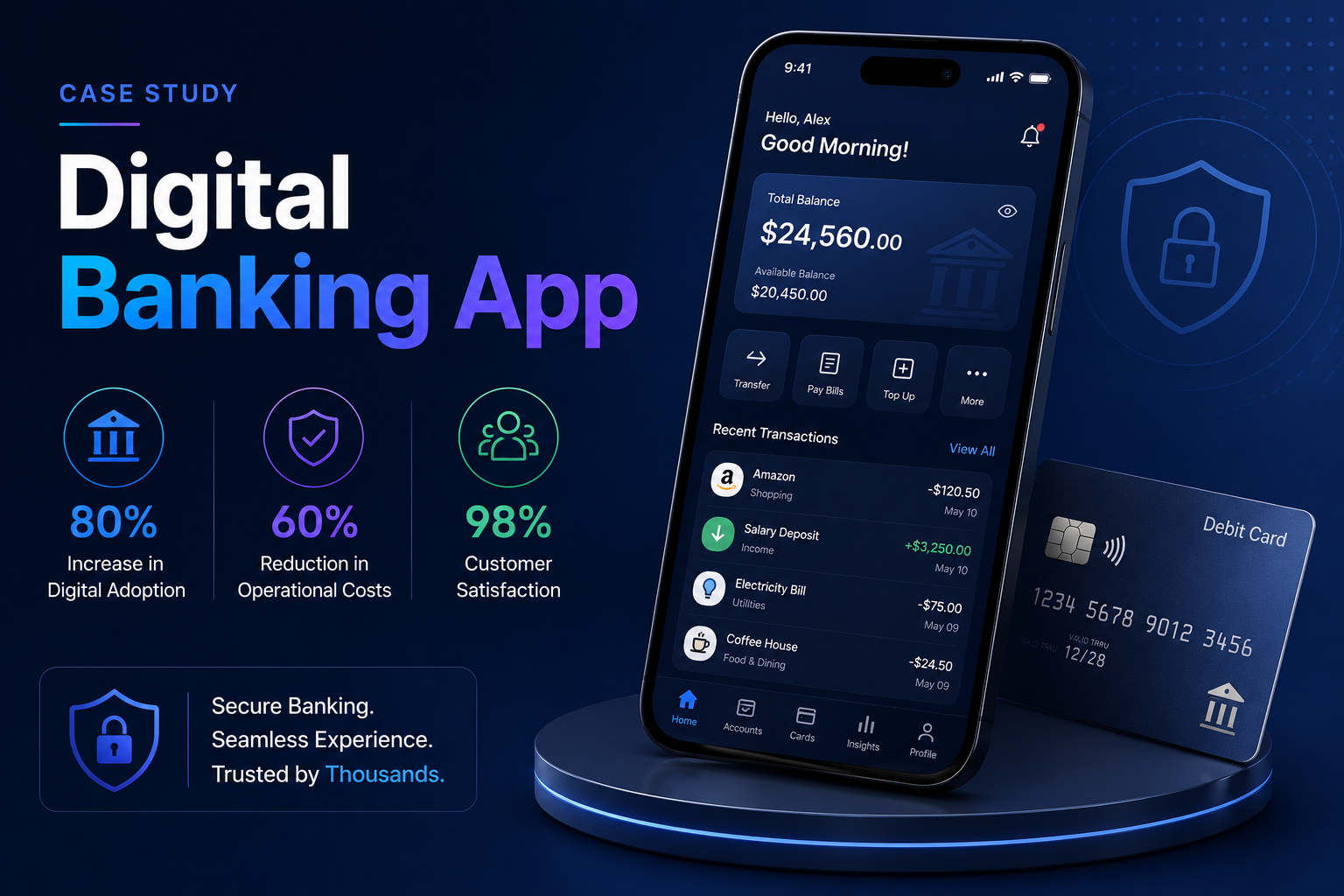
Fintech apps usually cost more because they require secure onboarding, payments, account dashboards, transaction history, alerts, fraud controls, identity verification, and compliance-driven workflows.
Even small fintech apps need strong architecture and careful testing.
Marketplace apps need multiple user roles, vendor onboarding, customer accounts, listings, search, payments, commissions, reviews, dispute handling, and admin controls.
The cost depends on whether the marketplace is service-based, product-based, location-based, subscription-based, or multi-vendor.
Enterprise apps usually include custom workflows, secure access, role-based permissions, dashboards, reports, backend integrations, audit trails, and admin controls.
These apps cost more because they must fit real business operations and often connect with CRM, ERP, HRMS, data systems, or legacy software.
CRM-connected mobile apps help sales, support, field, and operations teams work with customer data on the go.
Cost depends on whether the app connects with SuiteCRM, HubSpot, Zoho CRM, Salesforce, custom CRM systems, or internal databases.
TechEsperto’s SuiteCRM experience makes us a strong fit for CRM mobile app development because we understand leads, contacts, accounts, opportunities, tickets, workflows, reporting, and automation.
A super app or multi-service platform costs more because it combines several services, user roles, payments, admin dashboards, vendor workflows, notifications, and service modules.
Most businesses should start with a focused MVP instead of building every service at once.
iOS app cost depends on features, design, backend, Apple ecosystem requirements, testing, and App Store submission needs.
Native iOS development is often preferred when the app requires deep Apple-specific features or high-performance native behavior.
Android app cost depends on feature complexity, device coverage, design requirements, backend systems, testing, and Google Play submission needs.
Android testing can require extra planning because of the wide device and screen-size range.
React Native can reduce cost when you need iOS and Android apps from one shared codebase. It is a strong option for MVPs, SaaS apps, business apps, ecommerce apps, and CRM-connected apps.
Flutter can also reduce cross-platform development effort while offering strong UI consistency across devices. It is useful for startups, enterprises, ecommerce platforms, and apps that need polished interfaces.
A progressive web app may cost less than native mobile development when your goal is fast access through the browser, app-like usability, and broad device coverage without app store dependency.
Skipping discovery can lead to unclear scope, missed requirements, delays, and expensive rework. A good discovery phase helps define features, workflows, integrations, risks, and realistic timelines.
Some businesses only budget for the mobile screens. But the backend, database, APIs, cloud hosting, admin panel, and monitoring are often a major part of the real cost.
App Store and Google Play preparation may involve testing builds, compliance checks, metadata, screenshots, release notes, review fixes, and submission support.
Payment gateways, maps, SMS, email, video, AI APIs, analytics, hosting, and monitoring tools may have monthly or usage-based fees.
A healthy app needs ongoing support. Without maintenance, apps become slow, outdated, insecure, and harder to improve.
User feedback often leads to new feature requests. A good roadmap should leave room for iteration after launch.
We start by understanding what the app needs to achieve. This includes revenue goals, user needs, operational problems, launch expectations, and long-term vision.
We identify who will use the app and what each role needs to do. This may include customers, admins, vendors, drivers, employees, managers, providers, or support teams.
We separate must-have features from nice-to-have features. This helps control cost and keeps the first release focused.
We look at platforms, backend needs, integrations, data flows, security requirements, cloud infrastructure, admin controls, and performance expectations.
We help you choose between native iOS, native Android, React Native, Flutter, PWA, or a hybrid strategy based on your product goals.
Instead of forcing everything into one large scope, we create a phased roadmap so you can launch, learn, and improve with better cost control.
Build the smallest useful version first. Focus on the features that prove the product, solve the core problem, and support early users.
React Native or Flutter can reduce duplicate work for iOS and Android if your app does not need heavy platform-specific development.
Many apps become expensive because too many features are added before the product is validated. A clear roadmap helps prevent this.
Payment gateways, communication tools, analytics platforms, CRM systems, and cloud services can reduce custom development effort.
Late integration decisions can create rework. Plan API, CRM, payment, ERP, and data integration needs before development starts.
Working with separate vendors for design, app development, backend, integrations, and support can increase coordination cost. A full-stack team can reduce friction.
design, development, backend, integrations, testing, deployment, and maintenance.
Our team creates realistic MVP and phase-two plans so you can control spend without blocking growth.
clear communication, realistic timelines, documented scope, scalable architecture, and long-term support planning.
An app development cost calculator helps buyers understand likely budget ranges before speaking with a sales team. It can also improve lead quality by helping users define their project scope.
A strong calculator should ask about:
TechEsperto’s site architecture also includes a dedicated app cost calculator as a new tool to support this page and improve conversions.
A startup wants a simple booking app with user login, profile management, service listings, booking requests, notifications, and basic admin controls.
Estimated range: $35,000–$75,000
A retailer needs a mobile shopping app with product catalog, search, cart, checkout, payment integration, order tracking, offers, loyalty, and admin controls.
Estimated range: $70,000–$180,000
A service business needs a mobile app for field teams to access customer records, update jobs, submit notes, upload photos, and sync data with SuiteCRM.
Estimated range: $80,000–$200,000
A healthcare business needs appointment booking, patient profiles, secure messaging, reminders, provider dashboards, and compliance-aware workflows.
Estimated range: $120,000–$300,000+
A business wants a multi-service platform with customer app, vendor app, admin panel, payments, notifications, service listings, and order tracking.
Estimated range: $180,000–$400,000+
Our work and story have been picked up by news outlets and databases worldwide.
As featured on
App development cost in the USA can range from around $25,000 for a basic MVP to $500,000+ for complex enterprise apps, depending on features, platforms, design, backend, integrations, and security requirements.
A mid-complexity mobile app often falls between $60,000 and $150,000. Apps with advanced workflows, payments, dashboards, AI, CRM integration, or enterprise security can cost more.
App development includes more than coding screens. The cost covers planning, UI/UX design, backend development, APIs, database, testing, app store launch, integrations, security, project management, and support.
Cross-platform development with React Native or Flutter can be more cost-efficient when the same app experience is needed for iOS and Android. It may not be the best fit for every app, especially when deep native features are required.
An MVP app may cost between $25,000 and $75,000 depending on scope. A more advanced MVP with backend systems, payments, admin controls, and integrations may cost more.
The biggest cost drivers are complex features, custom backend logic, multiple user roles, third-party integrations, security requirements, real-time functionality, admin panels, and ongoing changes in scope.
Start with an MVP, prioritize core features, use cross-platform development when suitable, plan integrations early, avoid unnecessary custom features, and choose a full-stack development partner.
Yes. TechEsperto can review your app idea, features, platforms, integrations, and business goals to provide a practical cost estimate and phased development roadmap.
Before you build an app, know what you are paying for and why it matters.
TechEsperto helps startups, SMBs, and enterprises plan app development budgets with clear scope, practical feature planning, and full-stack technical guidance.
Whether you need an MVP, ecommerce app, healthcare app, fintech app, CRM-connected mobile app, or enterprise app, our team can help you estimate the right budget and build a scalable product.
Tell us what you’re building. Our team will get back to you within one business day with a clear, no-obligation plan.