
A community-focused bank needed to modernize its digital offering, replacing an outdated mobile banking app with a secure, full-featured platform that could compete with larger national banks’ digital experiences. Our fintech software development team built a new banking app covering account management, payments, and the compliance requirements banking regulation demands. This case study covers the client’s challenge, our approach, and the adoption results following launch.
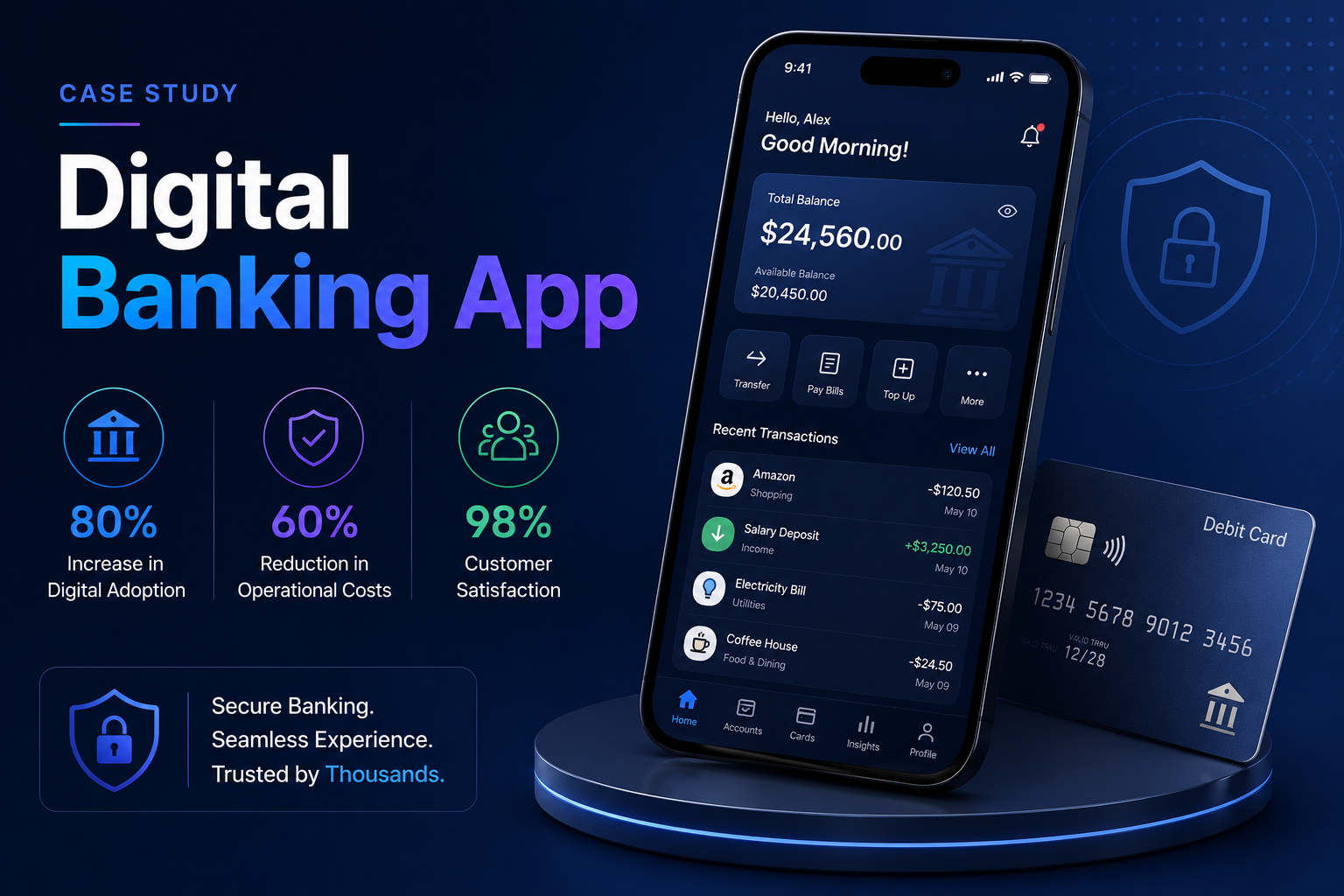
The client’s existing mobile app felt dated compared to national bank competitors, with limited functionality and a clunky user experience that was driving younger customers toward more digitally sophisticated competitors.
The existing app’s interface and functionality had fallen noticeably behind customer expectations shaped by national bank competitors with much larger digital development budgets.
Customers increasingly expected peer-to-peer transfers, mobile check deposit, and card controls that the client’s legacy app simply didn’t support.
As a regulated financial institution, any new platform needed to meet rigorous security and compliance standards without compromising the modern user experience customers expected.
We designed and built a new banking app from the ground up, balancing modern user experience expectations against the non-negotiable security and compliance requirements banking regulation requires.
We built a redesigned interface for checking balances, transaction history, and account management, matching the polish and ease of use customers expected from modern banking apps.
We implemented peer-to-peer transfers, mobile check deposit, and card management features that brought the client’s digital offering in line with larger competitor banks.
We built the app with encryption, multi-factor authentication, and fraud detection appropriate for a regulated financial institution, without the security friction feeling excessive to everyday users.
We implemented audit logging and compliance documentation practices that met regulatory requirements, giving the client confidence the platform would hold up under regulatory review.
Following launch, the client saw strong adoption and engagement improvements across its digital customer base:
The client’s digital banking team noted that the modernized app played a meaningful role in both retaining existing customers who had been considering switching banks and attracting new, digitally-oriented customers.
Balancing modern user experience against strict security and compliance requirements meant the platform didn’t have to choose between being usable and being secure. By building compliance and security in from the architecture stage rather than retrofitting it later, the client avoided the friction and delays that often come from bolting security onto an already-designed user experience.