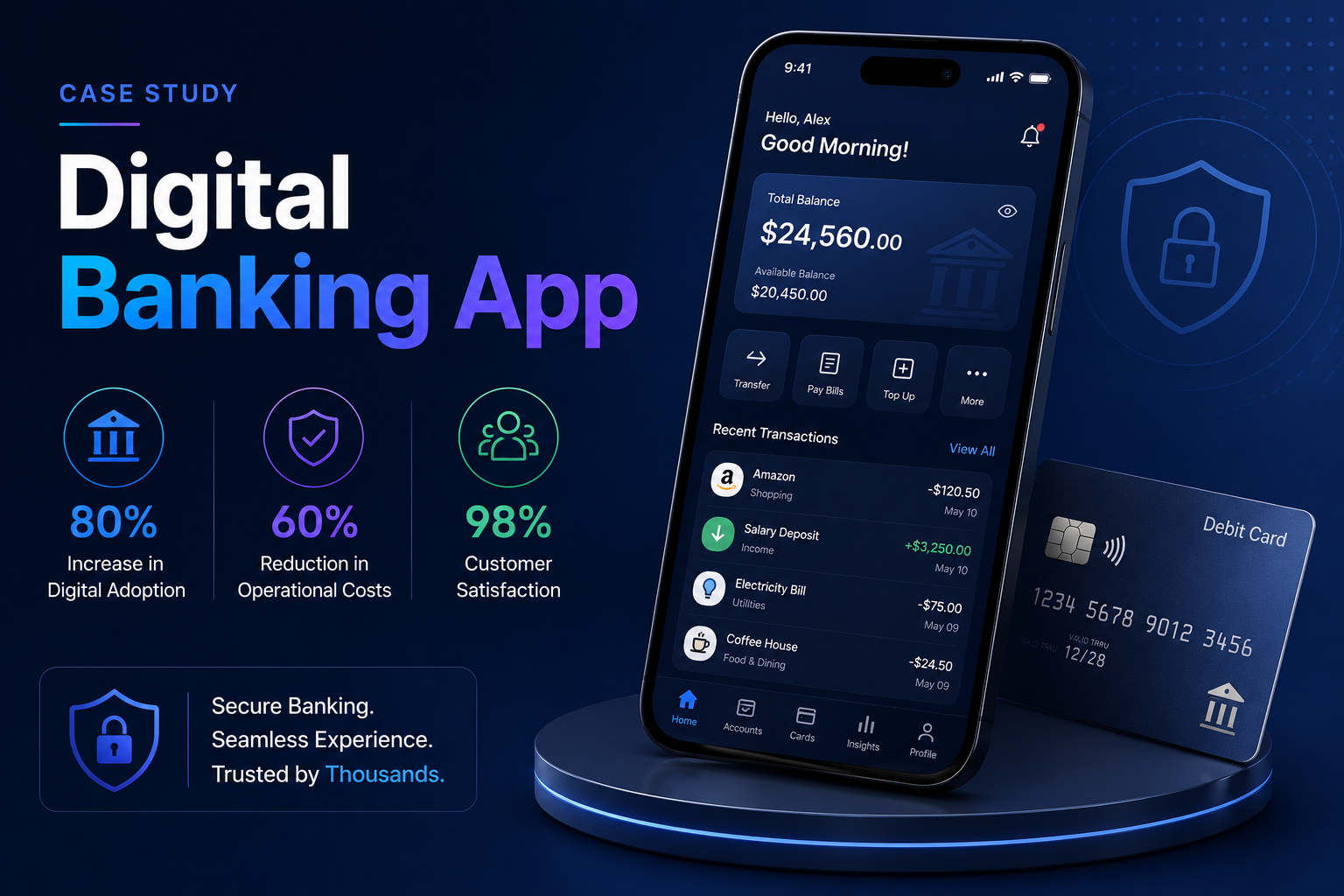
TechEsperto provides digital transformation services that help mid-market and enterprise organizations replace manual processes, legacy systems, and siloed data with connected, intelligent operations. We combine strategy, software engineering, cloud, data, and AI expertise to deliver measurable outcomes rather than slide decks: faster processes, better customer experiences, lower operating costs, and decisions based on reliable data. Every transformation program is phased, governed, and tied to business KPIs. Book a free consultation to assess your digital maturity and prioritize the initiatives with the strongest return.
Our digital transformation services span strategy through execution, so one accountable partner connects business goals with delivered technology. Many transformation efforts fail because strategy consultants hand off recommendations that engineering teams cannot implement, or developers build tools without a clear business case. We avoid that gap by planning and building together. Depending on your priorities, programs combine several of the services below, sequenced in phases that deliver early wins while laying foundations for larger changes. Every phase has defined owners, budgets, timelines, and measurable success criteria.
We assess your current processes, technology, data, and skills, then define a prioritized transformation roadmap. Initiatives are ranked by business value, risk, cost, and dependencies, creating a realistic multi-year plan with early wins.
Our legacy software modernization services rebuild, replatform, or refactor outdated applications while preserving critical business logic. Modern architecture improves performance, security, and integration capabilities without disrupting daily operations or customer service.
Through cloud consulting, we design cloud strategies, migrate workloads, and optimize infrastructure on AWS, Azure, or Google Cloud. Organizations gain scalability, resilience, and cost control compared with ageing on-premise environments.
We redesign and automate core workflows using business process automation, integrations, and custom applications. Approvals, document handling, and data movement run automatically, reducing cycle times and errors across departments and locations.
We consolidate data from operational systems into modern warehouses and dashboards. Leaders gain trusted, real-time reporting, while analysts access clean data for forecasting, performance management, and advanced analytics initiatives across the business.
Once foundations are ready, our AI consulting services identify and implement practical AI use cases, such as document processing, forecasting, and intelligent assistants, ensuring governance, security, and measurable business value from every deployment.
Research consistently shows that many digital transformation programs fall short of their goals, usually because of unclear objectives, weak change management, or attempting too much at once. Our approach reduces these risks through clear governance, phased delivery, and close attention to people and processes, not just technology. We define measurable outcomes before work begins, deliver value in short cycles, and track results continuously. Equally important, we support training and adoption, because new systems only create value when employees understand, trust, and actively use them every day.
Every initiative is linked to measurable KPIs, such as cycle time, cost per transaction, customer satisfaction, or revenue growth. Progress is reported against these outcomes rather than activity or output alone.
Large programs are broken into phases that deliver usable improvements within months. Early wins build stakeholder confidence and fund later initiatives, avoiding risky multi-year projects with no visible results for stakeholders.
We involve end users early, communicate changes clearly, and provide role-based training and documentation. Strong adoption ensures new systems replace old habits instead of becoming expensive, underused tools that teams quietly avoid.
Steering committees, clear decision rights, and regular reviews keep executives aligned and priorities consistent. Risks, dependencies, and budget changes are surfaced early, enabling informed decisions before small issues become major problems.
Security, privacy, and regulatory requirements are built into architecture, data handling, and processes from the beginning, reducing risk and avoiding costly remediation, audit findings, and rework later in the transformation journey.
Our digital transformation process moves from assessment to sustained improvement through clear, structured phases. We begin by understanding where your organization stands today and where it needs to be, then define a roadmap that balances ambition with practical constraints. Execution happens in iterative cycles, combining process redesign, software development, data work, and change management. After each phase, we measure outcomes, refine priorities, and plan the next steps. This disciplined approach keeps investment focused on initiatives that deliver real, measurable business value throughout the program.
We evaluate processes, systems, data, security, and organizational readiness through stakeholder workshops, interviews, and technical reviews, identifying capability gaps, risks, quick wins, and high-value opportunities across departments and business units.
Opportunities are prioritized into a phased roadmap with cost estimates, expected benefits, dependencies, and timelines. Leadership receives a clear business case for each initiative before committing budget, people, or resources.
Selected initiatives launch as pilots in one department, location, or process. Measured results validate assumptions, refine solutions, quantify benefits, and build internal support before broader rollout across the wider organization.
Proven solutions expand across teams and locations, supported by integration, data migration, training, and communication plans. Governance ensures consistency while allowing teams to adapt workflows where business needs genuinely differ.
After implementation, we monitor KPIs, gather user feedback, and optimize systems and processes. Ongoing improvement ensures transformation delivers lasting value rather than a single project with fading impact over time.
The cost of digital transformation services depends on organizational size, scope, legacy complexity, number of systems, data quality, and regulatory requirements. A focused process automation and integration initiative costs far less than enterprise-wide modernization covering ERP, CRM, cloud migration, and data platforms. Because transformation is phased, investment is spread over time and tied to measurable benefits. We provide detailed estimates and business cases after assessment, and our data analytics capabilities help track return on investment throughout the program.
A fixed-price assessment evaluates your current state and delivers a prioritized roadmap with detailed business cases. It provides clarity and alignment before committing to larger transformation investments or new vendor selections.
Programs are delivered in defined phases, each with its own scope, milestones, budget, and KPIs. You approve each phase based on results, keeping full control over spending, scope, and direction.
A dedicated team of strategists, architects, developers, data engineers, and change specialists works alongside your leadership and IT teams, providing predictable monthly costs, shared knowledge, and continuity throughout complex multi-year programs.
For organizations with strong internal teams, we provide transformation advisory, architecture guidance, and program management, ensuring initiatives stay aligned, coordinated, and focused on agreed business outcomes and measurable financial returns.
Our work and story have been picked up by news outlets and databases worldwide.
As featured on
Digital transformation services help organizations use modern technology to improve processes, customer experiences, and decision-making. They typically include strategy and roadmapping, legacy modernization, cloud migration, process automation, data platforms, AI adoption, and change management, delivered as a coordinated program tied to measurable business outcomes rather than isolated technology projects.
Cost depends on organizational size, scope, legacy complexity, systems involved, and compliance requirements. Focused automation or integration initiatives are the most affordable starting point, while enterprise-wide programs require larger, phased investments. We begin with an assessment that produces a prioritized roadmap and business cases, so spending aligns with expected returns.
Transformation is an ongoing journey, but individual phases typically deliver results within three to six months. Comprehensive enterprise programs often run over one to three years, structured as a series of phases with measurable outcomes. Phased delivery ensures the organization benefits early instead of waiting years for a single large launch.
Common causes include unclear objectives, weak executive sponsorship, poor change management, trying to do too much at once, and treating transformation purely as a technology project. Successful programs define measurable outcomes, deliver in phases, involve users early, and invest in training and governance alongside software and infrastructure.
Start with a digital maturity assessment that identifies the processes, systems, and data issues costing the most time and money. Prioritize initiatives with clear business value and manageable risk, such as automating high-volume workflows or modernizing a critical legacy system, then build momentum through early, measurable wins.
Yes, AI is increasingly central to digital transformation, powering document processing, forecasting, customer service, and decision support. However, AI depends on clean data, integrated systems, and modern infrastructure. That is why many programs first modernize foundations, then introduce AI use cases that deliver measurable value safely and responsibly.
Tell us what you’re building. Our team will get back to you within one business day with a clear, no-obligation plan.