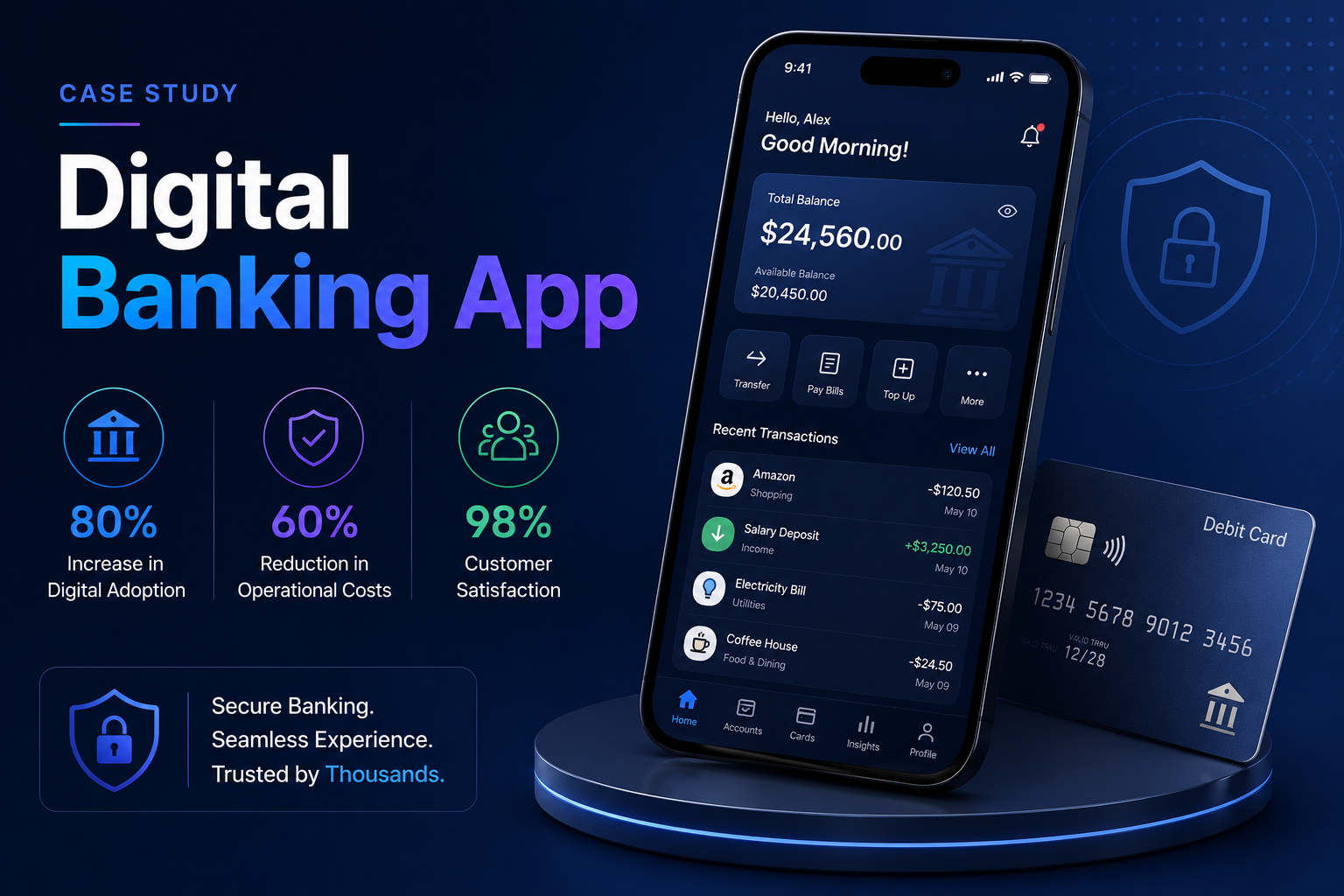
Building an app like Cash App means moving real money between people instantly and reliably, while satisfying financial regulations that vary by region and asset type. Peer-to-peer payment apps look deceptively simple, send money, receive money, but the wallet infrastructure, compliance requirements, and fraud prevention underneath carry the same weight as any regulated financial product, because they are one. This guide covers what a production-grade P2P payments app actually needs: wallet and transaction architecture, compliance and banking partnerships, must-have features, tech stack choices, and what realistic development costs look like in 2026. The same fundamentals apply whether you are building a general-purpose payment app or a payments layer for a specific niche or community.
At the center of an app like Cash App sits a system that tracks balances, moves money between accounts, and connects to the broader banking system, all while keeping an exact, auditable record of every transaction.
Every user needs a wallet balance that updates instantly and accurately with every transaction, deposit, or withdrawal. This ledger needs to be transactionally consistent, meaning a payment can never be lost, duplicated, or applied twice, even under concurrent load.
Sending money between users needs to feel instant from the user’s perspective, even though the underlying settlement, especially when funds move to or from a linked bank account, often happens on a delay. Managing that gap between perceived and actual settlement speed is a core design challenge.
Very few companies build direct banking rails from scratch. Most payment apps partner with a banking-as-a-service provider or card network for the underlying money movement, while the app itself handles the wallet, user experience, and business logic layer.
A handful of features determine whether a payments app feels trustworthy enough for people to keep meaningful balances in it.
Identity verification and linking a bank account or card are required both for regulatory compliance and fraud prevention, and this onboarding flow needs to be smooth enough that it doesn’t cause users to abandon signup, while still meeting know-your-customer requirements.
Beyond simple transfers, users expect to request money from others, split a bill among a group, and see a clear transaction history, all updating in real time as payments are sent and received.
Many P2P payment apps extend into everyday spending through a linked debit card, which adds card network integration, spending controls, and real-time balance deduction to the technical scope.
Given that the app holds and moves real money, strong authentication, transaction monitoring, and fraud detection need to be core infrastructure from launch, not features added after a fraud incident forces the issue.
Cost is driven primarily by how much compliance and banking partnership integration is required, whether a linked debit card and spending features are included, and how sophisticated the fraud detection system needs to be at launch. A focused MVP built on an established banking-as-a-service partnership, with straightforward peer-to-peer transfers and bank account linking, costs considerably less than a platform adding card issuance, investing, or business payment features. Ongoing costs, banking partnership fees, card network fees, and compliance tooling, scale with transaction volume and need to be modeled carefully given the regulated nature of this category.
Payments apps that succeed almost always launch through an established banking-as-a-service or card network partnership rather than attempting to build regulated financial infrastructure independently, since the compliance and licensing path for handling money directly is lengthy and resource-intensive. Getting that partnership foundation right from the start matters more than any single feature in the app. Our e-wallet app development team can help scope an MVP built on the right partnership model for your target market, and our payment gateway integration work covers the underlying transfer and settlement infrastructure this model depends on.
An app like Cash App succeeds on the strength of its ledger accuracy, banking partnership, and fraud prevention, not on the number of features in the app. Most payment apps rely on a banking-as-a-service or card network partner rather than building banking infrastructure independently. Account verification carries direct regulatory weight, and ongoing partnership and compliance costs need to be planned for well beyond the initial build.
Our work and story have been picked up by news outlets and databases worldwide.
As featured on
Most payments apps partner with an existing licensed bank or banking-as-a-service provider rather than becoming a bank themselves, since direct banking licensure is a lengthy, costly process most startups are not positioned to pursue independently.
A P2P payments app typically adds peer-to-peer transfers, requests, and often a linked debit card on top of standard e-wallet functionality, which increases the compliance and card network integration scope compared to a wallet used only for storing and spending funds within one platform.
A properly designed ledger system uses transactional consistency to guarantee that a payment either fully completes or fully rolls back, with no partial or duplicate state possible, which is why ledger architecture is one of the most carefully engineered parts of this kind of app.
Not necessarily. Many payment apps launch with peer-to-peer transfers and bank account linking first, then add a linked debit card once the core transfer experience is stable and the additional card network integration is justified by demand.
Most platforms combine automated transaction monitoring, flagging unusual patterns like rapid transfers or new-account large transactions, with manual review processes and strong identity verification at onboarding, since payment apps are frequent targets for fraud attempts.
Cost depends heavily on your banking partnership model, target market, and whether card issuance is included, so a general number is only a rough guide. A detailed cost estimate scoped to your specific requirements is the most reliable way to plan your budget.
Tell us what you’re building. Our team will get back to you within one business day with a clear, no-obligation plan.