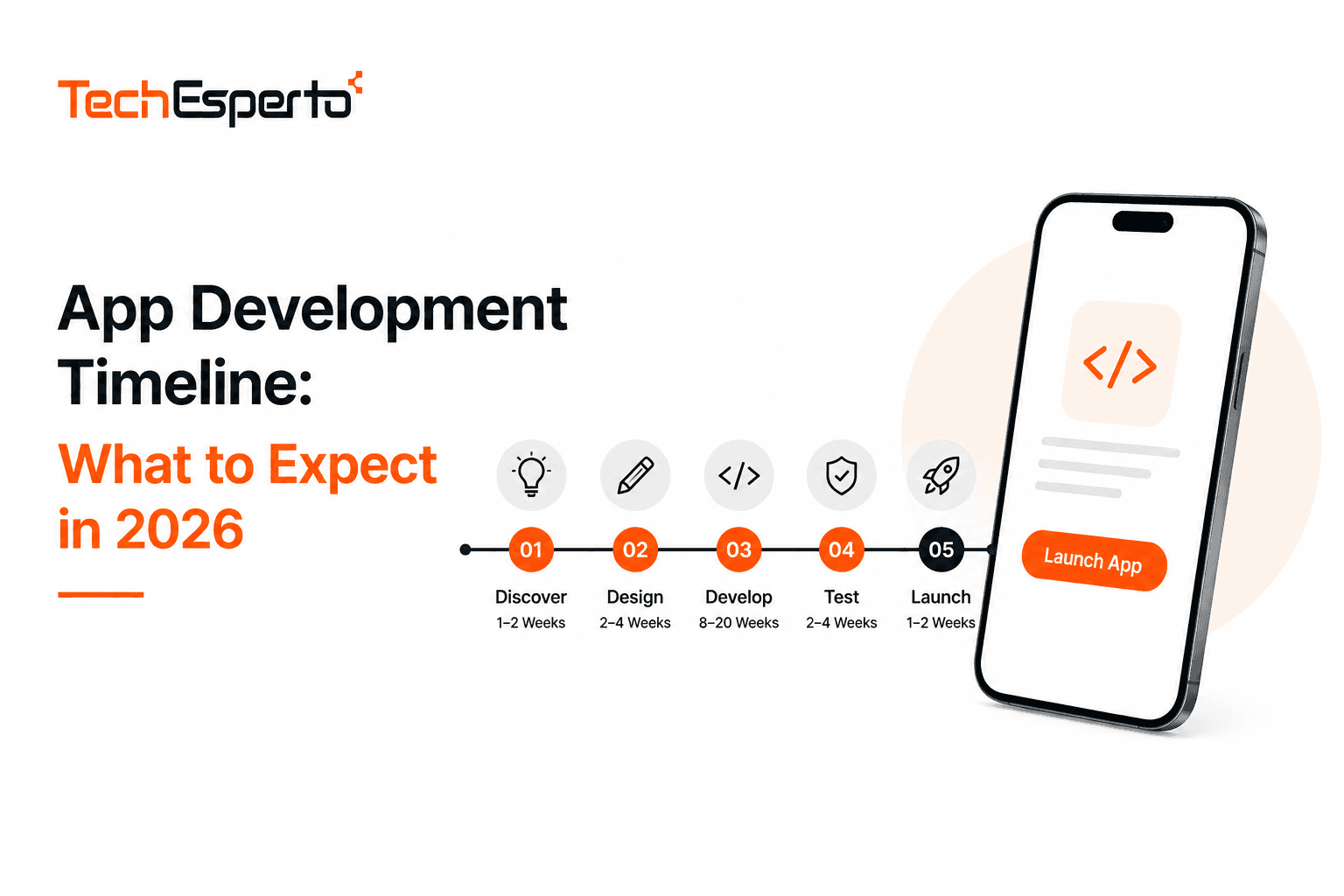
Understanding a realistic app development timeline helps you plan launch dates, budget, and stakeholder expectations accurately, rather than working from an overly optimistic estimate that leads to rushed decisions later. Timelines vary significantly based on feature complexity and platform scope, but most projects follow a similar phase structure worth understanding upfront. This guide breaks down what typically happens at each stage. Our mobile app development team can provide a specific timeline estimate based on your project’s actual scope.
Discovery & Planning Phase
Before any code gets written, discovery and planning set the foundation for the rest of the project timeline, and rushing this phase often causes delays later.
Requirements Gathering Typically Takes Days to Weeks
Clearly defining features, user flows, and technical requirements takes real time upfront, but investing here reduces costly scope changes during later development.
Technical Architecture Planning
Deciding on your tech stack, backend architecture, and third-party integrations happens during planning, since changing these decisions later is far more disruptive.
Design Wireframing Before Full Visual Design
Wireframes validate app structure and flow before investing in detailed visual design, catching structural issues while they’re still cheap to address.
Design & Development Phase
The bulk of the timeline typically falls within design and development, where the actual product gets built incrementally.
UI Design Follows Validated Wireframes
Once wireframes are approved, visual design work translates the validated structure into your app’s actual look and feel, typically running in parallel with early development.
Development Happens in Iterative Sprints
Most modern development proceeds in short, iterative sprints, delivering working features incrementally rather than one large release at the very end of the timeline.
Backend & API Development Runs Alongside Frontend
Backend architecture and API development typically progress alongside frontend work, since both need to be ready together for meaningful feature testing.
Testing, Launch & Post-Launch Phase
The final stretch of the timeline covers quality assurance, submission processes, and the transition into ongoing support.
QA Testing Needs Dedicated Time
Thorough testing across devices and scenarios takes real time and shouldn’t be compressed to meet an arbitrary launch date at the expense of quality.
App Store Submission Adds Review Time
Platform review processes add days to the timeline after development is complete, which should be factored into your launch date planning from the start.
Post-Launch Support Isn’t a Separate Timeline
Ongoing maintenance and feature development continue after launch, so budget and timeline planning shouldn’t treat launch as the absolute end of the project.
FAQs
How long does a typical mobile app take to build?
Timelines vary significantly by feature complexity and platform scope, ranging from a few months for a focused MVP to considerably longer for feature-rich, multi-platform applications.
What phase of app development typically takes the longest?
Development itself usually consumes the largest portion of the timeline, though thorough planning and testing phases are equally important to avoid delays elsewhere.
Can I speed up my app development timeline?
Some acceleration is possible through cross-platform development, reduced initial feature scope, or additional development resources, though quality shouldn’t be sacrificed purely for speed.
Does app store review affect my launch timeline?
Yes. Review processes typically add several days after development completes, which should be built into your planned launch date rather than treated as an afterthought.
Why do app development timelines often run longer than initially planned?
Scope changes, underestimated complexity, and insufficient buffer time are common reasons timelines extend, which is why realistic upfront planning matters so much.
Should I plan for post-launch development time too?
Yes. Ongoing bug fixes, updates, and feature additions are a continued cost after launch, not a separate consideration to plan for later.