AWS vs Azure vs Google Cloud is a decision that often gets reduced to comparing marketing claims about market share or brand recognition, when the more useful comparison is grounded in a business’s actual existing infrastructure, team expertise, and specific workload requirements. This post offers a practical framework for making this decision based on what genuinely matters for a given business, rather than which provider is broadly considered the largest.
Why Market Share Is the Wrong Starting Point
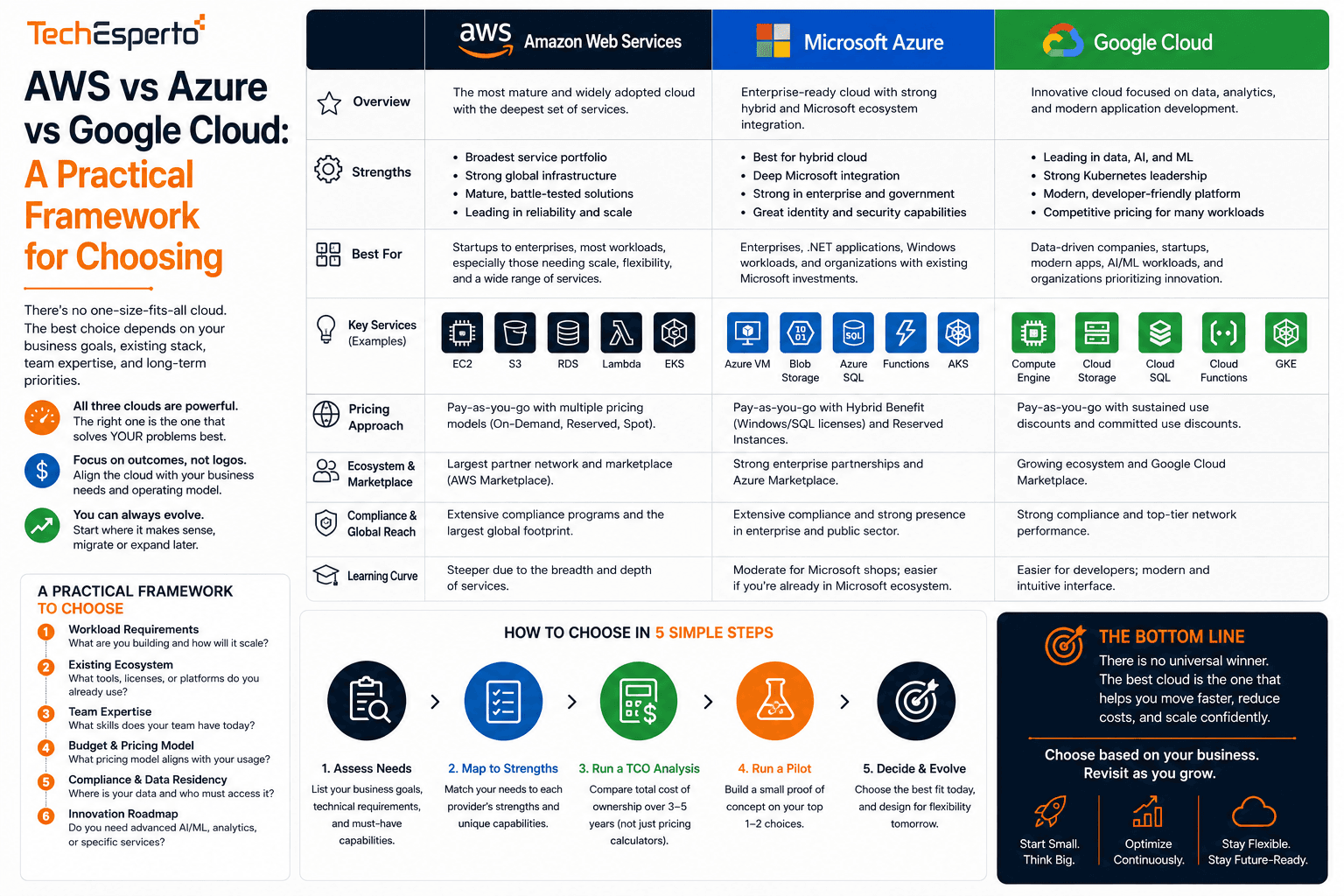
All three major providers, AWS, Azure, and Google Cloud, offer mature, capable infrastructure that can support the vast majority of business workloads reliably. The differences that actually matter for a specific decision are rarely about which provider is objectively best in the abstract, and far more about which one fits a business’s existing systems, team skills, and specific technical needs.
Existing Technology Ecosystem
Businesses Already Invested in Microsoft Tools
A business heavily reliant on Microsoft’s ecosystem, including Active Directory, Office 365, or existing .NET applications, often finds Azure integrates more naturally with what is already in place, reducing friction and avoiding the need to rebuild authentication and infrastructure connections from scratch.
Businesses With Existing AWS or Google Workloads
Similarly, a business that has already built infrastructure on AWS or Google Cloud generally benefits from staying within that ecosystem rather than incurring the cost and complexity of migrating to a different provider without a compelling specific reason to do so.
Team Expertise and Hiring Considerations
The practical expertise of an existing development and operations team matters significantly, since choosing a provider unfamiliar to the team introduces a learning curve and potential for costly configuration mistakes during the transition period. AWS generally has the largest talent pool given its market presence, which can make hiring somewhat easier, though this varies by region and specific technical specialty.
Workload-Specific Strengths
AI and Machine Learning Workloads
Google Cloud has historically held a strong reputation specifically for AI and machine learning tooling, given Google’s own research investment in the space, which can matter for businesses building heavily AI-driven products.
Enterprise and Hybrid Cloud Needs
Azure has particular strength in hybrid cloud scenarios, where a business needs to maintain some infrastructure on its own servers while extending into the cloud, an area where Microsoft’s tooling for hybrid deployment is generally considered mature and well supported.
Breadth of Services and General-Purpose Infrastructure
AWS offers the broadest overall range of services and has historically been the most battle-tested option across a wide variety of general-purpose workloads, which is why it remains a common default choice for businesses without a specific reason favoring one of the other two providers.
Cost Comparison Considerations
Pricing structures across all three providers are complex and not directly comparable on a simple line-item basis, since discounts, reserved capacity options, and specific service pricing all vary. A meaningful cost comparison requires modeling actual expected usage against each provider’s specific pricing structure rather than comparing general published rates, since the provider that appears cheapest on paper is not always the cheapest for a specific workload pattern.
Making the Decision for Your Specific Situation
A practical approach starts by mapping existing technology investments and team expertise, then evaluating whether the specific workloads planned, such as heavy AI use or hybrid infrastructure needs, favor one provider’s particular strengths. This kind of evaluation is typically part of broader cloud consulting work, since the right choice depends on specifics that a generic comparison of features cannot fully capture, and it is often paired with DevOps services planning to ensure the chosen provider’s tooling aligns well with how the team plans to deploy and manage infrastructure going forward.
Key Takeaways
The choice between AWS, Azure, and Google Cloud should be based on existing technology ecosystem, team expertise, and specific workload needs rather than general market share or brand reputation. Azure often fits naturally for businesses already invested in Microsoft’s ecosystem, while AWS and Google Cloud suit businesses with existing infrastructure or AI-focused workloads respectively. Cost comparisons require modeling actual usage patterns rather than comparing general published pricing. And the decision benefits from a structured evaluation of specific business needs rather than a one-size-fits-all recommendation.
Frequently Asked Questions
Is one cloud provider generally cheaper than the others?
Not universally. Cost depends heavily on specific usage patterns, discount structures, and which services are used, meaning the cheapest option varies by workload rather than being consistent across every business.
Does switching cloud providers require rebuilding an entire application?
Often significant portions need to be reconfigured, particularly if the application relies on provider-specific services, which is why most businesses avoid switching without a strong specific reason to do so.
Is Google Cloud only a good choice for AI-focused businesses?
No, Google Cloud supports general-purpose workloads well too, but it has a particularly strong reputation specifically in AI and machine learning tooling given Google’s own research investment in that area.
Do all three providers support hybrid cloud deployments?
All three offer some hybrid cloud capability, but Azure is generally considered to have particularly mature tooling for businesses needing to maintain infrastructure across both on-premises servers and the cloud.
Should a startup choose a cloud provider based on future scale needs?
To some extent, yes, though all three major providers can support significant scale. The more immediate consideration for most startups is which provider fits their team’s current expertise and existing technology choices.