Insurance CRM compliance requirements are often an afterthought in how CRM systems get evaluated and configured, with most attention going to pipeline visibility and sales automation while the regulatory obligations specific to insurance get bolted on later, if at all. This post looks at why compliance needs to be a foundational design consideration for insurance CRM systems rather than a secondary concern, and what that actually requires in practice.
Why Insurance CRM Requirements Differ From General Sales CRM
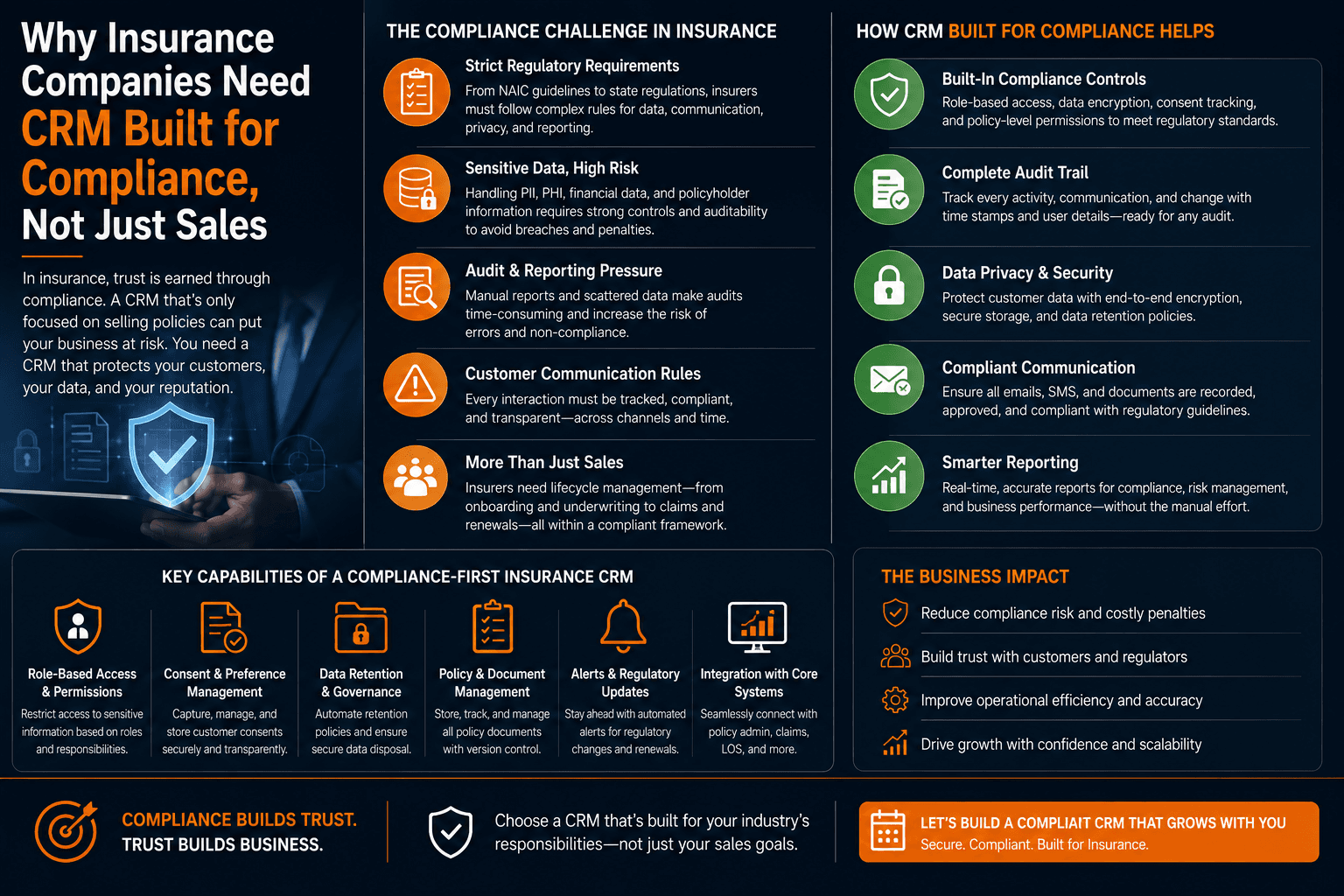
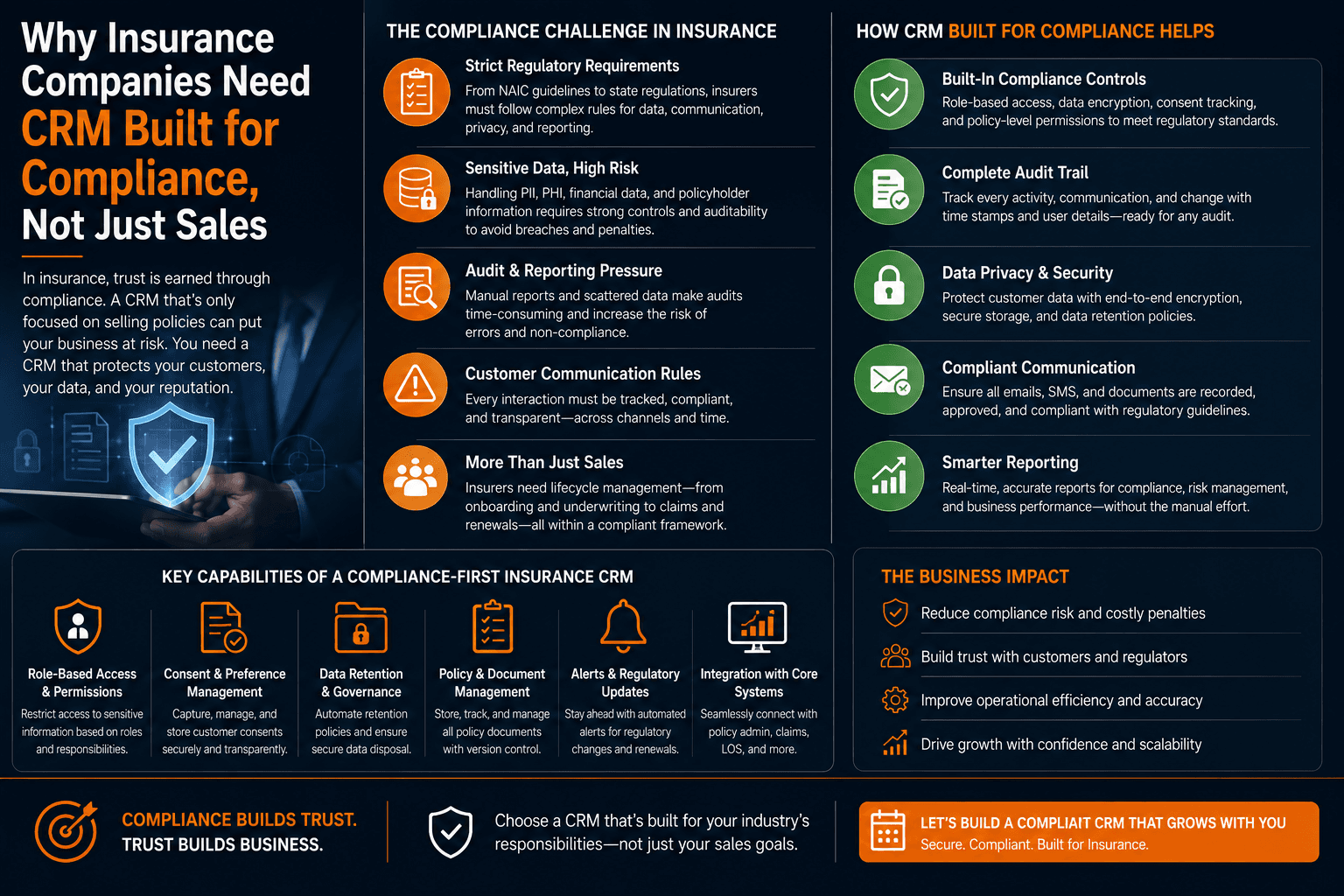
A general-purpose sales CRM is built around optimizing the path from lead to closed deal. Insurance sales and service involve additional layers most CRMs are not designed for by default, including detailed audit trails of every interaction and disclosure, documentation of specific regulatory disclosures made to a client, and long-term record retention requirements that often extend well beyond a typical sales cycle.
Audit Trail Requirements
Documenting Every Client Interaction
Insurance regulators generally expect a documented record of what was disclosed to a client and when, particularly for interactions involving policy recommendations or changes. A CRM configured without robust activity logging can leave a business unable to produce this documentation during an audit or a dispute, which creates real regulatory and legal exposure.
Retention and Immutability of Records
Beyond simply logging interactions, insurance compliance often requires that records cannot be altered or deleted after the fact, and that they are retained for a specific duration that can extend years beyond when a policy is active. This requires deliberate configuration around record retention policies that a default CRM setup does not necessarily enforce.
Data Security for Sensitive Client Information
Insurance CRMs often hold sensitive personal and financial information, requiring the same rigor around role-based access and data protection covered in broader role-based access control practices, ensuring that only appropriately authorized staff can view or edit specific categories of client data based on their actual role and need.
Managing Multi-State and Multi-Product Regulatory Differences
Insurance businesses operating across multiple states or offering multiple product lines often face varying regulatory requirements depending on jurisdiction and product type. A CRM needs to be configured to apply the correct compliance rules based on these variables automatically, rather than relying on individual staff members to manually track which rules apply to which client, a task that becomes unreliable as the business grows.
Building Compliance Into the CRM From the Start
Retrofitting compliance capabilities into a CRM already configured purely around sales workflow tends to be significantly more disruptive than designing the system with compliance requirements as a foundational consideration from the outset. This typically involves close collaboration with whoever handles SuiteCRM consulting or a similar implementation partner familiar with regulated industries, ensuring audit logging, retention policies, and access control are built into the initial configuration rather than added as an afterthought once the system is already in daily use.
Where Compliance and Sales Effectiveness Actually Align
Compliance-focused CRM design is sometimes framed as being in tension with sales efficiency, but in practice, a well-documented, auditable system also gives sales and service teams clearer visibility into a client’s full history, reducing errors and improving service quality. Compliance requirements and effective CRM solutions for insurance are not fundamentally opposed goals, and businesses that treat them as complementary from the start tend to build systems that serve both needs well.
Key Takeaways
Insurance CRM systems face additional regulatory requirements beyond what a general sales CRM is built for, including detailed audit trails, record immutability, and long-term retention obligations. Documenting client interactions and disclosures accurately is essential for regulatory audits and dispute resolution. Role-based access control matters significantly given the sensitivity of client financial and personal data typically held in these systems. And building compliance into the CRM configuration from the start avoids the disruption of retrofitting these requirements into a system already built purely around sales workflow.
Frequently Asked Questions
Do all insurance CRM systems need immutable record retention?
Requirements vary by jurisdiction and insurance product type, but many regulatory frameworks require that records cannot be altered after the fact and are retained for a specified minimum period.
How does role-based access control specifically apply to insurance CRM?
It ensures that only staff with an appropriate role and need can view or edit sensitive client financial and personal information, which is particularly important given the sensitivity of data insurance CRMs typically hold.
Can an existing sales-focused CRM be retrofitted for insurance compliance?
Yes, but it generally requires significant reconfiguration around audit logging, retention policies, and access control, which is more disruptive than building these requirements in from the initial implementation.
Does compliance-focused CRM design slow down sales team productivity?
Not necessarily. Well-documented, auditable systems often improve service quality by giving teams clearer visibility into a client’s full history, rather than working against sales effectiveness.
Do multi-state insurance businesses need different CRM configurations per state?
Often yes, since regulatory requirements can vary by jurisdiction, and the CRM should be configured to apply the correct rules automatically based on a client’s location and product type rather than relying on manual tracking.