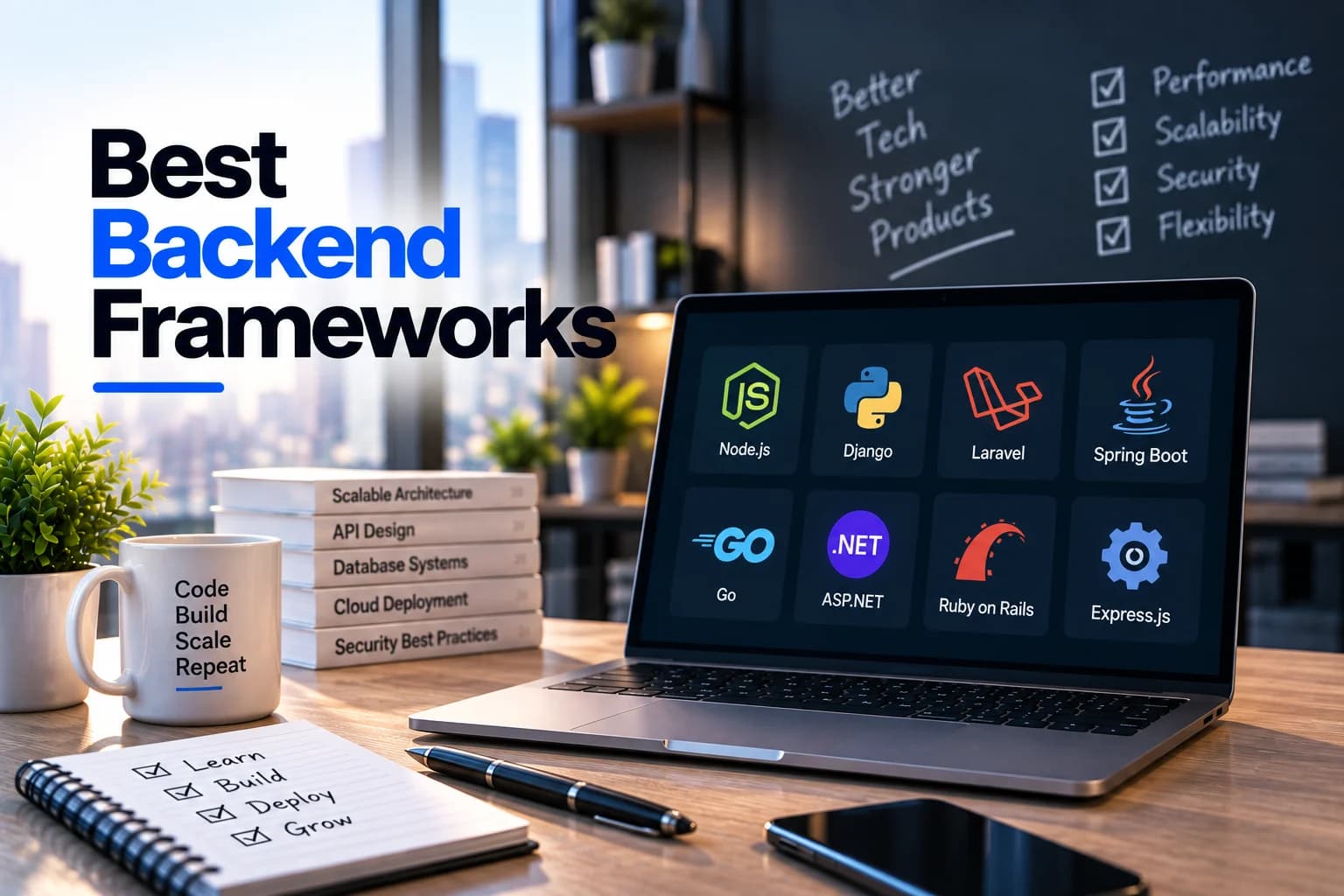
There is no best backend framework, which is why framework comparison articles are mostly useless. Every mature option handles the workload of the overwhelming majority of applications, and the differences that matter are hiring availability, ecosystem depth, and what your team already knows. This page covers the selection criteria that genuinely affect outcomes, where each major framework family fits, and why performance benchmarks are close to irrelevant for most decisions.
The Criteria That Actually Matter
Teams comparing frameworks usually weigh the wrong factors. Performance differences rarely bind before you have enough traffic to have solved harder problems, while hiring and ecosystem constraints bite immediately and persist for the life of the system.
Who You Can Hire
The single most consequential factor. A framework with a small talent pool creates a permanent recruitment constraint that compounds as the team grows.
What Your Team Already Knows
Existing expertise beats theoretical suitability in nearly every case. Learning a new framework on a delivery deadline is an avoidable risk.
Ecosystem and Library Maturity
Whether well-maintained libraries exist for payments, authentication, queues, and your specific integrations. This determines how much you build yourself.
Long-Term Maintenance Burden
Release cadence, upgrade path, and support lifetime. Our custom software development work weighs this heavily because maintenance outlasts the build.
Why Performance Rarely Decides
Application code is seldom the bottleneck. Database queries, network round trips, and architecture dominate, and those are framework-independent.
JavaScript and TypeScript Backends
The largest ecosystem and the widest hiring pool, with the advantage of sharing a language with the frontend. Well suited to applications with substantial concurrent input and output relative to computation.
Where It Fits Best
Applications dominated by network calls and database access rather than heavy computation, which describes most business software.
The Shared Language Advantage
One language across frontend and backend simplifies hiring, code sharing, and team flexibility, which matters more on smaller teams.
The Trade-Off Worth Knowing
Ecosystem breadth comes with dependency churn and variable library quality. Dependency discipline matters more here than elsewhere.
Where to Read the Detail
See our dedicated comparison covering this family against the alternatives.
Python Backends
Strong general-purpose choice with unmatched depth in data and machine learning tooling, which increasingly matters as applications incorporate analytical and model-driven features.
Where It Fits Best
Applications with data processing, analytics, or machine learning components, where keeping everything in one language avoids a service boundary.
The Data Ecosystem Advantage
Direct access to the analytical and modelling libraries. Our predictive-analytics work frequently makes this decisive.
Framework Choice Within Python
Options range from batteries-included to minimal. The choice depends on how much convention you want imposed versus assembled.
Where to Read the Detail
PHP and Ruby Backends
Both remain excellent choices for conventional web applications despite receiving less attention than newer options. Mature, productive, and backed by very large hosting and hiring markets.
Where PHP Fits
Content-driven and conventional web applications, with enormous hosting availability and a large hiring pool at accessible rates.
Where Ruby Fits
Rapid development of conventional applications, with strong convention reducing decisions and a productive ecosystem for standard patterns.
The Reputation Gap
Both are frequently dismissed for reasons that no longer hold. Modern versions of each are capable and well maintained.
Where to Read the Detail
Compiled and Enterprise Backends
Java, .NET, and Go occupy the space where organisational requirements, performance characteristics, or existing estate make them the sensible choice rather than a preference.
Where Java and .NET Fit
Large organisations with existing estate, established tooling, long support lifetimes, and enterprise integration requirements. Our enterprise software development work sits substantially here.
Where Go Fits
Services where deployment simplicity and concurrent handling matter, particularly infrastructure and high-throughput internal services.
The Enterprise Consideration
Support lifetimes and vendor backing matter in organisations with long procurement and compliance cycles, independent of technical merit.
Where to Read the Detail
Making the Decision
The decision is usually simpler than the comparison suggests, and taking it in this order produces a defensible answer quickly rather than an extended evaluation that arrives at whatever the team preferred initially.
Start With Your Team
If your team knows one well, that is almost always the answer. Overriding existing expertise needs a specific technical justification.
Check Hiring in Your Market
Search current listings in the locations you would hire from. A thin market is a constraint you will feel on every future hire.
Confirm the Integrations You Need
Verify mature libraries exist for your specific payment, identity, and third-party requirements before committing.
Prefer Boring and Widely Adopted
Mature, widely used frameworks have answers to your problems already written. Our api-development work favours this deliberately.
Stop Evaluating and Decide
Beyond a certain point, further comparison produces no better answer. The frameworks are more similar than the discourse implies.
FAQs
Which backend framework is best?
There is no single best. Every mature option handles the workload of most applications comfortably. The differences that matter are hiring availability, ecosystem depth for your specific integrations, and what your team already knows well.
Does backend framework choice affect performance?
Far less than teams expect. Database queries, network round trips, and architecture dominate application performance, and all are framework-independent. Framework benchmarks rarely reflect where real applications actually spend time.
Should I choose the framework my team knows?
Almost always yes. Existing expertise beats theoretical suitability, and learning a new framework against a delivery deadline introduces avoidable risk. Overriding that needs a specific technical requirement rather than a preference.
How important is the hiring pool?
It is the most consequential long-term factor. A framework with a thin talent pool creates a recruitment constraint you feel on every hire, and that compounds as the team grows and as people leave.
Is it worth using a newer framework?
Rarely for production business systems. Newer frameworks have thinner ecosystems, fewer answered questions, and smaller hiring pools. Spend innovation budget on the product rather than on the infrastructure underneath it.
When does framework choice genuinely matter?
When you have unusual requirements such as very high concurrency, heavy computation, strict latency, or an existing estate with established tooling. For conventional business applications the choice matters much less than the discourse suggests.