Comparing the best cross-platform app frameworks available today means weighing performance, ecosystem maturity, and your team’s existing skills, since the right choice varies meaningfully depending on your specific project’s priorities rather than there being one universal winner. Flutter and React Native remain the two most widely adopted options, each with genuine strengths worth understanding before committing. This guide breaks down the practical considerations. Our cross-platform app development team can help you choose the right fit for your project.
Leading Cross-Platform Framework Options
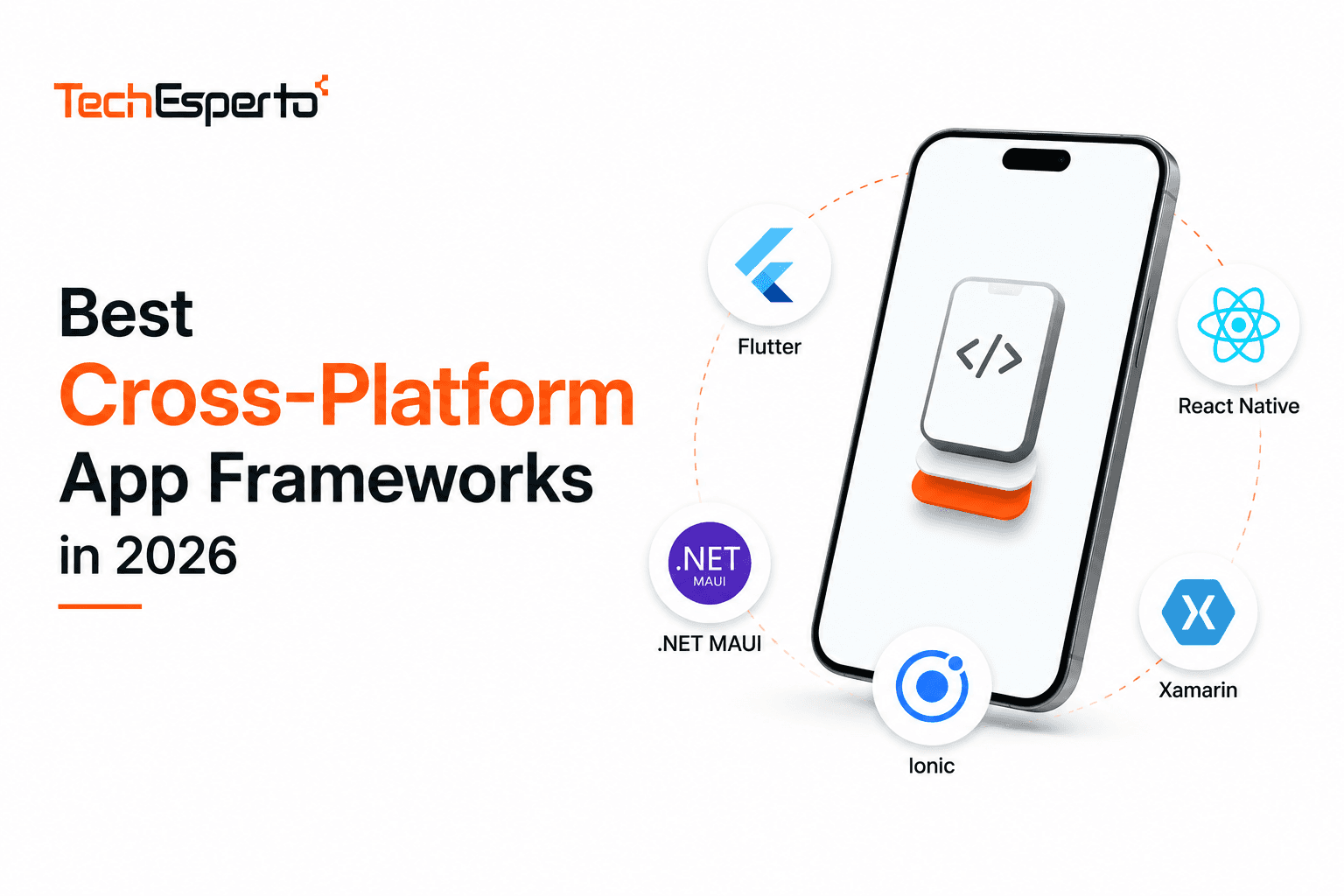
Several mature frameworks compete for cross-platform development today, each with a different balance of performance, ecosystem, and development experience.
Flutter Offers Consistent Cross-Platform Rendering
Flutter renders its own UI components consistently across platforms, giving predictable visual behavior and strong performance backed by ongoing Google investment.
React Native Leverages JavaScript & Native Components
React Native uses JavaScript to control genuinely native UI components, offering strong performance and a large ecosystem built on web development familiarity.
Ionic Suits Web-Skilled Teams
Ionic uses standard web technologies rendered in a WebView, trading some performance for letting web development teams build mobile apps with familiar skills.
.NET MAUI Serves the Microsoft Ecosystem
For teams deeply invested in C# and .NET, MAUI offers cross-platform development as Microsoft’s actively supported successor to the now-retired Xamarin.
Choosing the Right Framework for Your Situation
The best framework choice depends heavily on your team’s existing skills, your app’s performance requirements, and how much you value ecosystem maturity.
Match Framework to Team Skill Set
Teams with strong web development backgrounds may find Ionic or React Native more approachable, while teams comfortable with Dart can leverage Flutter effectively.
Weigh Performance Requirements Honestly
Apps with demanding animations or complex interactions benefit from Flutter or React Native’s closer-to-native performance over Ionic’s WebView-based approach.
Consider Long-Term Ecosystem Support
Actively developed, well-supported frameworks with strong community investment reduce the risk of being stuck with an unsupported technology down the line.
Evaluate Hiring & Talent Availability
Frameworks with larger developer communities generally offer easier hiring and team scaling, which matters for projects expecting to grow their engineering team over time.
FAQs
Which cross-platform framework is most popular right now?
Flutter and React Native are currently the two most widely adopted cross-platform frameworks, each with strong community support and active development.
Is Flutter better than React Native?
Neither is universally better — both offer strong performance and active development, with the right choice depending on your team’s skills and specific project needs.
What are the best cross-platform app frameworks for a startup MVP?
Flutter and React Native are both strong choices for MVPs, offering fast development and good performance without requiring separate native codebases for iOS and Android.
Should I avoid Xamarin for new projects?
Yes. Microsoft has ended official Xamarin support in favor of .NET MAUI, so new projects should consider MAUI, Flutter, or React Native instead.
Does Ionic perform as well as Flutter or React Native?
Generally not for complex, performance-intensive apps, since Ionic’s WebView-based rendering trades some performance for using familiar web development technologies.
How do I decide between these frameworks for my specific project?
Consider your team’s existing skills, your app’s performance needs, and long-term ecosystem support — we can help assess the right fit during a project consultation.