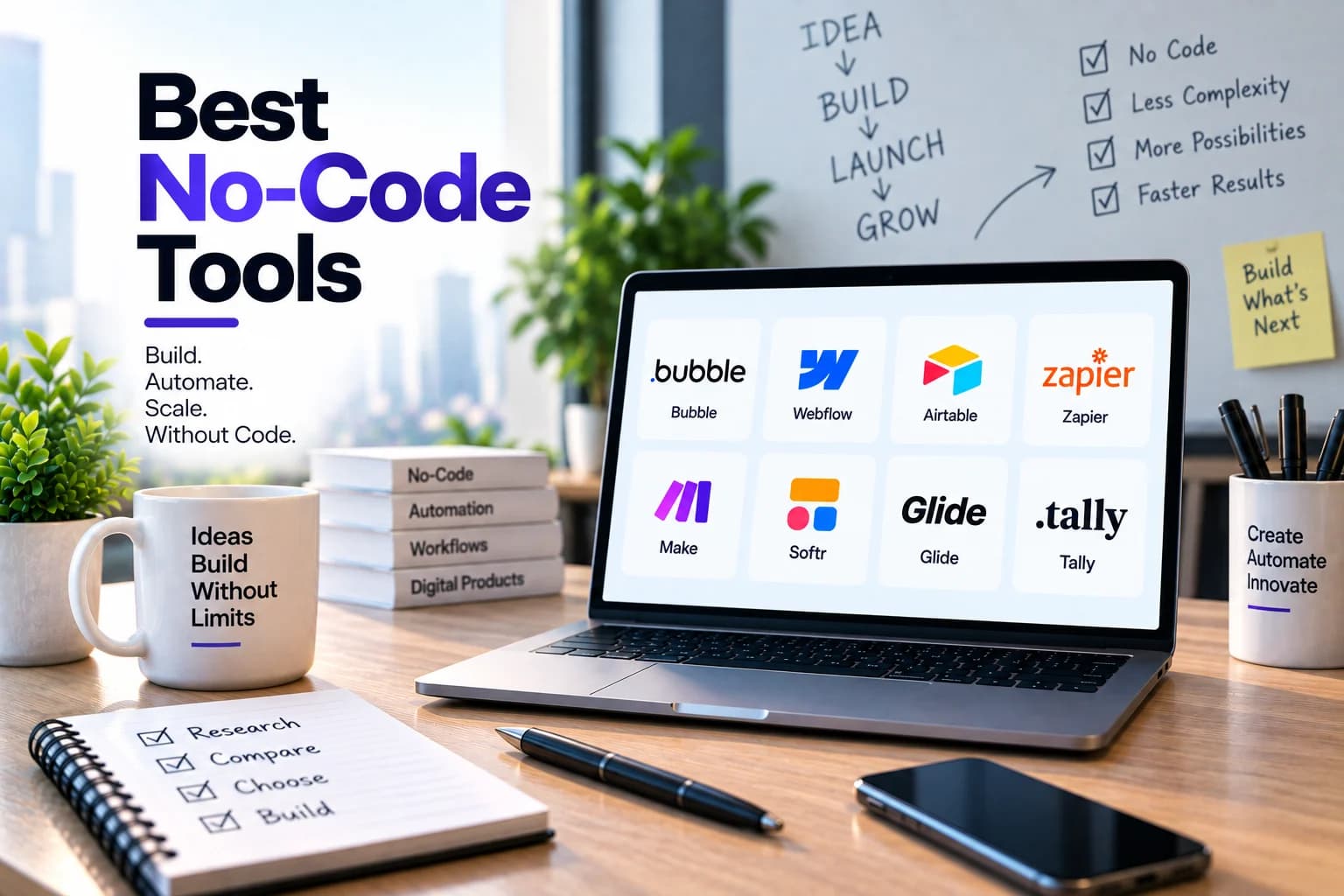
No-code is not one category, and treating it as one produces bad selections. Building an internal approval tool, a customer-facing product, an automated workflow, and a marketing site are four different problems solved by four different groups of tools. This page sorts the landscape by the job you need done, covers what each category genuinely handles, and is honest about where each stops working.
Internal Tools and Admin Interfaces
The strongest and least contested no-code category. Internal tools have known users, forgiving requirements, and no need for visual distinction, which is exactly where these platforms excel.
What This Category Covers
Admin panels, approval interfaces, data entry forms, and operational dashboards built on top of databases and APIs you already have.
The Established Platforms
Retool and Appsmith are the widely adopted options, with Budibase as a self-hostable alternative where data control matters.
Why It Works So Well Here
Internal users tolerate generic interfaces, requirements are known, and the alternative is frequently a spreadsheet rather than a well-built application.
Where It Connects to Your Estate
These tools sit on top of existing systems. Our API integration services work provides the endpoints they read and write through.
Customer-Facing Applications
More contested territory. These platforms can build real products, and the ceiling arrives sooner than in the internal tool category because customers judge performance and polish.
The Established Platforms
Bubble is the most capable general option, with FlutterFlow generating mobile applications and Glide suiting simpler data-driven apps.
What They Handle Well
Marketplaces, directories, booking products, and internal-facing SaaS where requirements are conventional and volumes are moderate.
Where the Ceiling Sits
Complex conditional logic, performance at higher data volumes, precise interface control, and integrations beyond standard connectors.
The Validation Use Case
Frequently the best use of these tools is proving demand before committing to a build. Our MVP development work treats them as a legitimate validation route.
Workflow Automation
Connecting systems and automating processes is a mature category with genuinely capable tools, covered in depth in our Zapier alternatives writing.
What This Category Covers
Moving data between systems, triggering actions on events, and automating multi-step processes without writing integration code.
The Established Platforms
Zapier for breadth of connectors, Make for more complex visual logic, and n8n where self-hosting matters for cost or data control.
Where It Stops Being Suitable
When a business-critical process depends on it without monitoring, or when logic becomes complex enough that nobody can explain a flow.
The Better Long-Term Position
Automation platforms for low-stakes connections, built integrations for anything the business depends on. Our workflow automation work draws that line deliberately.
Databases and Spreadsheets
Between a spreadsheet and a database sits a category that has become the operational backbone of many small organisations, frequently without anyone deciding that deliberately.
What This Category Covers
Structured data with relationships, views, and permissions, accessible to non-technical users who would otherwise use spreadsheets.
The Established Platforms
Airtable is the widely adopted option, with Notion databases covering lighter needs and Baserow providing a self-hostable alternative.
The Risk Worth Naming
These frequently become systems of record without anyone intending it, holding business-critical data with no backup discipline or access control.
When to Move to a Real Database
When the data matters operationally, when volume grows, or when access control becomes a genuine requirement. Our data migration work handles that transition.
Websites and Content
The oldest no-code category and the least contested, where the tools are mature and the ceiling is high enough that most organisations never reach it.
What This Category Covers
Marketing sites, landing pages, documentation, and content publishing without development involvement for routine changes.
The Established Platforms
Webflow for design control, WordPress with page builders for content-heavy sites, and Framer for design-led marketing sites.
Where Custom Development Still Wins
Complex integrations, unusual functionality, performance at scale, and anything where the site is a product rather than marketing.
The Practical Position
Most organisations should use these for marketing sites and reserve development for the product. Our CMS development work covers the cases where platforms genuinely fall short.
FAQs
What are the best no-code tools?
It depends on the job. Retool and Appsmith for internal tools, Bubble and FlutterFlow for customer-facing applications, Zapier and Make for workflow automation, Airtable for structured data, and Webflow or WordPress for websites.
Can no-code build a real product?
Yes, within limits. Bubble and similar platforms handle marketplaces, directories, and booking products at moderate volume. The ceiling arrives with complex logic, performance at higher data volumes, and precise interface control.
What is no-code best at?
Internal tools. Known users, forgiving requirements, no need for visual distinction, and an alternative that is usually a spreadsheet. This is the category where no-code most reliably outperforms building something custom.
Is Airtable a database?
It sits between a spreadsheet and a database and frequently becomes a system of record without anyone deciding that. If the data matters operationally, check whether backup discipline and access control match what a system of record needs.
Should I use no-code to validate a product idea?
Frequently yes. It is usually the fastest way to test whether people want something before committing to development, which makes it a legitimate validation route rather than a compromise.
When should I stop using no-code?
When workarounds outnumber features, when platform costs rise faster than usage, when changes take disproportionately long, or when the business is routinely told a requirement is impossible on the platform.