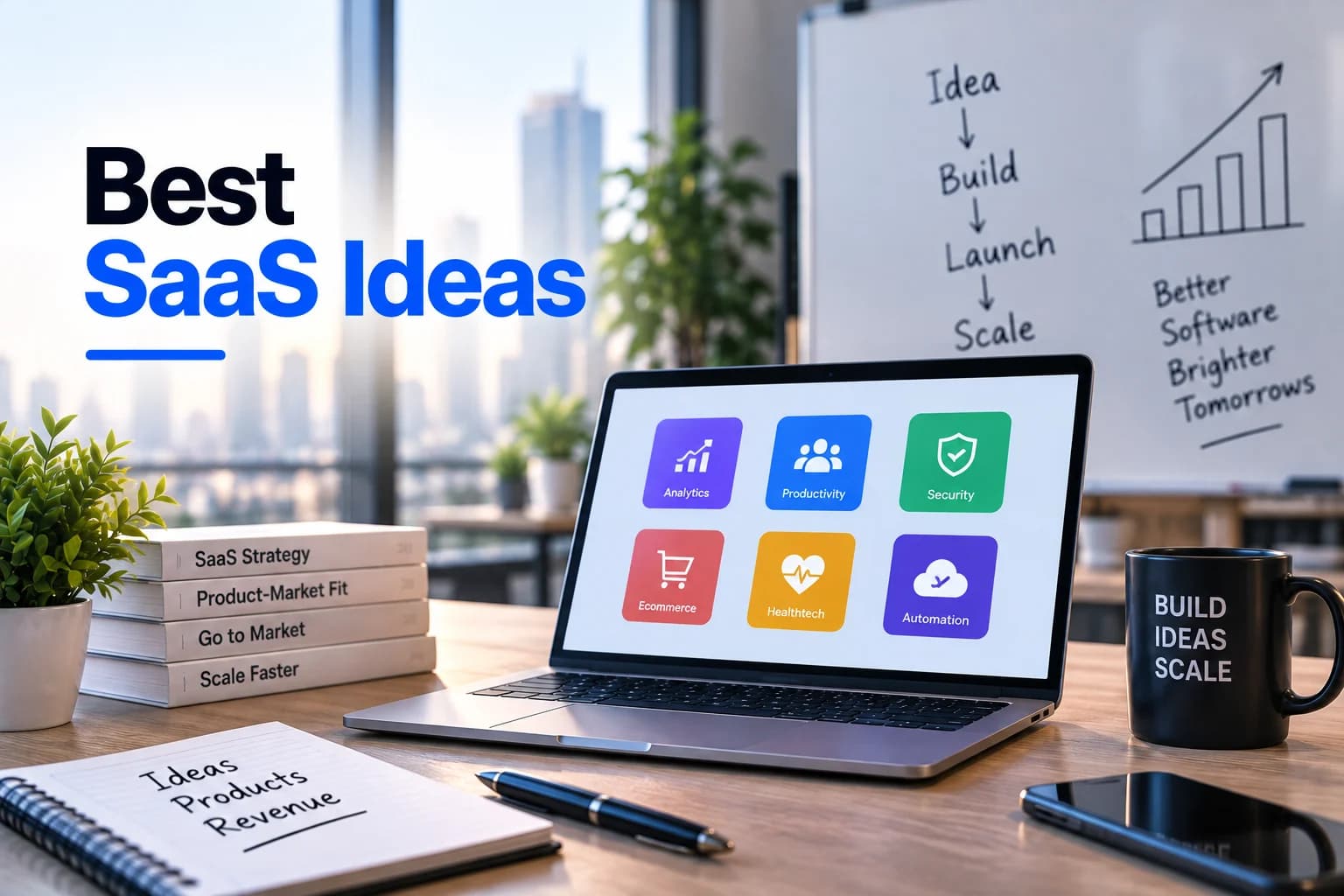
A SaaS idea only works if people keep paying, which is a narrower requirement than being useful once. That single condition eliminates most ideas that sound appealing, because recurring payment needs recurring value and increasing switching cost. This page assesses SaaS ideas against that test, covering the categories where recurring revenue holds reliably, the ones where it decays, and why business software sustains subscriptions far better than consumer products do.
The Recurring Revenue Test
Subscription is a business model with specific requirements, and applying them before assessing whether an idea is interesting saves considerable effort. Products that deliver value once and then coast get cancelled at the first budget review.
Value Must Recur, Not Just Persist
The product needs to keep doing something useful. Tools that complete a one-time task and then store the result struggle to justify renewal.
Switching Cost Must Accumulate
Data, integrations, configuration, and process embedding all make leaving harder over time. Products with none of these renew on goodwill alone.
The Buyer Must Have Budget Authority
Business buyers with a line item renew. Consumers reassess every subscription during any financial pressure, which produces much higher churn.
The Problem Must Be Ongoing
One-off problems suit one-off pricing. Our MVP development scoping tests this before committing to a subscription model.
Vertical SaaS for Specific Industries
The most reliable SaaS category remains software built for one industry that general tools serve badly. Smaller markets, higher win rates, lower churn, and pricing power because the alternative is a spreadsheet and a filing cabinet.
Why Vertical Retains Better
Software matching an industry’s exact workflow, terminology, and regulation becomes embedded in how the business runs, which is the strongest form of switching cost.
Smaller Markets Are an Advantage
A defined industry is reachable through associations, trade press, and word of mouth, which makes acquisition affordable at small scale.
Pricing Power From Lack of Alternatives
Where the alternative is manual process rather than a competitor, pricing reflects value delivered rather than competitive comparison.
What It Demands From You
Real domain understanding rather than researched understanding. Our saas-development work in vertical markets depends on that access.
Compliance and Obligation Software
Where a business must do something to remain compliant, software making it reliable has non-discretionary demand. This is unusually resilient revenue because cancelling means accepting risk rather than losing convenience.
Demand Survives Budget Pressure
Compliance spending is protected in a way convenience spending is not, since the downside is penalty or lost accreditation rather than inefficiency.
Regulation Changes Create Renewal Value
Rules change, and software that keeps pace delivers recurring value by definition. That is a natural fit for subscription.
Audit Trail as the Product
The record that something was done correctly is frequently worth more than the doing. This suits software very well.
The Bar This Sets
Accuracy and auditability above all. Our enterprise software development work treats getting the obligation right as the primary requirement.
Operational Systems of Record
Software that becomes the place a business tracks something important has the strongest retention characteristics available, because the data accumulates and the process depends on it. These are harder to sell initially and considerably harder to displace.
Data Accumulation Creates Retention
Every month of records makes leaving more expensive. This compounds without any additional product work.
Integration Depth Compounds It
Connected to accounting, communications, and reporting systems, the product becomes infrastructure rather than a tool.
Reporting Sustains Perceived Value
Customers seeing their own operational data reported back experience continuing value. Our dashboard development work supports renewal conversations directly.
The Sales Reality
Longer cycles and higher scrutiny, because becoming a system of record is a considered decision rather than an experiment.
Where SaaS Ideas Commonly Fail
These patterns fail for structural reasons rather than execution, and recognising them prevents building something that works and does not renew.
Consumer Subscriptions Without Habit
Consumers reassess subscriptions constantly. Without daily or near-daily use, churn overwhelms acquisition regardless of product quality.
Single-Feature Tools
Products doing one thing get absorbed by platforms adding it, or replaced when a cheaper alternative appears. No accumulating switching cost.
Tools Solving One-Off Problems
Migration, setup, and audit tools deliver value once. Subscription is the wrong model even when the product is excellent.
Products Dependent on One Platform
Building entirely on another company’s platform means your business exists at their discretion. Our api-development work weighs that dependency deliberately.
Ideas Requiring Behaviour Change First
Software needing a team to adopt a new practice before receiving benefit has very high abandonment during onboarding.
FAQs
What makes a SaaS idea work?
Recurring value rather than one-time value, accumulating switching cost through data and integrations, a buyer with budget authority, and an ongoing problem rather than a one-off one. Ideas failing any of these struggle to renew regardless of quality.
Is vertical SaaS better than horizontal?
Generally yes for smaller teams. Vertical products match an industry’s exact workflow and terminology, which improves win rates and retention, and the defined audience is reachable affordably through associations and trade channels.
Why do consumer SaaS ideas usually fail?
Because consumers reassess every subscription during financial pressure, and without daily or near-daily use the product is an easy cancellation. Business buyers with a budget line renew far more reliably at much higher price points.
What is the most retentive type of SaaS?
An operational system of record. Data accumulates monthly, integrations deepen, and the business process depends on it, which makes displacement expensive. These are harder to sell initially and considerably harder to lose.
Should compliance software be a SaaS?
It suits subscription well. Demand is non-discretionary because cancelling means accepting risk, regulation changes create ongoing value, and the audit trail is frequently worth more to the customer than the task the software performs.
Why is single-feature SaaS risky?
Because it accumulates no switching cost and is easily absorbed by platforms adding the capability natively or replaced by a cheaper alternative. Depth of integration and data accumulation are what make products difficult to leave.