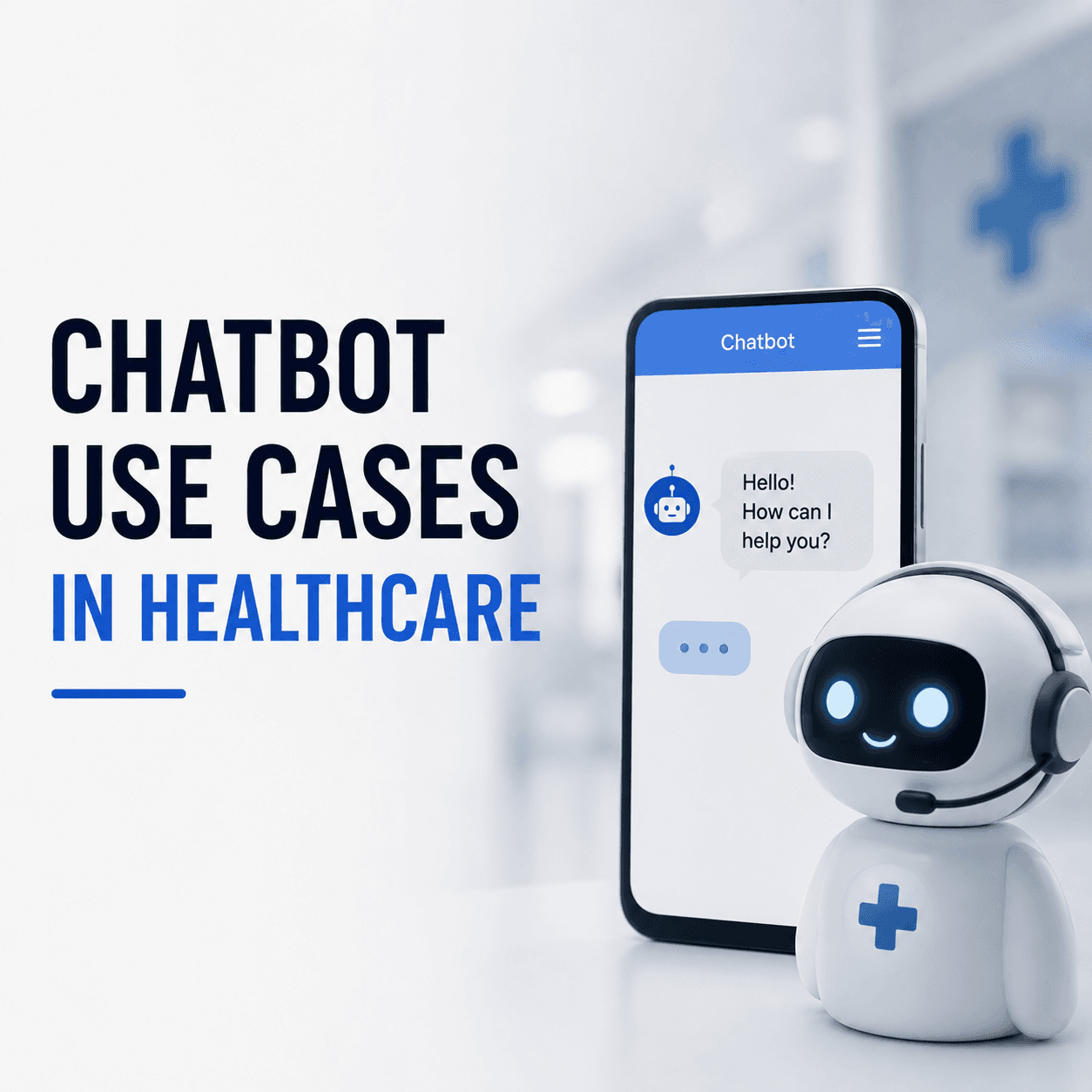
Healthcare chatbots work well for administrative and navigational tasks and poorly for anything approaching clinical judgement. That boundary is the most important design decision in the category, because crossing it creates patient safety risk and potentially brings the software into medical device regulation. The use cases below are grouped by how safely they deploy. Administrative handling is dependable and delivers measurable value. Guided intake works with careful scoping. Symptom assessment carries real risk and needs clinical governance rather than a product decision.
Administrative and Navigational Use Cases
This is where healthcare chatbots deliver reliably. Provider organisations handle enormous volumes of routine enquiries that consume clinical and reception time without requiring clinical knowledge to answer. Grounding responses in the organisation’s own published information keeps accuracy high and keeps the system well clear of clinical territory.
Appointment Scheduling and Changes
Booking, rescheduling, and cancellation through conversation, connected to the scheduling system. High volume, clearly bounded, and immediately measurable against call handling time.
Practical and Procedural Questions
Opening hours, locations, parking, preparation instructions, and what to bring. Answered from published material rather than generated, which keeps accuracy verifiable.
Billing and Insurance Enquiries
Coverage questions, statement explanations, and payment routing. Complex enough to consume staff time and factual enough to answer from documented policy.
Prescription and Refill Requests
Routing refill requests into the correct workflow with verification, rather than making any clinical decision about the request itself.
Why These Work
Repetitive, high volume, answerable from organisational documentation, and tolerant of escalation. Our AI chatbot development work grounds responses in source documents rather than open generation.
Intake, Preparation and Follow-Up
The second tier involves collecting or delivering clinical information without interpreting it. A chatbot can gather a structured history for a clinician to review, or deliver post-discharge instructions a clinician wrote. Both are useful and both stay on the safe side of the boundary, provided the system never assesses what it collects.
Structured Pre-Visit Intake
Collecting history, medications, and reason for visit before an appointment, presented to the clinician rather than assessed by the system.
Preparation and Consent Information
Delivering procedure instructions and answering questions about them from approved material, reducing cancellations caused by incorrect preparation.
Post-Discharge Follow-Up
Checking on recovery against clinician-defined criteria, escalating anything outside expected parameters to a human rather than advising.
Medication Reminders and Adherence
Scheduled prompts with simple confirmation. Straightforward technically and among the more clinically valuable applications available.
Integration Into Clinical Systems
Intake data must reach the record rather than sitting in a separate tool. Our API integration services work handles that connection.
Where Clinical Boundaries Must Be Enforced
Symptom checking and triage are the applications most requested and least safely delivered. A conversational interface that appears to assess symptoms will be treated as clinical advice by patients regardless of any disclaimer. This is a governance question rather than a product design question, and it needs clinical sign-off rather than a legal footer.
Symptom Assessment Carries Real Risk
Patients act on what a health system’s chatbot tells them. Missing a serious presentation is a patient safety event, not a support ticket.
Regulatory Classification
Software that assesses symptoms to guide care decisions may qualify as a medical device, bringing design controls and clinical evidence requirements into scope.
Disclaimers Do Not Transfer Responsibility
Patients do not read disclaimers as limiting the advice they just received. Designing on the assumption they will is not a defensible position.
Safe Alternative: Deterministic Triage
Clinician-authored decision trees with defined outputs and mandatory escalation thresholds. Auditable, reviewable, and far more defensible than generated responses.
Requiring Clinical Governance
Any patient-facing clinical content needs named clinical ownership and review. Our healthcare software solutions work treats this as a project prerequisite.
Data Protection and Compliance Design
Healthcare chatbots handle protected health information by default, which changes the architecture significantly. Conversation logs, transcripts, and any collected data fall within scope, and vendor selection is constrained accordingly. This needs settling before implementation rather than being retrofitted after a security review.
Conversation Data Is PHI
Transcripts containing symptoms, medications, or appointment details are protected health information and require the same handling as clinical records.
Vendor Agreements and Model Hosting
Any provider processing conversation data needs an agreement in place. Confirm whether your chosen model provider supports this before selecting it.
Authentication Before Personal Information
The chatbot must verify identity before discussing anything specific to a patient. Unauthenticated conversations stay strictly on general published information.
Audit Logging of Interactions
Record what was asked, what was answered, and what escalated. Required for investigation and expected by compliance review.
Retention and Deletion
Define how long transcripts persist and how deletion requests are honoured. Our workflow automation work builds these controls into the process.
Measuring Whether It Works
Healthcare chatbot projects are frequently evaluated on containment rate, meaning the share of conversations resolved without a human. That metric rewards a system that fails to escalate, which is precisely the wrong incentive in this sector. Measure the operational outcome and the safety behaviour together, not deflection alone.
Measure Staff Time Recovered
Reduction in call and reception handling time against a documented baseline. This is the defensible business case and the easiest to evidence.
Track Escalation Appropriateness
Whether escalations were justified and whether anything should have escalated and did not. The second is the number that matters for safety.
Watch Patient Satisfaction, Not Just Volume
A chatbot handling more conversations while frustrating patients is a net loss in a sector where trust affects care outcomes.
Avoid Containment as a Target
Optimising for fewer handovers pushes the system toward answering things it should escalate. Set escalation as a safety feature rather than a failure.
Review With Clinical Staff Regularly
Sample transcripts reviewed by clinicians. Our AI consulting services engagements build this review cadence into deployment.
FAQs
What are healthcare chatbots actually good at?
Administrative and navigational tasks: appointment scheduling and changes, practical questions about locations and preparation, billing and insurance enquiries, refill request routing, and medication reminders. All are high volume, answerable from organisational documentation, and clearly non-clinical.
Can a chatbot check symptoms?
Technically yes, safely no, without clinical governance. Patients act on what a health system’s chatbot tells them regardless of disclaimers, and missing a serious presentation is a patient safety event. Clinician-authored deterministic triage with mandatory escalation is the defensible alternative.
Are healthcare chatbots subject to HIPAA?
Yes, where they handle protected health information, which includes conversation transcripts containing symptoms, medications, or appointment details. That requires vendor agreements with any provider processing the data, authentication before personal discussion, audit logging, and defined retention.
Could a healthcare chatbot be a regulated medical device?
Possibly, if it assesses symptoms or guides care decisions rather than providing information or handling administration. That classification brings design controls and clinical evidence requirements, which is why the boundary needs clinical and regulatory input early.
What should healthcare chatbot success be measured on?
Staff time recovered against a documented baseline, plus escalation appropriateness in both directions. Containment rate is actively misleading here, since optimising for fewer handovers pushes the system toward answering things it should escalate.
How do we keep a healthcare chatbot accurate?
Ground responses in the organisation’s own approved documentation rather than allowing open generation, require clinical ownership for any patient-facing clinical content, and sample transcripts for clinical review on a defined cadence after deployment.