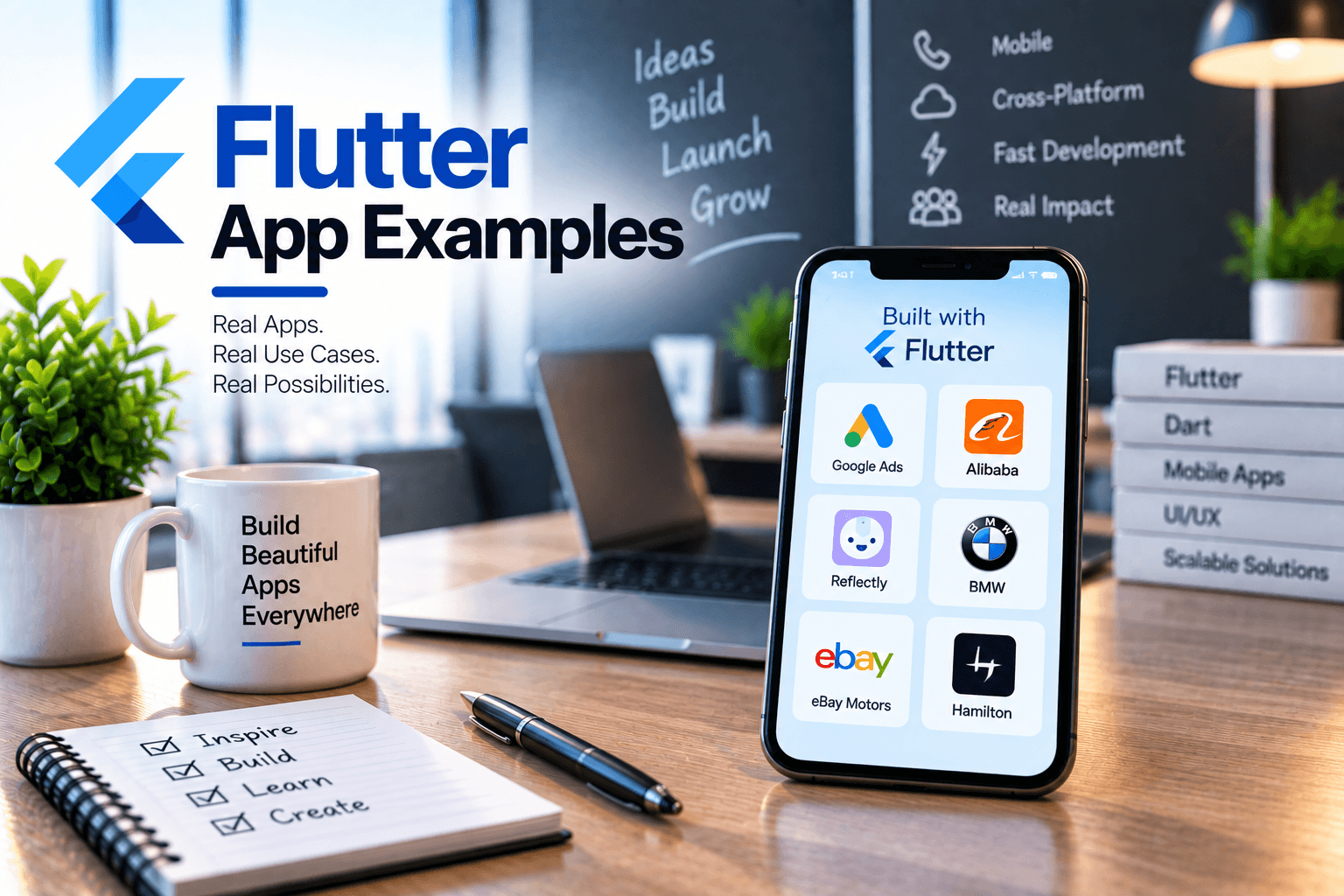
Examples are only useful if they tell you something about your own decision. A list of logos does not. This page covers Flutter applications running in production and, for each, what the example actually demonstrates about where the framework fits. The pattern across them is consistent: Flutter is chosen where visual consistency across platforms matters and where a team wants one codebase to reach mobile and, increasingly, desktop as well.
Consumer Scale Applications
The examples at the largest consumer scale demonstrate that Flutter handles high-volume production traffic, which was the open question for several years after its release.
Google Pay
(cite index=”26-1″>Google Pay is among the large brands using Flutter</cite>, which is unsurprising given Google maintains the framework and meaningful because payments carry reliability requirements few applications match.
Alibaba
(cite index=”26-1″>Alibaba uses Flutter</cite> in its marketplace applications, which demonstrates the framework operating at a scale of concurrent users very few products reach.
eBay Motors
(cite index=”25-1″>eBay chose Flutter to build its Motors app</cite>, which shows an established marketplace committing a significant product line rather than an experiment.
What These Demonstrate
Scale is no longer the open question. Our cross-platform app development recommendations reflect that the reliability concerns have largely been answered.
Enterprise and Public Sector Rebuilds
The more informative examples are organisations that migrated existing native applications to Flutter, because that decision was made with full knowledge of what they were leaving.
SNCF Connect
(cite index=”25-1″>The official app of the French railway, used by millions daily for booking and timetables, was migrated from previous native apps to Flutter in a large undertaking that demonstrated complex enterprise booking flows can be rebuilt successfully.</cite>
BMW
(cite index=”27-1″>BMW’s connected car applications are built with Flutter</cite>, which places the framework in a context with hardware integration and long product lifecycles.
Toyota
(cite index=”27-1″>Toyota uses Flutter for in-house driver applications</cite>, another example of an automotive manufacturer choosing it for software with extended support horizons.
Why Migrations Matter More Than New Builds
A team choosing Flutter for a new app is making a low-information bet. A team replacing working native apps has compared both directly.
Design-Led Products
Flutter renders its own interface rather than using platform components, which makes it particularly suited to products where a distinctive and identical visual experience matters more than platform convention.
Reflectly
(cite index=”25-1″>One of the first high-profile Flutter adopters, whose team has spoken publicly about shipping a polished, native-feeling experience with a small team.</cite>
Why Custom Rendering Helps Here
Because Flutter draws its own widgets, a designed interface looks identical on both platforms without per-platform work to reconcile differences.
The Trade-Off
Applications that should feel platform-native rather than brand-native get less help from the framework and more from deliberate design work.
Where This Fits Commercially
Brand-led consumer products with small teams. Our UI/UX design work assesses whether a product wants platform convention or brand consistency.
Beyond Mobile
Several of these products ship desktop or web builds from the same codebase, which is the capability that increasingly differentiates Flutter from its main competitor.
Desktop From the Same Codebase
(cite index=”25-1″>Some Flutter products ship a macOS version alongside mobile, which demonstrates building for multiple platforms from a single codebase.</cite>
Where Multi-Platform Genuinely Pays
Internal tools, field applications, and products where a desktop companion is genuinely useful rather than an afterthought.
The Realistic Assessment
Desktop support is usable rather than equivalent to native desktop development. Treat it as a bonus rather than a primary reason to choose the framework.
Web Output Caveat
Flutter can produce web builds, and they suit application-style interfaces rather than content sites where search visibility matters.
What the Examples Collectively Show
Reading across the set, the pattern is clearer than any individual example, and it maps onto a specific kind of project rather than being a general endorsement.
Rendering Consistency Is the Recurring Reason
Organisations choose Flutter when they want identical presentation across platforms, and the custom rendering engine is what delivers that.
The Architecture Question Is Settled
(cite index=”27-1″>Impeller, Flutter’s rendering engine, now ships by default and is the only renderer allowed on iOS</cite>, which concluded a multi-year overhaul.
Enterprise Commitment Is Real
Railway, automotive, and marketplace adoptions indicate organisations with long support horizons are comfortable depending on it.
Where It Still Is Not the Answer
Applications needing deep platform integration, heavy on-device processing, or genuine platform-native feel. Our mobile app development scoping tests for these specifically.
FAQs
What apps are built with Flutter?
Documented production examples include Google Pay, Alibaba, eBay Motors, SNCF Connect, BMW’s connected car applications, Toyota’s in-house driver apps, and Reflectly. The set spans consumer scale, enterprise rebuilds, and design-led products.
Is Flutter used by large companies?
Yes. Google, Alibaba, eBay, SNCF, BMW, and Toyota all have documented Flutter applications. The automotive and railway examples are notable because those organisations have long software support horizons and conservative technology selection.
Can Flutter handle large-scale applications?
The evidence suggests yes. SNCF Connect serves millions of daily users for booking and real-time journey updates, and Alibaba operates at marketplace scale. Scale concerns that were legitimate several years ago have largely been answered.
Why do companies choose Flutter over React Native?
Most commonly for rendering consistency. Flutter draws its own interface rather than using platform components, so a designed experience looks identical on both platforms without per-platform reconciliation work.
Can Flutter build desktop and web apps?
Yes, from the same codebase, and some products ship macOS versions alongside mobile. Desktop support is usable rather than equivalent to native desktop development, and web output suits application interfaces rather than content sites.
Is Flutter still actively developed?
Yes. Its Impeller rendering engine now ships by default and is the only renderer permitted on iOS, which concluded a multi-year architecture overhaul and signals continued investment rather than maintenance.