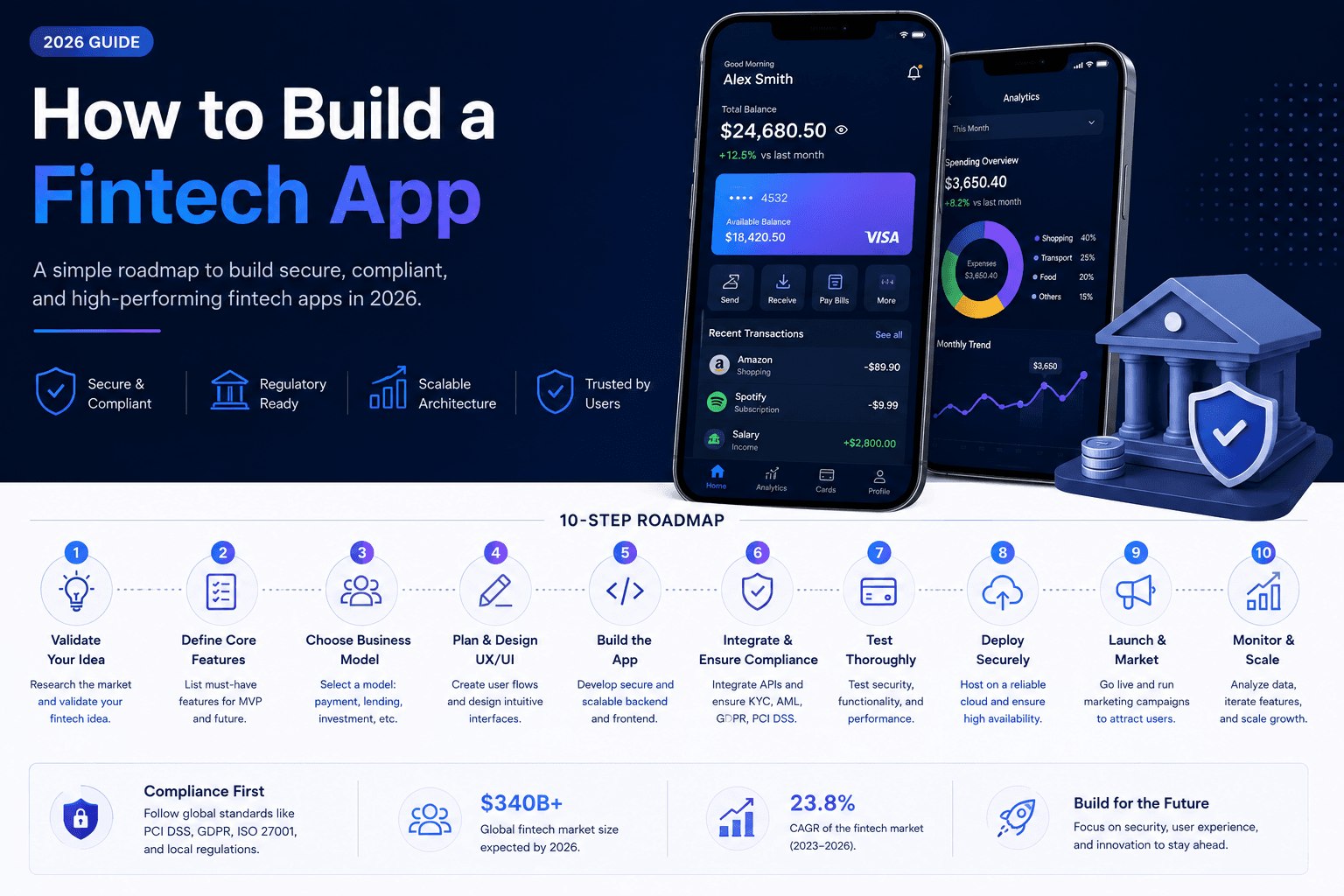
Learning how to build a fintech app requires balancing user experience expectations against the security and regulatory compliance requirements that make financial applications fundamentally different from typical consumer apps. Founders exploring fintech software development often underestimate how much compliance planning needs to happen before writing any code, not as an afterthought once the product is built. This guide walks through the core steps, from regulatory planning to security architecture, for building a fintech app that can actually launch and operate legally.
Step 1: Understand Your Regulatory Requirements
Financial applications operate under significant regulatory oversight that varies by specific service type and target jurisdiction, making this the essential first step before any technical planning.
Identify Applicable Licensing Requirements
Different fintech services — payments, lending, investing — face different licensing requirements that vary significantly by country and sometimes by state or region within a country.
Consult Legal Counsel Early
Given how significantly regulatory requirements affect technical architecture, involving legal counsel with fintech experience early in planning avoids costly rework after discovering compliance gaps later.
Plan for Multi-Jurisdiction Complexity
If you plan to operate across multiple countries or regions, understand that compliance requirements will differ by jurisdiction, potentially requiring different features or processes in different markets.
Step 2: Define Your Core Feature Set
Fintech apps span a wide range of specific service types, each with distinct core functionality requirements.
Account & Identity Verification (KYC)
Most fintech apps require identity verification during onboarding to meet anti-money-laundering and know-your-customer regulatory requirements before users can transact.
Core Transaction Functionality
Define exactly what financial actions your app enables, whether that’s payments, transfers, investing, or lending, since this core functionality shapes most other technical decisions.
Security & Fraud Detection
Given the direct financial risk involved, fraud detection and transaction monitoring need to be built into the core architecture, not added as an afterthought.
Step 3: Build Security Into the Architecture From Day One
Security in fintech applications isn’t a feature to add later; it needs to be foundational to how the entire system is architected.
Encryption for Data at Rest and in Transit
All sensitive financial and personal data needs proper encryption both when stored and when transmitted, protecting information even if other defenses are compromised.
Multi-Factor Authentication
Strong authentication requirements, typically including multi-factor authentication, are standard expectations for fintech apps given the direct financial risk of account compromise.
Audit Trails & Compliance Logging
Comprehensive logging of financial transactions and account changes is typically required for regulatory compliance and is essential for investigating any disputes or suspected fraud.
Step 4: Choose the Right Technical Partners & Infrastructure
Fintech apps often rely on specialized third-party services rather than building every component from scratch.
Banking & Payment Infrastructure Partners
Most fintech apps partner with licensed banking or payment infrastructure providers rather than obtaining banking licenses directly, significantly simplifying certain compliance obligations.
Identity Verification Services
Third-party identity verification services handle the KYC process efficiently, reducing the custom development work required for this compliance-critical function.
Security & Compliance-Focused Development Partners
Working with a development team experienced specifically in fintech compliance requirements reduces the risk of building security or compliance gaps into your application’s foundation.
Step 5: Plan for Ongoing Compliance & Security
Fintech compliance isn’t a one-time launch consideration; it requires ongoing attention as regulations evolve.
Monitor Regulatory Changes
Financial regulations change over time, requiring ongoing monitoring and potential application updates to remain compliant as requirements evolve in your operating jurisdictions.
Regular Security Audits
Periodic security audits and penetration testing help catch vulnerabilities before they’re exploited, an ongoing practice rather than a one-time pre-launch checkbox.
FAQs
Do I need a banking license to build a fintech app?
Most fintech startups partner with licensed banking or payment infrastructure providers rather than obtaining banking licenses directly, though specific requirements depend on exactly which financial services you’re offering.
How long does it take to build a compliant fintech app?
Timeline varies significantly based on regulatory complexity and feature scope, but fintech apps generally take longer than comparable non-financial apps due to additional compliance and security requirements.
What’s the biggest mistake founders make building fintech apps?
Treating compliance and security as something to address after building core features, rather than architecting the entire application around these requirements from the very start.
Can I launch in one country first and expand later?
Yes, many fintech companies launch in a single jurisdiction to manage regulatory complexity, expanding to additional markets once the core product and compliance processes are proven.
Do fintech apps need different security than typical consumer apps?
Yes, the direct financial risk and regulatory scrutiny fintech apps face generally requires more rigorous security practices than typical consumer apps without financial transaction capabilities.
Should I build KYC verification myself, or use a third-party service?
Most fintech companies use established third-party identity verification services rather than building this compliance-critical function from scratch, since specialized providers handle the regulatory nuance more reliably.