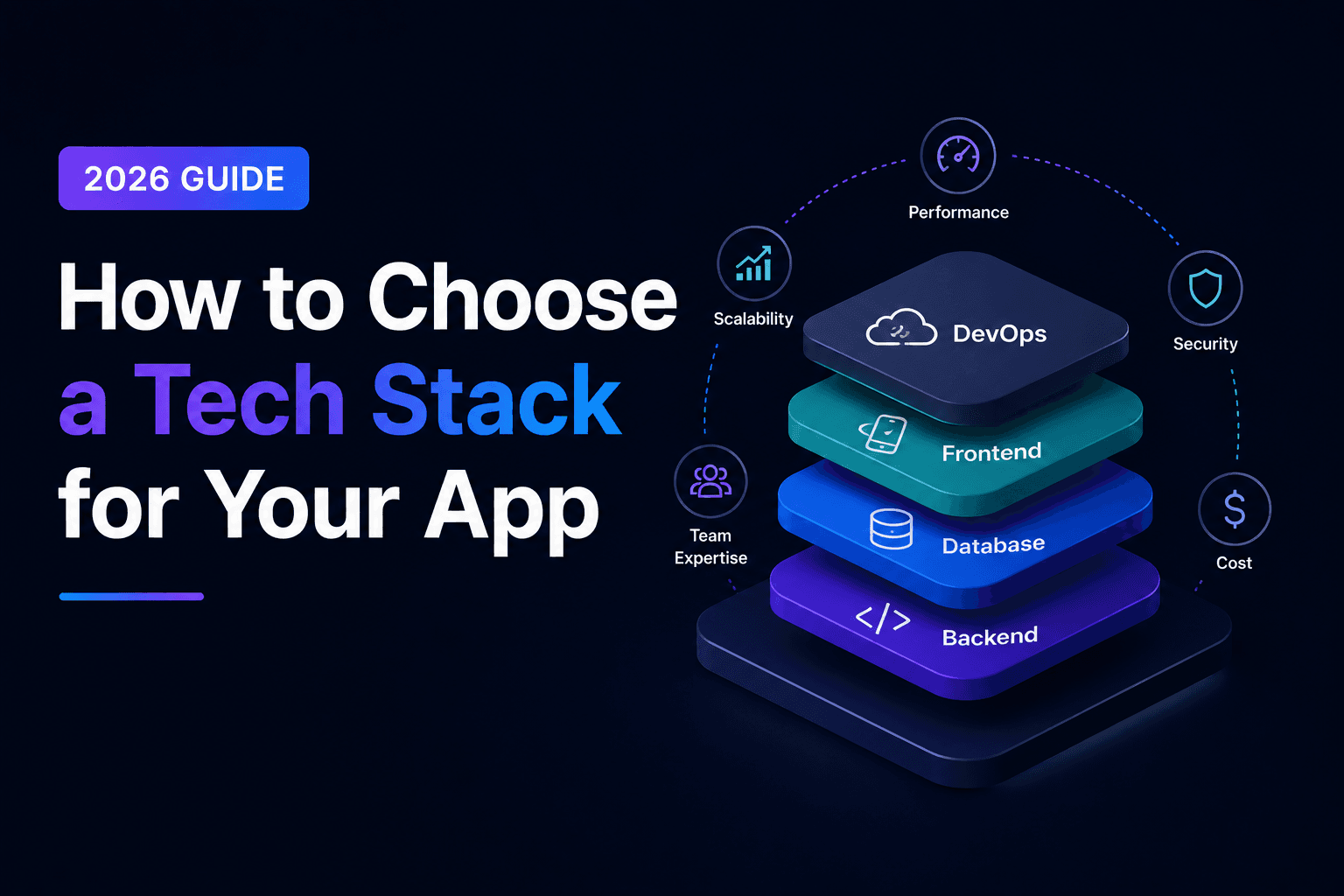
Learning how to choose a tech stack for a new app isn’t about picking whatever’s currently trending, but working through a decision framework that weighs your specific project needs, team capability, and long-term maintainability. Founders exploring software development often ask which stack is “best,” when the more useful question is which stack fits their specific constraints. This guide walks through a practical decision framework for choosing the right technology for your project, rather than listing every possible stack option.
Step 1: Define Your Project’s Core Technical Requirements
Before comparing specific technologies, get clear on what your project actually needs technically, since this shapes which stacks are even reasonable candidates.
Performance & Scale Requirements
Understand whether your application has genuinely demanding performance requirements, since many projects don’t need the highest-performance option and can prioritize other factors instead.
Platform Requirements
Clarify whether you need native mobile apps, cross-platform mobile, web only, or some combination, since this significantly narrows relevant technology choices from the start.
Integration & Ecosystem Needs
Consider what third-party services or existing systems your application needs to integrate with, since some stacks have more mature tooling for specific integration needs than others.
Step 2: Weigh Team & Talent Availability
The best technology on paper isn’t the best choice if you can’t find or afford developers who know it well.
Consider Your Existing Team’s Expertise
If you have an existing development team, their current expertise often makes the most practical starting point, since learning curves add real time and risk to a project timeline.
Evaluate Talent Pool Size for Hiring
For technologies where you’ll need to hire, consider how large and accessible the talent pool is, since niche technologies can create hiring bottlenecks and cost premiums later.
Account for Long-Term Maintenance Staffing
Think beyond initial development to who will maintain the application long-term, since some technology choices make it easier to find maintenance talent than others.
Step 3: Evaluate Trade-offs, Not Just Strengths
Every technology choice involves trade-offs, and understanding these honestly leads to better decisions than only considering advertised strengths.
Development Speed vs. Long-Term Flexibility
Some technologies optimize for fast initial development but can become more rigid later, while others require more upfront investment but offer more flexibility as requirements evolve.
Popularity vs. Fit for Your Specific Use Case
A widely popular technology isn’t automatically the right choice if it doesn’t fit your specific technical requirements well, even though popularity does correlate with better tooling and community support.
Cost Considerations Beyond Developer Rates
Consider infrastructure costs, licensing fees, and third-party service costs associated with different stack choices, not just developer availability and rates.
Step 4: Consider Your Growth Trajectory
Your tech stack choice should account for where your project is headed, not just its current state.
Avoid Over-Engineering for Hypothetical Scale
Choosing an unnecessarily complex stack to handle scale you may never reach often slows initial development without providing genuine benefit if that scale never materializes.
Ensure Reasonable Migration Paths Exist
If there’s a real chance you’ll need to migrate or significantly extend the stack later, consider whether reasonable migration paths exist rather than choosing something that locks you in completely.
Step 5: Validate Your Choice With a Small Proof of Concept
Before committing fully, testing your stack choice on a small scale can reveal issues that theoretical evaluation misses.
Build a Focused Technical Spike
A small proof-of-concept implementation of your core technical challenge can validate whether your chosen stack actually handles your specific requirements well before full commitment.
FAQs
Is there one “best” tech stack for every app?
No, the right stack depends heavily on your specific requirements, team expertise, and growth trajectory; what works well for one project may be a poor fit for another with different needs.
Should I choose based on what’s currently trending in tech?
Not primarily; while popular technologies often have better tooling and talent availability, fit for your specific project requirements matters more than following trends.
How much should team expertise influence the decision?
Significantly; using technology your team already knows well often outweighs marginal technical advantages of an unfamiliar stack, since learning curves add real project risk and time.
Can I switch tech stacks later if I choose wrong?
Yes, though migration is costly and disruptive, making it worth investing real thought in the initial decision rather than assuming an easy switch later if needed.
Does choosing a more complex, scalable stack always make sense for a new project?
No, over-engineering for scale you may never reach often slows initial development unnecessarily; it’s usually better to start reasonably simple and evolve as genuine scaling needs emerge.
Where can I get a more tailored recommendation for my specific project?
Our tech stack selector tool can help narrow options based on your specific project details, and our team can provide a more detailed recommendation after understanding your full requirements.