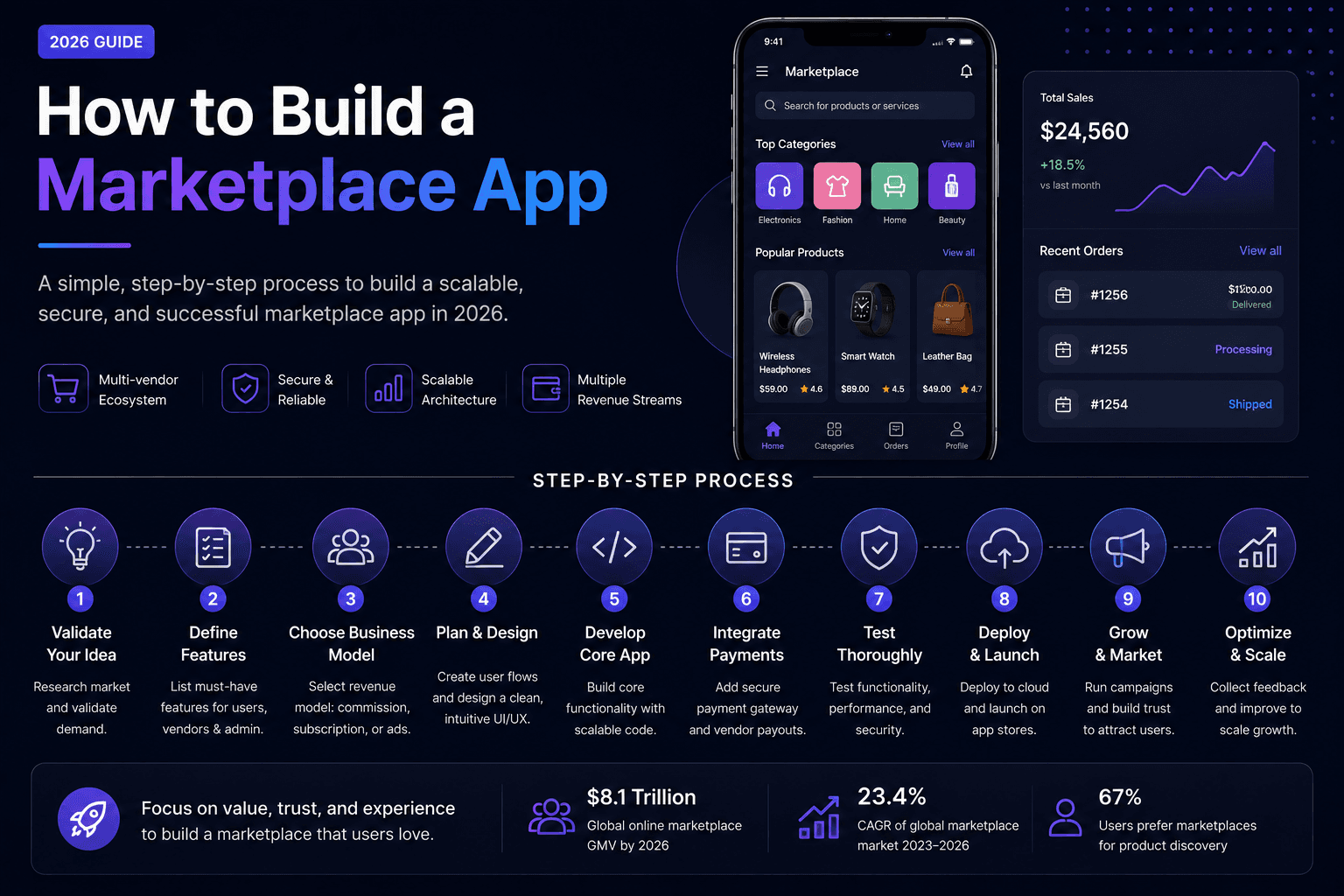
Learning how to build a marketplace app starts with understanding that you’re really building two connected products at once — an experience for sellers and an experience for buyers — that need to work together seamlessly to create a functioning transaction loop. Founders exploring app like Fiverr development or similar marketplace concepts often underestimate how much the trust and payment layer matters compared to the listings interface alone. This guide walks through the core steps, from validating demand to launching your two-sided platform.
Step 1: Validate Demand Before Building
Marketplaces face a unique chicken-and-egg problem: you need both buyers and sellers for the platform to have value, making early demand validation especially important before investing in a full build.
Identify Your Initial Supply Side
Before building anything, identify whether you can realistically attract an initial group of sellers or providers, since a marketplace with no supply has nothing for buyers to browse.
Validate Buyer Demand Independently
Talk to potential buyers directly to understand whether the problem you’re solving is genuinely painful enough that they’d switch from their current solution to use your marketplace.
Consider a Manual, Pre-Platform Test
Some successful marketplaces started by manually matching buyers and sellers before building any software, validating the core value proposition before investing in technology.
Step 2: Define Your Core Feature Set
A marketplace MVP needs specific core features to function, even in a minimal form, though many advanced features can wait for later phases.
Listings & Search
Sellers need a way to create listings, and buyers need search and browsing functionality to find relevant options, forming the foundational discovery mechanism of any marketplace.
Communication Between Parties
Buyers and sellers need a way to communicate, whether through in-app messaging or simply facilitated contact information exchange, to coordinate transaction details.
Payment Processing
Decide early whether you’ll process payments directly through the platform, use escrow for added trust, or simply facilitate contact and let payment happen externally initially.
Trust & Review Mechanisms
Even a basic review system tied to completed transactions helps establish the trust necessary for strangers to transact confidently through your platform.
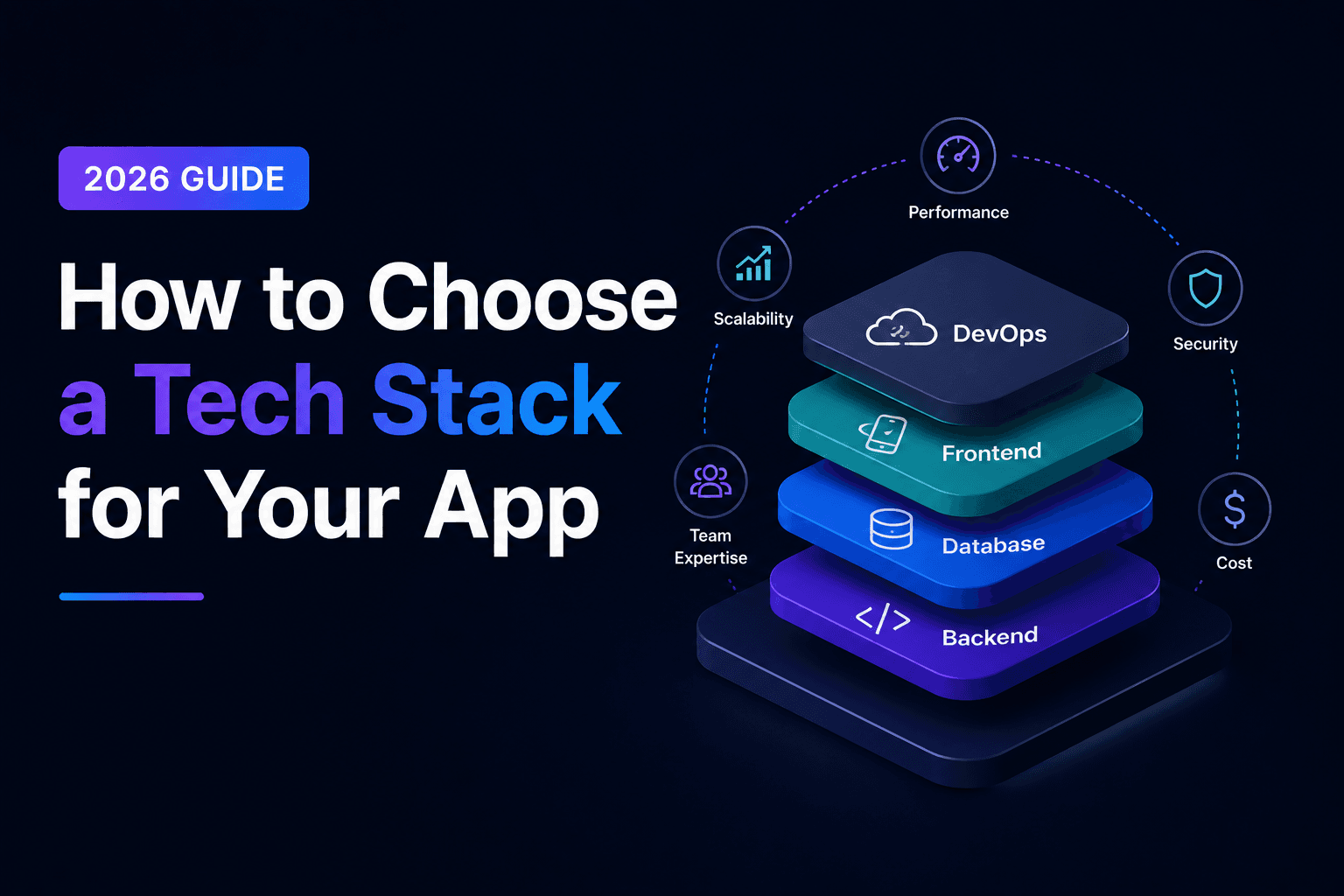
Step 3: Choose Your Technical Approach
Technical decisions at this stage significantly affect both initial cost and how easily the platform can scale later.
Web-First vs. Mobile-First
Many successful marketplaces launched web-first to validate demand before investing in dedicated mobile apps, which can reduce initial development cost and complexity.
Build vs. Marketplace Platform Templates
Consider whether existing marketplace platform templates might accelerate your launch, versus custom development that offers more flexibility for your specific transaction model.
Plan for Two-Sided Scalability
Even in your MVP, architect your backend with the two-sided nature of marketplaces in mind, avoiding technical shortcuts that would require a costly rebuild as you scale.
Step 4: Launch & Solve the Chicken-and-Egg Problem
Getting both sides of your marketplace active simultaneously is often the hardest part of a successful launch.
Seed Supply Before Driving Demand
Focus initial efforts on building a critical mass of sellers or listings before heavily marketing to buyers, since buyers arriving to an empty marketplace will quickly leave and not return.
Consider Geographic or Niche Focus
Launching in a narrow geographic area or niche category first, rather than trying to serve everyone everywhere immediately, makes it easier to achieve enough density for the marketplace to feel active.
Incentivize Early Adopters on Both Sides
Early incentives for both initial sellers and buyers can help overcome the natural hesitation of being among the first users on a new, unproven platform.
Step 5: Iterate Based on Real Transaction Data
Once live, real usage data reveals far more about what your marketplace actually needs than pre-launch assumptions did.
Monitor Transaction Completion Rates
Track how many browsing sessions actually convert to completed transactions, since this reveals friction points in your specific buyer or seller journey that need addressing.
Gather Feedback From Both Sides
Both buyers and sellers will have different pain points and feature requests, requiring you to balance sometimes-competing priorities as you plan post-launch development.
FAQs
How long does it take to launch a basic marketplace MVP?
Timeline varies based on scope, but a focused MVP with core listings, search, and basic payment or contact facilitation can often launch within a few months of starting development.
Should I charge commission from day one, or wait until I have traction?
Many successful marketplaces delay or minimize commission early to reduce friction for initial adoption, introducing or increasing fees once the platform has established genuine value for both sides.
How do I get initial sellers when there are no buyers yet?
Focus on directly recruiting sellers with a compelling pitch about future buyer access, sometimes supplementing with manual matching or incentives until the platform reaches sustainable organic activity.
Is escrow payment necessary for a marketplace MVP?
Not necessarily at the very earliest stage, though it generally increases trust and transaction completion rates significantly once you’re ready to build the additional payment infrastructure.
What’s the biggest mistake founders make building marketplace apps?
Building too many features before validating that both sides of the marketplace genuinely want to transact through the platform, rather than starting minimal and learning from real usage.
Can a marketplace succeed without a mobile app initially?
Yes, many successful marketplaces validated demand and grew significantly using only a web platform before eventually adding dedicated mobile apps once demand justified the additional investment.