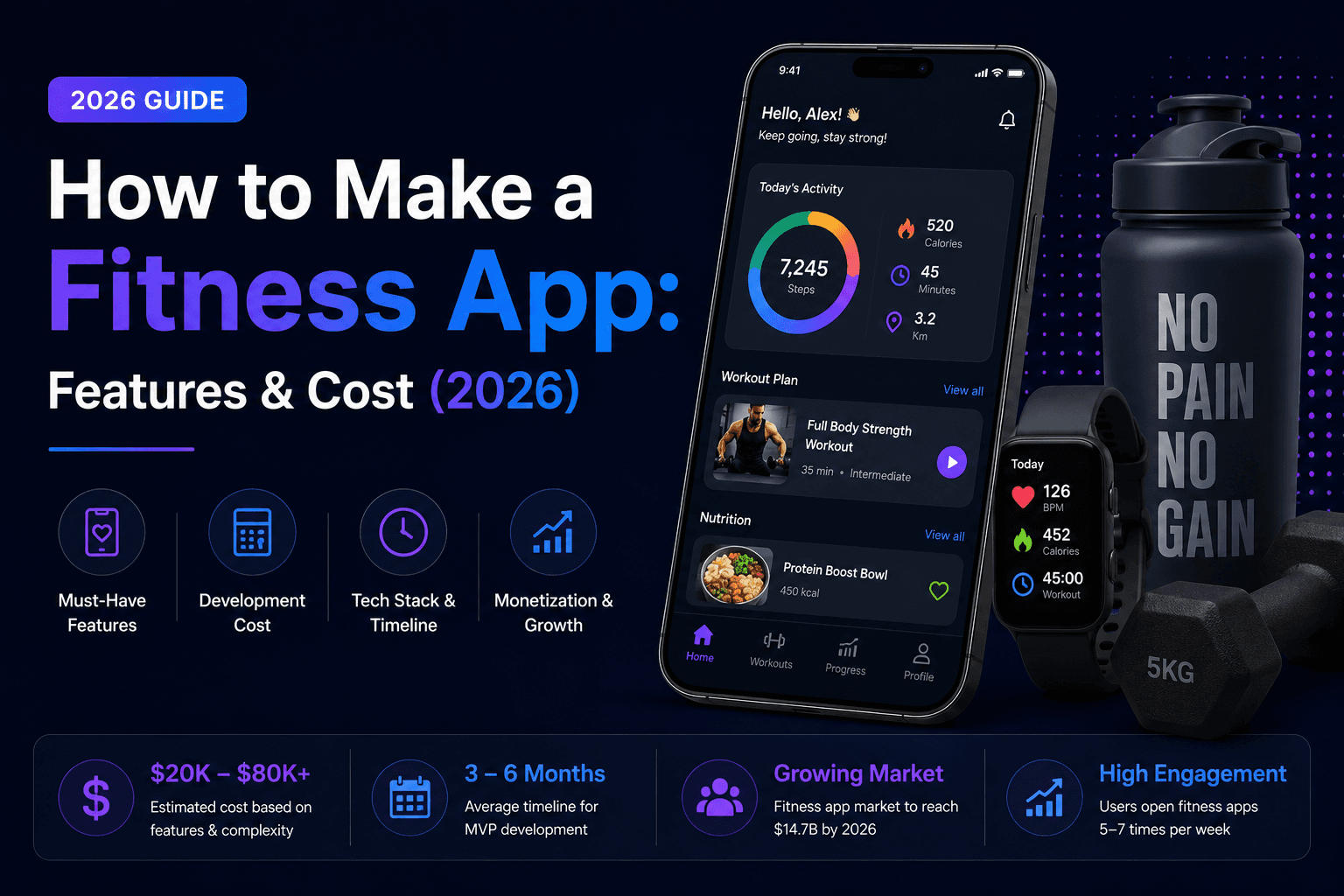
Learning how to make a fitness app that users actually stick with requires understanding which features genuinely drive engagement versus which just add development cost without meaningfully improving retention. Founders exploring fitness app development often start with an extensive feature wishlist, when the fitness apps that succeed tend to nail a few core capabilities exceptionally well rather than doing everything adequately. This guide walks through the must-have features, wearable considerations, monetization options, and cost factors for building a fitness app.
Must-Have Features for a Fitness App
Certain features form the baseline expectation for any fitness app, regardless of your specific niche or target audience.
Workout Tracking & Logging
Users need to log workouts, whether through manual entry, guided routines, or automatic tracking, forming the core data collection that powers progress visibility and motivation.
Progress Visualization
Clear visual progress tracking, whether through charts, streaks, or milestone celebrations, gives users the tangible sense of improvement that keeps them motivated to continue using the app.
Personalized Workout or Nutrition Plans
Personalization based on user goals and fitness level significantly increases relevance and adherence compared to generic, one-size-fits-all program content.
Social & Community Features
Community elements like challenges, leaderboards, or sharing achievements tap into social motivation, often driving stronger long-term engagement than purely individual tracking alone.
Wearable Device Integration
Modern fitness apps increasingly need to work seamlessly with the wearable devices users already own.
Syncing With Popular Wearables
Integration with popular fitness trackers and smartwatches lets users’ existing devices feed data automatically into your app, reducing manual logging friction significantly.
Real-Time Health Metric Tracking
For apps focused on live workout tracking, integration with wearables enables real-time heart rate, pace, or other health metrics during active workouts, a feature increasingly expected by serious fitness app users.
Balancing Integration Scope With MVP Timeline
Supporting every possible wearable device adds significant integration work, so most successful MVPs start with the most popular one or two device ecosystems before expanding further.
Monetization Models for Fitness Apps
Fitness apps use several common monetization approaches, often in combination.
Subscription-Based Premium Content
Many fitness apps use a freemium model with basic tracking free and premium workout plans, nutrition guidance, or advanced analytics behind a subscription paywall.
One-Time Program Purchases
Some fitness apps sell specific workout programs or challenges as one-time purchases, appealing to users who prefer paying for defined content rather than ongoing subscriptions.
Corporate Wellness & B2B Licensing
Fitness apps can license their platform to employers for corporate wellness programs, creating a B2B revenue stream alongside direct consumer monetization.
Cost Factors for Fitness App Development
Several factors specifically shape fitness app development cost beyond general app development considerations.
Wearable Integration Complexity
Supporting multiple wearable device ecosystems adds meaningfully to development cost compared to a fitness app that only tracks manually entered data.
Content Creation & Curation
Workout videos, nutrition content, and program design often require ongoing content investment beyond the core software development cost itself.
Personalization & Recommendation Logic
Building genuinely personalized workout or nutrition recommendations, rather than static generic content, adds development complexity that affects overall project cost. See our full app development cost breakdown for more general cost factors.
Building Your MVP Strategically
Most successful fitness apps launched with a much narrower feature set than what they eventually built.
Focus on One Core Fitness Niche First
Rather than trying to serve every fitness interest simultaneously, focusing on one specific niche, whether strength training, running, or yoga, helps create a more compelling initial product.
FAQs
What features should a fitness app MVP absolutely include?
Core workout tracking, basic progress visualization, and at minimum one form of personalization are generally considered essential even for a minimal fitness app MVP.
Do I need wearable integration for my first version?
Not necessarily; many successful fitness apps launched with manual tracking first, adding wearable integration once they’d validated core demand for their specific approach.
Which monetization model works best for fitness apps?
This depends on your specific content and audience; subscription models work well for apps with ongoing content needs, while one-time purchases suit apps built around defined programs or challenges.
How much does a basic fitness app typically cost to build?
Costs vary significantly based on personalization complexity and wearable integration scope, with a focused MVP costing meaningfully less than a full-featured platform with extensive device support.
Should my fitness app focus on one niche or try to serve everyone?
Focusing on one specific fitness niche initially generally creates a more compelling, differentiated product than trying to be a generic fitness app serving every possible interest.
How important are social features for fitness app retention?
Social and community features often meaningfully boost long-term engagement, since social accountability and friendly competition tap into motivation that purely individual tracking doesn’t provide.