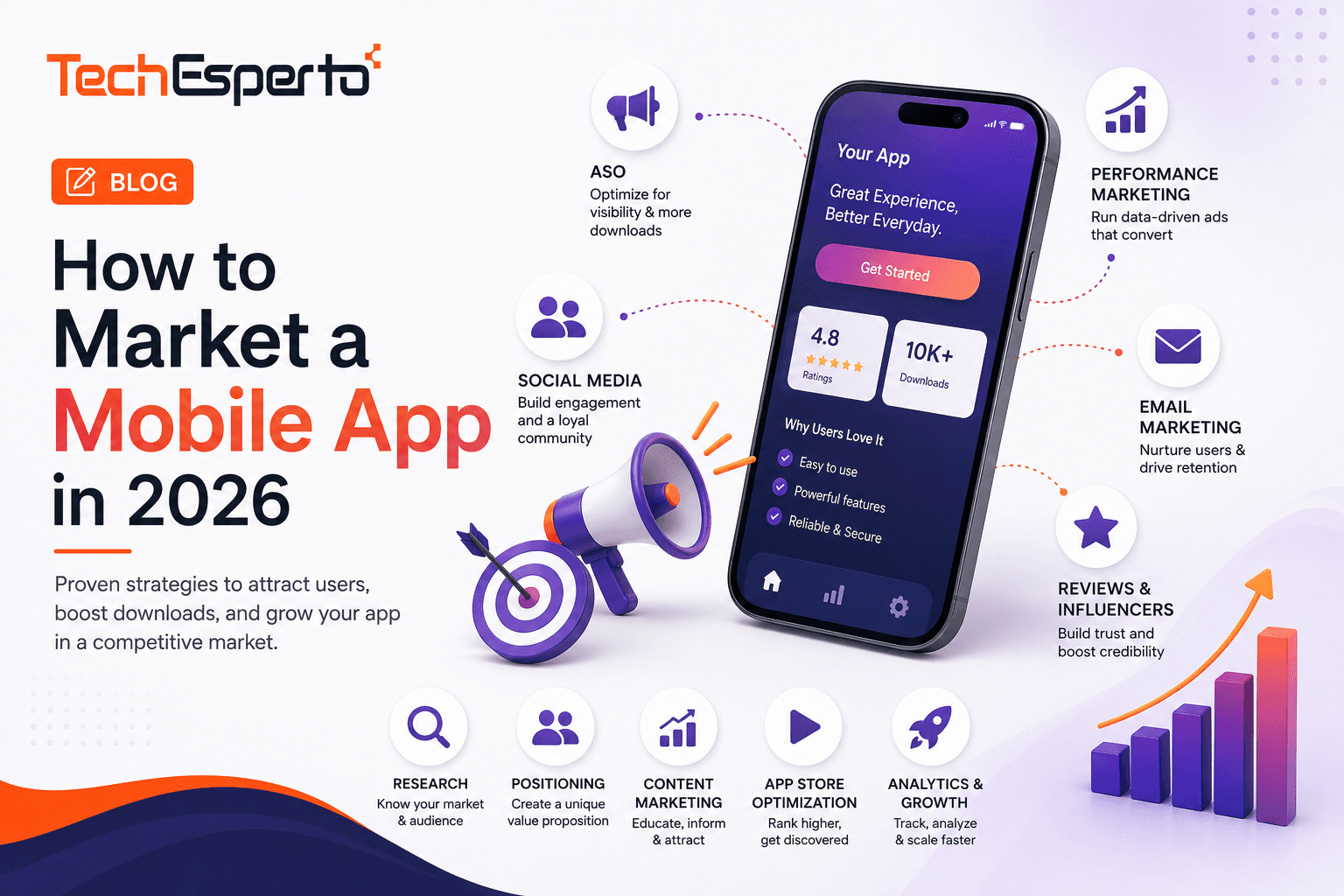
Knowing how to market a mobile app effectively starts well before launch day, since the apps that gain traction typically build awareness and an early user base during development, not after the app is already live and competing for attention in a crowded app store. App store discovery alone rarely drives meaningful growth without a deliberate marketing plan behind it. This guide walks through the practical steps that move the needle. If you’re planning a launch, our mobile app development team can help align your build timeline with your marketing plan.
Pre-Launch Marketing Foundations
The strongest app launches start building momentum before the app is even available to download, using this time to validate messaging and build an initial audience ready to convert on day one.
Build an Email List Before Launch
Capturing interested emails through a landing page before launch gives you a ready audience to notify the moment your app goes live, rather than starting from zero.
Create Content Around Your App’s Problem
Publishing content about the problem your app solves, not just the app itself, builds organic search visibility and positions you as credible before launch.
Identify and Engage Early Beta Testers
Recruiting a small group of engaged beta testers before public launch gives you real feedback and a group of advocates who can help spread initial word of mouth.
Prepare App Store Assets Thoughtfully
Screenshots, preview videos, and descriptions directly affect conversion from app store visits to downloads, so these deserve real design attention, not last-minute effort.
App Store Optimization Strategies
Once your app is live, app store optimization determines how easily potential users can find it through search within the App Store or Google Play, which remains a major discovery channel.
Research Relevant Keywords for Your App Category
Understanding what terms your target users actually search for in the app store helps you optimize your title, subtitle, and description for genuine discoverability.
Encourage Early Positive Reviews
Reviews and ratings significantly affect app store ranking and conversion, so prompting satisfied early users to leave a review matters more than it might seem.
Update Screenshots and Descriptions Regularly
Refreshing your app store listing periodically, especially after major feature updates, keeps your presentation current and can improve conversion rates over time.
Ongoing Growth & Retention Marketing
Getting the first download is only half the challenge — sustained growth depends on retention marketing that keeps existing users engaged and encourages them to bring others.
Use Push Notifications Thoughtfully
Well-timed, relevant push notifications can re-engage users effectively, but overuse quickly drives uninstalls, so frequency and relevance both matter.
Build Referral Incentives Where It Fits
If your app has a natural sharing use case, referral incentives can turn existing users into an acquisition channel, reducing dependency on paid advertising alone.
Track Retention Metrics, Not Just Downloads
Download counts alone don’t indicate success — tracking how many users remain active after a week or month reveals whether your app is actually delivering ongoing value.
FAQs
When should I start marketing my mobile app?
Ideally before launch, since building awareness and an email list during development gives you a ready audience for launch day rather than starting promotion from zero afterward.
Does app store optimization really affect downloads?
Yes, significantly. Many users discover apps through app store search, so optimizing keywords, screenshots, and descriptions directly affects how many potential users find and download your app.
How important are reviews for how to market a mobile app successfully?
Very important. Reviews affect both app store ranking algorithms and potential users’ trust when deciding whether to download, making early positive reviews a meaningful growth lever.
Should I use paid advertising to market my app?
It depends on your budget and goals — paid ads can accelerate growth but work best alongside organic strategies like app store optimization and content, not as a replacement for them.
How often should I send push notifications?
There’s no universal frequency, but notifications should be relevant and valuable to the user, since excessive or irrelevant notifications are a leading cause of app uninstalls.
What’s the biggest mistake in mobile app marketing?
Waiting until launch day to start marketing efforts is one of the most common mistakes, since it misses the opportunity to build awareness and an early audience during development.