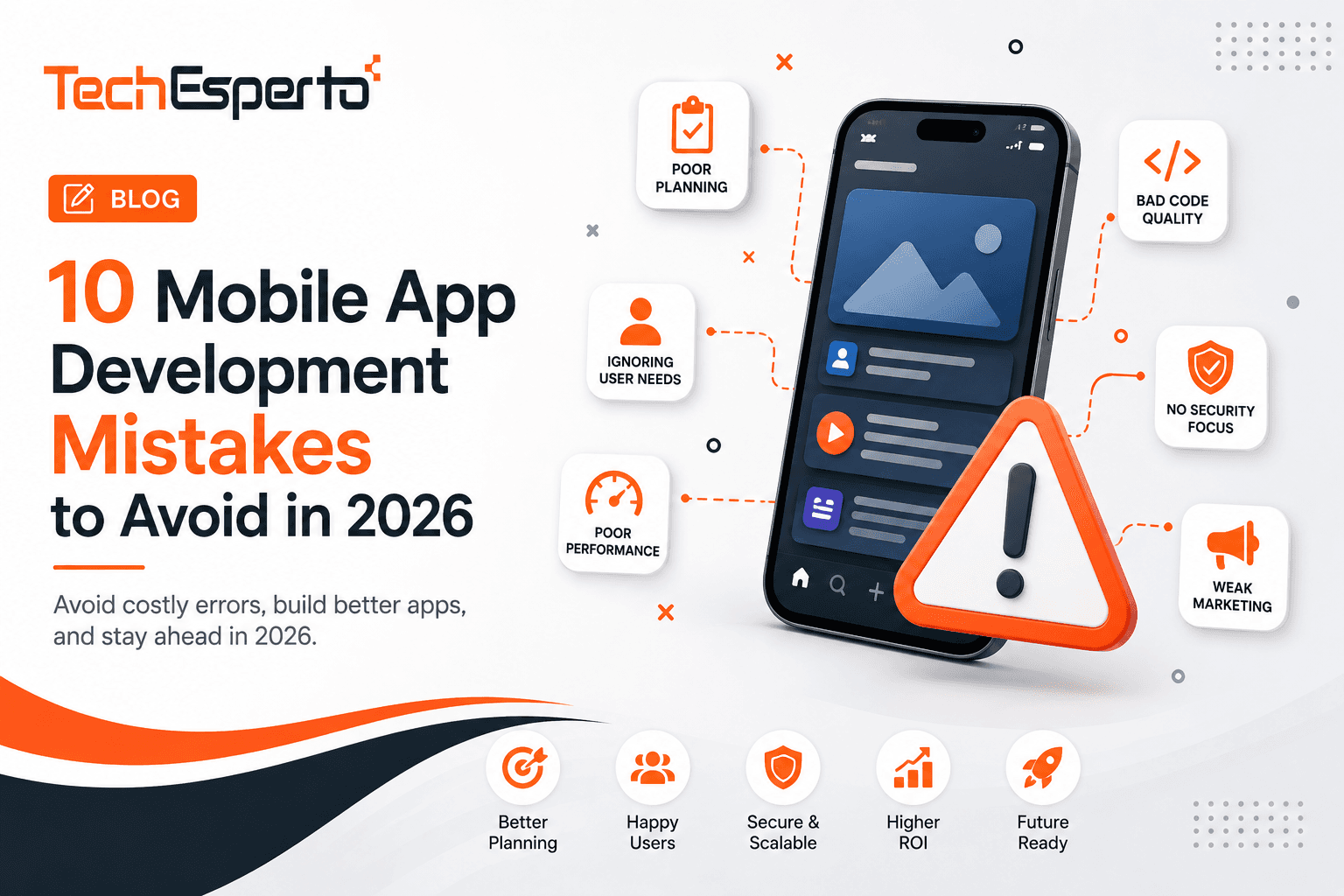
Avoiding common mobile app development mistakes can save a project months of rework and a significant chunk of budget, since most app failures trace back to a handful of recurring, avoidable errors rather than genuinely novel problems. From skipping proper planning to ignoring platform guidelines, these mistakes tend to surface late — usually after real money has already been spent. This guide walks through the ten most common mistakes we see and how to avoid each one. If you’re planning a new app, our mobile app development team can help you sidestep these pitfalls from day one.
Planning & Strategy Mistakes
Many app failures start before development even begins, when teams skip validation and planning steps in favor of jumping straight into building. These early-stage mistakes are the cheapest to fix if caught in time, but the most expensive if discovered after launch.
Skipping Market Validation Before Building
Building a full-featured app before validating real demand risks months of wasted development. Talk to potential users and test your core assumption with a lean prototype before committing to full development.
Underestimating Timeline and Budget
Unrealistic timelines lead to rushed decisions and cut corners. Build in buffer time for testing, app store review, and the inevitable scope adjustments that come up during development.
Ignoring Platform-Specific Guidelines
Apple and Google have distinct design and functional guidelines, and ignoring them risks App Store or Google Play rejection late in the process, costing valuable launch time.
Not Defining Success Metrics Upfront
Without clear metrics for what success looks like, teams struggle to evaluate whether the app is actually working after launch, making it hard to prioritize future improvements.
Design & Development Mistakes
Once planning is solid, execution mistakes during design and development are the next common failure point, often stemming from prioritizing speed over sustainable technical and design decisions.
Overcomplicating the User Interface
Cramming too many features into a single screen overwhelms users. Focus each screen on one primary task, moving secondary actions to secondary screens or menus.
Neglecting Performance Optimization
Slow load times and laggy interactions drive users to abandon an app quickly. Test performance on real, older devices, not just the newest flagship phones your team uses.
Building for One Platform Only Without a Plan
Launching iOS-only or Android-only without a clear plan for the other platform can leave significant market opportunity on the table depending on your target audience’s device preferences.
Skipping Proper QA Testing
Insufficient testing before launch means users discover your bugs instead of your QA team. Budget real time for both automated and manual testing across a range of devices.
Launch & Post-Launch Mistakes
Even a well-built app can underperform if launch and post-launch activities are treated as an afterthought rather than a planned phase of the project.
Treating Launch as the Finish Line
Many teams stop investing after launch, missing the ongoing updates and bug fixes needed to keep an app competitive and functional as devices and OS versions evolve.
Ignoring User Feedback After Launch
Early user reviews and support tickets contain valuable signal about what’s actually broken or confusing. Build a process for reviewing and acting on this feedback regularly.
FAQs
What’s the most common mobile app development mistake?
Skipping market validation before building is one of the most common and costly mistakes, since it risks months of development on an app that doesn’t actually solve a real user problem.
How can I avoid budget overruns during app development?
Build realistic timeline buffers into your plan, get detailed estimates upfront, and maintain open communication with your development team about scope changes as they arise.
Do mobile app development mistakes happen more often with in-house teams or agencies?
Mistakes can happen with either, though experienced agencies with a track record of shipped apps often have processes in place specifically designed to catch these common issues earlier.
How much testing is enough before launching an app?
There’s no universal number, but testing should cover core user flows across a range of real devices, including older and lower-spec models, not just your team’s newest test devices.
Is it a mistake to launch on only one platform first?
Not necessarily — many successful apps launch on one platform to validate demand before expanding. The mistake is not having a clear plan or timeline for the second platform.
How do I know if my app idea needs more validation before building?
If you can’t clearly articulate the specific problem your app solves and haven’t talked to potential users about it, that’s a sign more validation is needed before committing to full development.