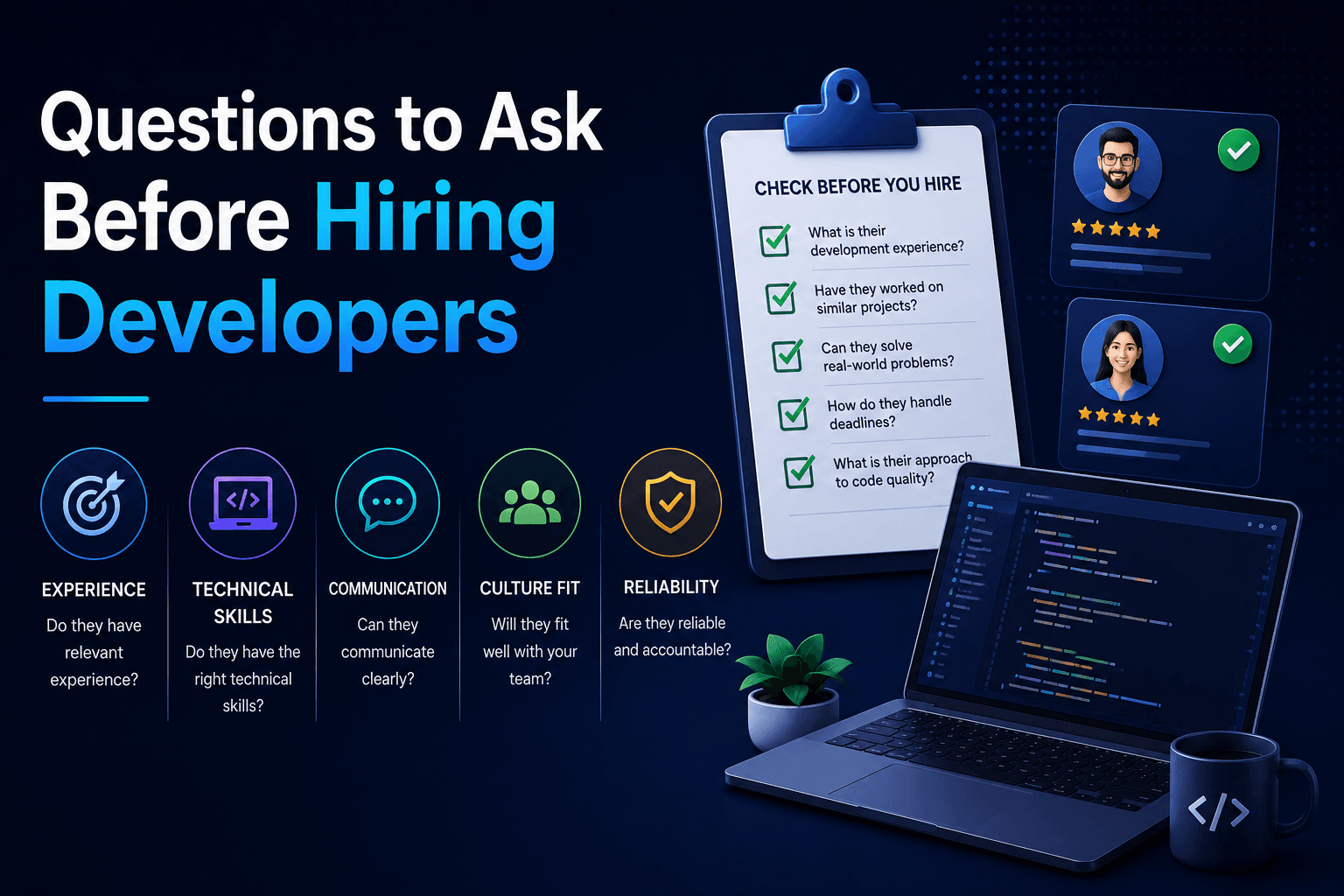
Knowing the right questions to ask before hiring developers, whether an individual freelancer, a dedicated team, or an outsourcing partner, matters more than most people realize, since the quality of the answers reveals far more about likely fit than a resume, portfolio link, or sales pitch alone. Many hiring decisions go wrong not because the wrong information was unavailable, but because the right questions were never asked clearly enough to surface it before committing. This post covers the specific questions worth asking before hiring developers, organized around what each answer actually reveals.
Questions About Relevant Experience
These questions dig into whether a candidate’s experience genuinely matches what your project needs.
“Can you describe a project similar to mine that you’ve completed?”
This question reveals whether the candidate has genuinely relevant experience, rather than general skills that may not translate directly to your specific project’s complexity or category.
“What was the biggest technical challenge on that project, and how did you solve it?”
The specificity and depth of this answer reveals real, hands-on problem-solving experience versus a surface-level or rehearsed description of a project they may have only peripherally worked on.
“What would you do differently if you built that project again?”
Candidates with genuine experience and reflective judgment usually have specific, thoughtful answers here, while vague or defensive responses can be a signal worth taking note of.
Questions About Technical Approach
These questions reveal how a candidate actually thinks about building software, not just what technologies they know.
“How do you approach testing and quality assurance?”
A candidate’s answer here reveals whether quality is a deliberate, built-in part of their process or an afterthought handled inconsistently, which directly affects the reliability of what gets delivered.
“How do you handle a situation where requirements are unclear or change mid-project?”
This question reveals how a candidate handles the ambiguity and change that’s common in real projects, rather than assuming every project proceeds exactly as initially planned.
“What’s your approach to documentation and knowledge transfer?”
Especially relevant for longer-term engagements, this reveals whether a candidate thinks about maintainability and continuity beyond just getting the immediate task done.
Questions About Communication and Availability
These questions clarify what day-to-day collaboration will actually look like.
“What does your typical communication cadence look like during a project?”
This clarifies expectations upfront around how often you’ll hear from the developer or team, avoiding a mismatch between your expectations and their default working style.
“How do you handle situations where you’re blocked or need clarification?”
The answer reveals whether a candidate proactively communicates when stuck, versus silently working on an incorrect assumption until a scheduled check-in reveals the problem.
“What’s your availability and how do you handle time zone differences, if applicable?”
For remote or distributed engagements, this clarifies practical logistics that directly affect how smoothly day-to-day collaboration will actually work.
Questions About Engagement Structure
These questions clarify the practical and financial mechanics of working together.
“How is pricing structured, and what’s included versus billed separately?”
Getting clarity here upfront avoids surprising costs partway through a project, since some quotes include project management and quality assurance while others cover only individual development time.
“What happens if I need to change scope partway through?”
Understanding how scope changes are handled, both practically and financially, before they come up helps set realistic expectations rather than discovering the process during an actual disagreement.
“Can I speak with a past client as a reference?”
A candidate’s willingness to connect you with genuine past clients, and what those clients say, provides some of the most reliable evidence available about real-world working experience.
Using These Questions Well
The value of these questions comes from paying close attention to the specificity and honesty of the answers, not just confirming that an answer was given, since vague or evasive responses are often as informative as detailed, confident ones. Our dedicated development team approach is built around transparent answers to exactly these kinds of questions, since we believe informed hiring decisions lead to better long-term working relationships.
Key Takeaways
Questions about relevant experience should probe for specific, reflective answers rather than general or rehearsed descriptions of past work. Questions about technical approach, testing, handling changing requirements, documentation, reveal how a candidate actually builds software, not just what they know. Communication and availability questions clarify practical expectations upfront, avoiding mismatches discovered only after work has begun, and questions about engagement structure and references protect against surprising costs and provide real evidence of past working relationships.
Frequently Asked Questions
How many of these questions should I ask during an initial conversation?
Prioritizing questions most relevant to your specific concerns and project type is more useful than mechanically asking every question, since the goal is genuine insight into fit, not simply completing a checklist.
What should I do if a candidate gives vague answers to these questions?
Vague or evasive answers, particularly around technical approach or past challenges, are worth taking seriously as a signal, since candidates with genuine, relevant experience usually have specific, concrete answers readily available.
Should I ask these questions differently for a freelancer versus an outsourcing company?
The underlying questions remain relevant either way, though for a company, you might also ask how they staff projects and ensure consistency if the specific individuals working on your project change over time.
Is it reasonable to ask for references before committing to a developer or team?
Yes, this is a reasonable and common request, and a candidate’s willingness to provide references, along with what those references actually say, offers some of the most reliable evidence available about real working experience.
What’s the most revealing question on this list?
Questions asking a candidate to reflect on what they’d do differently on a past project tend to be particularly revealing, since they require genuine, specific experience and honest self-assessment that’s difficult to fake convincingly.
How do I evaluate the answers I get to these questions?
Comparing the specificity, consistency, and honesty of answers across multiple candidates gives you a much clearer picture than evaluating any single candidate’s answers in isolation, and our dedicated development team is happy to answer all of these questions directly if you’re evaluating your options.