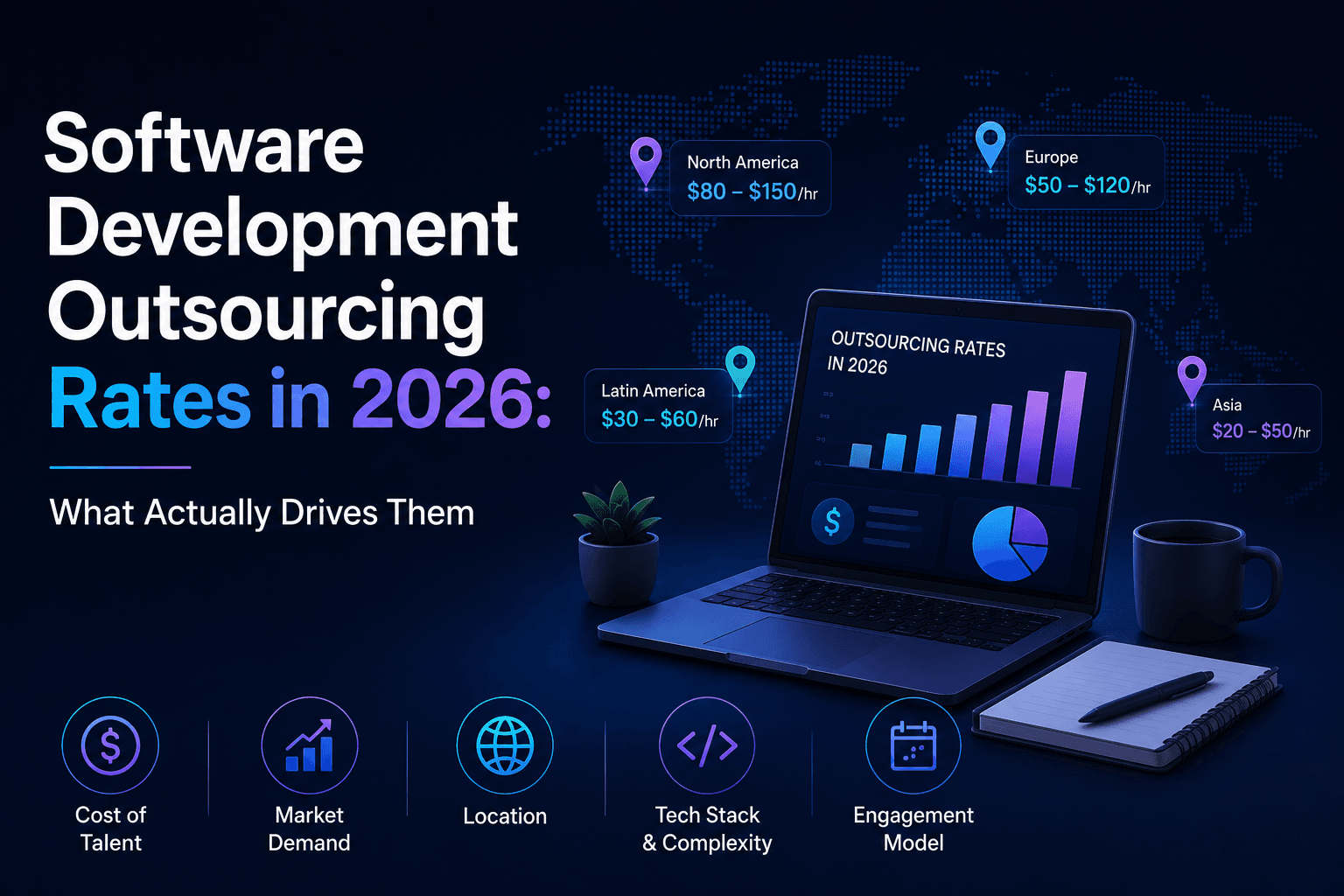
Software development outsourcing rates in 2026 vary significantly based on factors that matter more than simple regional comparisons alone, developer seniority, specialization, engagement model, and how much project management and quality assurance is bundled into the rate, which means comparing raw hourly numbers across regions or companies often misleads more than it informs. Businesses evaluating outsourcing options frequently anchor on a single rate figure without understanding what’s actually included in that number, then experience unexpected costs or quality gaps when the engagement doesn’t match their assumptions. This post covers what actually drives outsourcing rates and how to evaluate them meaningfully rather than comparing surface-level numbers alone.
What Drives Rate Differences
Understanding the specific factors behind rate variation helps you evaluate quotes meaningfully rather than comparing numbers in isolation.
Developer Seniority and Specialization
More senior developers, and those with specialized skills in areas like AI integration or complex backend architecture, command higher rates than general application developers, and this premium is often justified by faster, more reliable delivery that reduces total project cost despite the higher hourly number.
Regional Cost of Living Differences
Development rates vary meaningfully by region due to differences in local cost of living and market rates, which is why many companies work with development partners in different regions without necessarily sacrificing quality, provided communication and process are handled well.
What’s Bundled Into the Rate
A quoted rate might include only individual developer time, or it might bundle project management, quality assurance, and communication overhead, so comparing rates without understanding what’s actually included produces a misleading comparison.
Engagement Model Structure
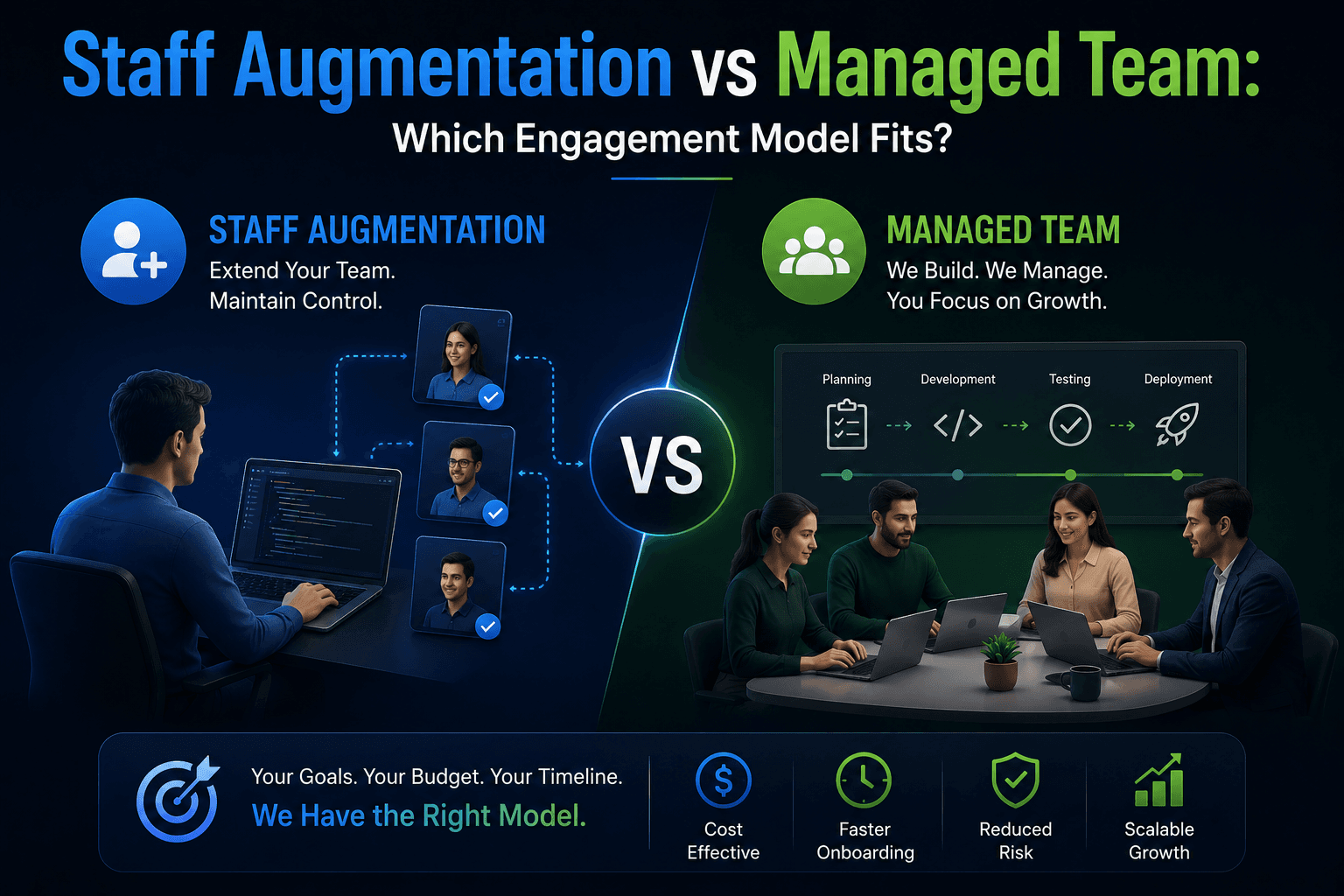
Staff augmentation, managed team, and project-based pricing structures carry different rate structures and included services, making apples-to-apples comparison difficult without understanding which specific model each quote reflects.
Evaluating Rates Beyond the Number Itself
A meaningful rate evaluation looks past the headline figure to what it actually represents.
Total Cost of Ownership, Not Just Hourly Rate
A lower hourly rate that requires more hours to complete a task, due to less experience or more required oversight, doesn’t necessarily represent lower total project cost, making total cost of ownership a more meaningful comparison than the rate alone.
Quality and Rework Risk
Lower rates sometimes correlate with less experienced teams more prone to producing work requiring significant rework, which can meaningfully increase total project cost and timeline despite an attractively low initial quote.
Communication and Coordination Overhead
Rates that don’t account for the time you’ll spend managing and coordinating with a team should factor your own time investment into the true comparison, since your time managing a lower-cost but harder-to-coordinate team carries real, if less visible, cost.
Regional Rate Patterns in 2026
While specific numbers vary and change over time, certain general regional patterns remain relevant for planning purposes.
Understanding Relative Regional Positioning
Different regions have historically positioned at different points along a cost-to-experience spectrum, though this landscape shifts over time as local talent markets mature and demand changes, making current, direct quotes more reliable than general historical assumptions.
The Risk of Outdated Rate Assumptions
Businesses often carry outdated assumptions about regional rates from years-old information, so getting current, specific quotes for your actual project matters more than relying on general reputation about where rates supposedly sit.
Getting an Accurate Rate Comparison for Your Project
The most reliable way to evaluate outsourcing rates is requesting detailed, project-specific quotes that clearly explain what’s included, rather than comparing generic hourly rate ranges across regions or companies. Our dedicated development team and engagement models pages explain how our own rate structures work, so you can evaluate them against your specific project needs.
Key Takeaways
Software development outsourcing rates in 2026 vary based on developer seniority, specialization, regional cost differences, and what services are actually bundled into the quoted rate, not a single universal number. Total cost of ownership, accounting for hours required, rework risk, and your own coordination time, is a more meaningful comparison than raw hourly rates alone. Regional rate patterns shift over time, making current, specific quotes more reliable than general or outdated assumptions about where different regions sit on a cost spectrum.
Frequently Asked Questions
Are lower outsourcing rates always a worse choice?
Not necessarily, but a lower rate should be evaluated alongside what’s included in that rate and the experience level of the team, since a lower hourly number that requires more hours or produces more rework doesn’t necessarily represent lower total project cost.
Do outsourcing rates vary significantly by developer specialization?
Yes, significantly. Developers with specialized skills in areas like AI integration or complex system architecture typically command higher rates than general application developers, reflecting the added value and often faster, more reliable delivery that specialization provides.
How do I compare rates across different engagement models fairly?
Understanding what’s specifically included in each quoted rate, whether it covers only developer time or also project management and quality assurance, is essential for a fair comparison across different engagement model structures.
Are regional rate assumptions from a few years ago still accurate?
Not necessarily. Regional talent markets and rate positioning shift over time, so relying on outdated assumptions about where a specific region sits on the cost spectrum can lead to inaccurate expectations, making current, specific quotes more reliable.
Does a higher rate always guarantee better quality?
Not automatically, though higher rates often correlate with greater experience and specialization, quality should still be evaluated through portfolio review and reference checks rather than assuming rate alone guarantees a specific quality level.
How do I get an accurate rate quote for my specific project?
Rates depend heavily on your specific project requirements, desired engagement model, and required specialization, so a general figure is only a rough guide. A detailed cost estimate scoped to your specific project is the most reliable way to plan your budget.