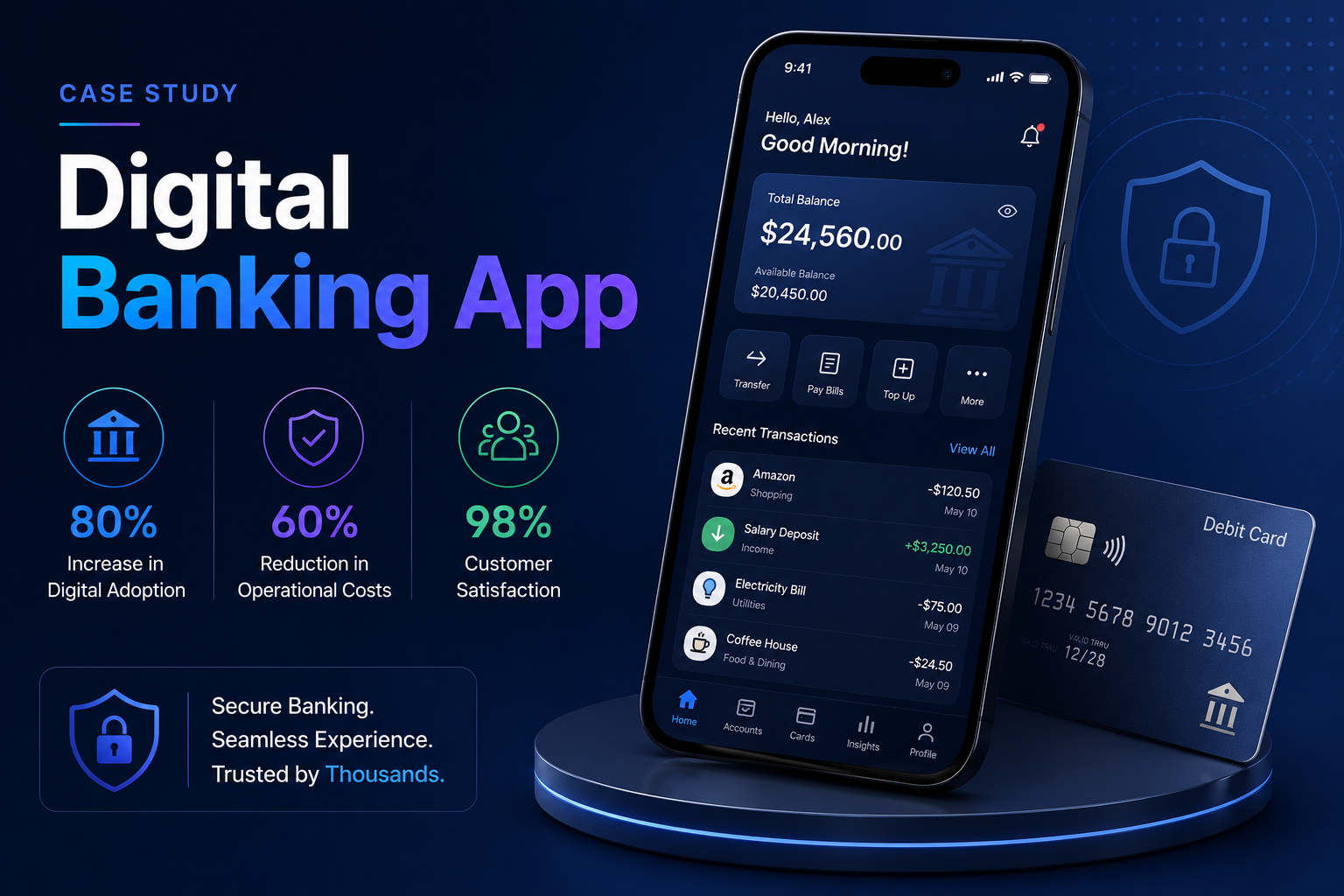
Plaid integration connects your app securely to users’ bank accounts, giving you access to balances, transactions, and account verification without handling raw banking credentials yourself. Fintech businesses building through fintech software development want more than a basic account-linking flow — they need secure token handling, transaction categorization, and compliance-ready data handling configured correctly from day one. From budgeting apps to lending platforms and payment verification, getting the integration right affects security, user trust, and regulatory compliance. This guide covers what a proper Plaid integration involves and what to expect from the process.
handles the banking complexity so your team can focus on the product experience. The sections below cover why this matters for fintech products.
A proper Plaid integration goes beyond implementing the basic Link flow. It involves handling token refresh, managing webhook events for account updates, and building fallback logic for when a bank connection breaks. The services below cover what we typically build as part of a plaid integration project.
We implement Plaid Link, the secure flow users go through to connect their bank account, ensuring a smooth experience across different banks and authentication methods.
We build sync logic that pulls transaction data reliably and categorizes it for use cases like budgeting or spending analysis, keeping data current as new transactions occur.
For lending or underwriting use cases, we implement Plaid’s identity and income verification products, streamlining the data collection needed for credit decisions.
We integrate real-time balance checks to verify sufficient funds before processing payments, reducing failed transactions for ACH or bank-transfer payment flows.
We build webhook handlers that detect when a bank connection breaks or requires re-authentication, prompting users to reconnect before your app loses access to their data.
We ensure your integration follows Plaid’s security requirements and relevant financial data regulations, keeping sensitive banking data handled appropriately throughout your system.
Plaid integrations vary significantly depending on your fintech product, and the right approach for a budgeting app looks very different from a lending platform. Understanding these use cases helps clarify what your specific plaid integration project will actually involve.
Apps helping users track spending and manage budgets need reliable transaction syncing and categorization across all of a user’s connected accounts to give an accurate financial picture.
Lenders use Plaid’s income and asset verification to speed up loan underwriting, reducing manual document collection while maintaining the data accuracy needed for credit decisions.
Payment platforms use Plaid to verify account ownership and check balances before initiating ACH transfers, reducing failed payments and fraud risk.
Investment apps use Plaid to aggregate a user’s full financial picture across banks and investment accounts, giving advisors or automated tools complete visibility for planning purposes.
Implementing Plaid correctly follows a structured path from use case definition through testing and go-live. Knowing what each phase involves helps set realistic expectations before the integration begins.
This phase clarifies which Plaid products your use case needs — account linking, transactions, identity verification, or income verification — and defines your compliance requirements.
Our engineers implement the Plaid Link flow and backend data handling, ensuring credentials and financial data are managed securely throughout the integration.
We test the integration against Plaid’s sandbox environment and a range of real institutions to catch edge cases in different banks’ authentication flows before launch.
After launch, we monitor connection reliability and webhook handling, remaining available to address broken bank connections or new compliance requirements as they arise.
Our work and story have been picked up by news outlets and databases worldwide.
As featured on
A basic account-linking integration can often be completed in a few weeks, while lending platforms using identity and income verification take longer due to additional compliance review and testing requirements.
Yes, Plaid is built specifically for secure financial data access and never exposes raw banking credentials to your application, though your own systems still need proper security practices for the data Plaid provides.
Bank connections can break due to password changes or bank-side updates, so we build webhook monitoring that detects these disconnections and prompts users to reconnect before your app loses data access.
Plaid supports thousands of institutions including many credit unions and regional banks, though coverage can vary, so it’s worth checking Plaid’s institution coverage for your specific target user base.
Requirements vary by use case and region, often including data privacy regulations and, for lending platforms, fair lending compliance, so it’s worth involving legal counsel alongside the technical integration planning.
Yes, Plaid supports both personal and business account types, though business account data often has different verification requirements that should be planned for during integration design.
Tell us what you’re building. Our team will get back to you within one business day with a clear, no-obligation plan.