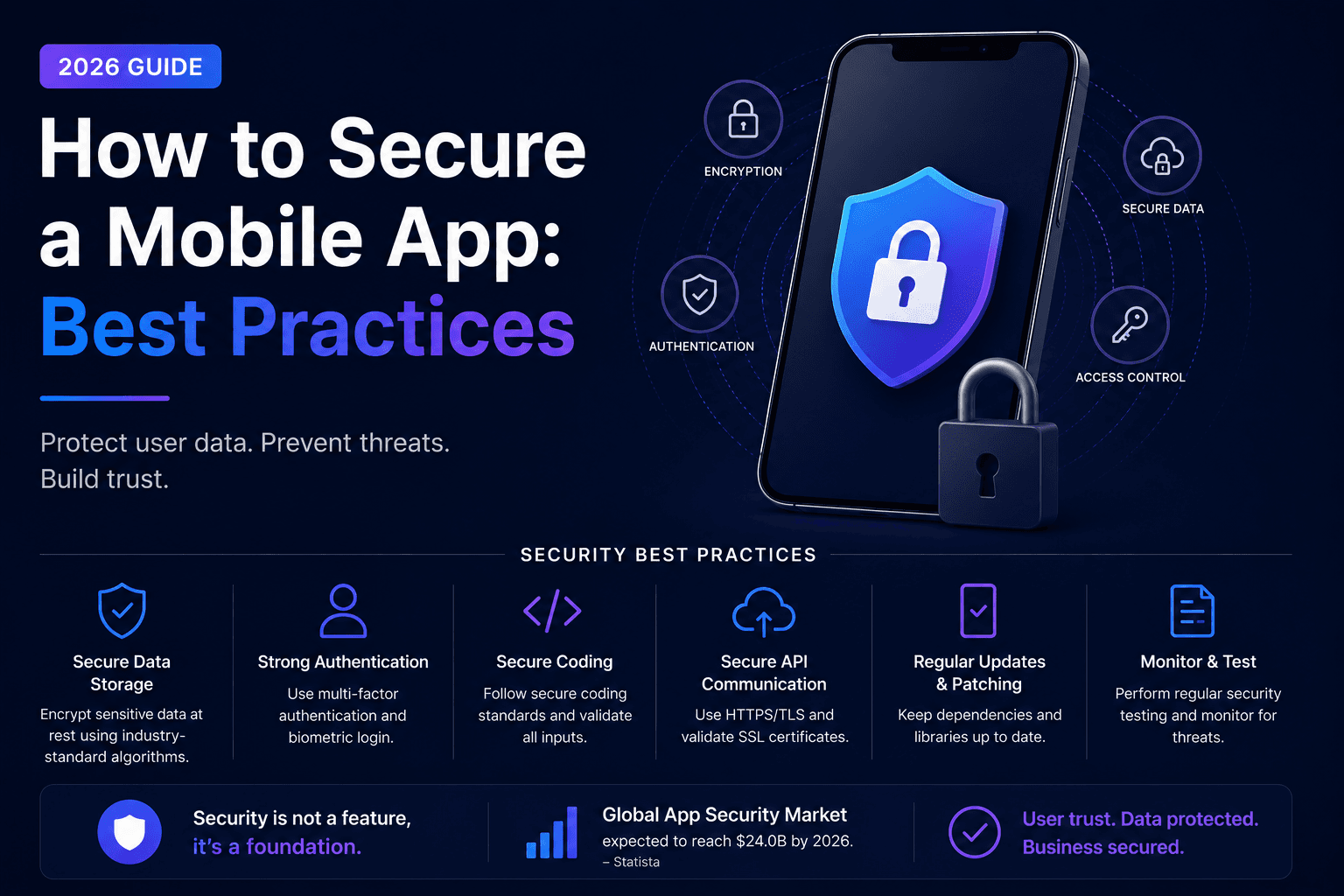
Learning how to secure a mobile app properly requires treating security as a foundational architecture decision, not a checklist item addressed right before launch. Businesses building through mobile app development increasingly handle sensitive user data, making security practices genuinely important rather than optional polish. This guide covers the core best practices that meaningfully reduce your app’s vulnerability to common attack vectors.
Data Encryption Best Practices
Protecting data both when stored and when transmitted forms a foundational security layer for any mobile app handling sensitive information.
Encrypt Data at Rest
Sensitive data stored locally on the device should be encrypted, protecting information even if the device itself is compromised or lost.
Encrypt Data in Transit
All data transmitted between the app and your servers should use proper encryption protocols, preventing interception even on untrusted networks.
Avoid Storing Sensitive Data Unnecessarily
The most secure data is data you never store in the first place; minimizing what sensitive information the app retains reduces your overall exposure if a breach does occur.
Authentication & Access Control
Strong authentication practices prevent unauthorized access even when other defenses are bypassed.
Implement Multi-Factor Authentication
Adding multi-factor authentication significantly reduces the risk of account compromise compared to relying on passwords alone, especially for apps handling sensitive data.
Use Secure Session Management
Properly implemented session tokens with appropriate expiration reduce the window of vulnerability if a session token is somehow compromised.
Apply the Principle of Least Privilege
Users and system components should only have access to the specific data and functions they genuinely need, limiting the potential damage from any single compromised credential.
Secure API & Backend Communication
Most mobile apps rely heavily on backend APIs, making secure API design essential to overall app security.
Validate All Requests Server-Side
Never trust client-side validation alone; all requests should be properly validated and authorized on the server, since client-side checks can be bypassed by a determined attacker.
Implement Proper Rate Limiting
Rate limiting on API endpoints helps prevent abuse and brute-force attacks, adding a meaningful layer of protection against automated attack attempts.
Use Certificate Pinning for Sensitive Apps
For apps handling particularly sensitive data, certificate pinning helps prevent man-in-the-middle attacks that might otherwise intercept encrypted communications.
Code-Level Security Practices
How the app itself is built affects its vulnerability to reverse engineering and code-level attacks.
Obfuscate Sensitive Code Logic
Code obfuscation makes reverse engineering more difficult, protecting proprietary logic and making it harder for attackers to find exploitable vulnerabilities through decompilation.
Avoid Hardcoding Sensitive Credentials
API keys and other sensitive credentials should never be hardcoded directly into app code, where they can be extracted relatively easily by anyone who decompiles the app.
Keep Dependencies Updated
Third-party libraries and frameworks regularly receive security patches, making it important to keep dependencies current rather than running outdated versions with known vulnerabilities.
Ongoing Security Practices
Security isn’t a one-time implementation; it requires ongoing attention as the app and threat landscape evolve.
Conduct Regular Security Audits
Periodic security audits and penetration testing help catch vulnerabilities that may have been introduced through new features or that weren’t apparent during initial development.
FAQs
Is encryption alone enough to secure a mobile app?
No, encryption is an important foundational layer, but comprehensive security also requires proper authentication, secure API design, and ongoing vigilance against emerging vulnerabilities.
How often should a mobile app undergo a security audit?
This depends on the app’s risk profile, but apps handling sensitive data generally benefit from periodic audits, especially after major feature additions or before significant compliance milestones.
Does passing App Store review guarantee my app is secure?
No, app store review processes focus primarily on policy compliance and basic functionality, not deep security vulnerability assessment, so many insecure apps pass review without issue.
What’s the most commonly overlooked mobile app security practice?
Server-side validation is frequently overlooked, with some developers relying too heavily on client-side checks that a determined attacker can bypass entirely.
Can security be added to an app after it’s already built?
Yes, though it’s generally easier and more effective to build security in from the architecture stage rather than retrofitting it later, since some security issues stem from fundamental design decisions.
Do small apps with few users still need strong security practices?
Yes, app popularity doesn’t determine attacker interest, and any app handling personal or financial data carries genuine risk regardless of current user base size.