Choosing the right SaaS pricing model shapes everything from your revenue predictability to how naturally your product scales with customer growth, making it one of the most consequential early decisions for any SaaS business. Founders working through SaaS development often default to a per-seat model without considering whether usage-based or tiered pricing might align better with how customers actually derive value from their product. This guide breaks down the main pricing models and how to think through choosing the right one.
The Main SaaS Pricing Models
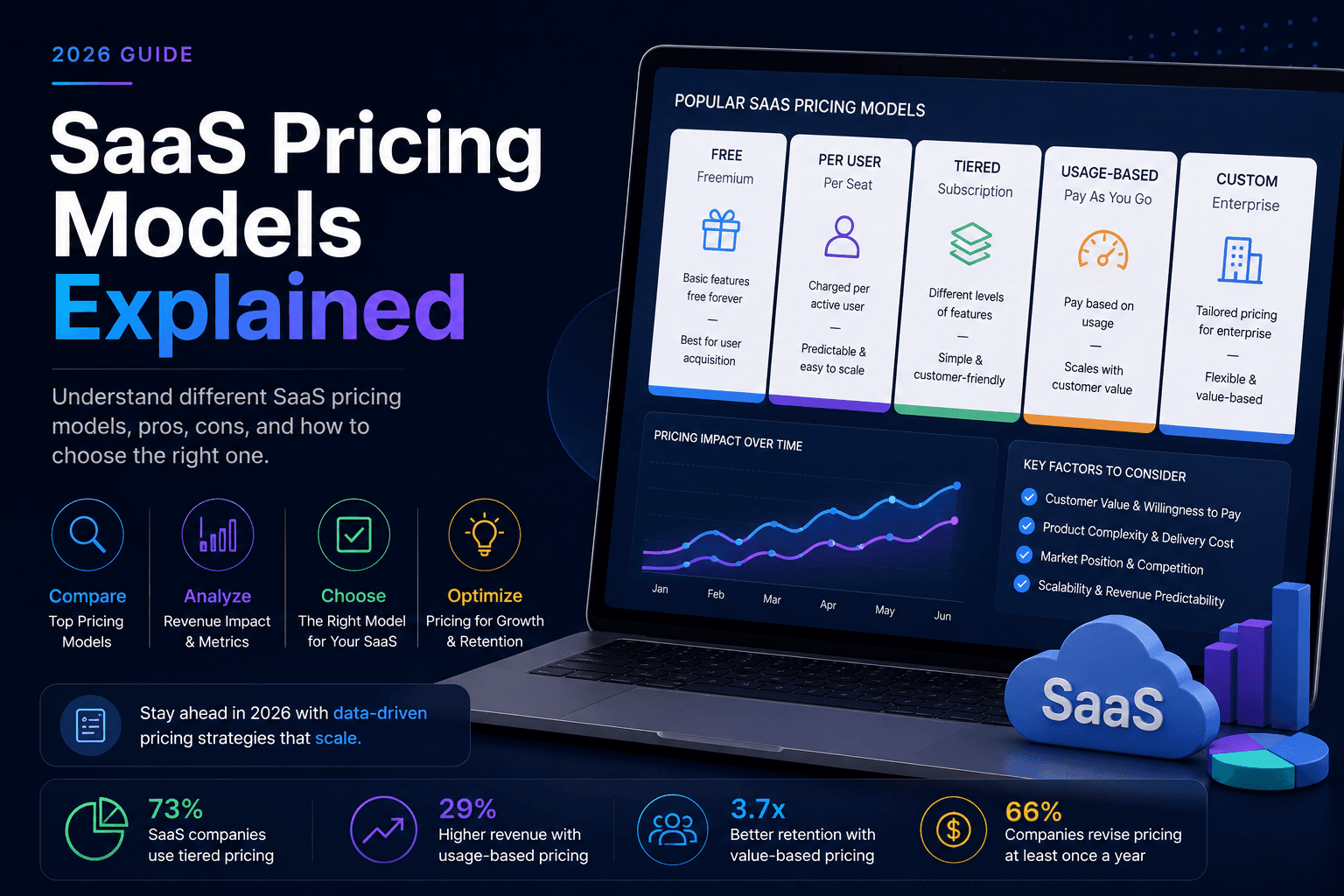
Each pricing model aligns revenue with a different measure of value, and understanding these differences helps clarify which approach fits your specific product and customer base.
Per-Seat (Per-User) Pricing
Per-seat pricing charges based on the number of users accessing the platform, working well for collaboration tools where value scales directly with team size and adoption.
Usage-Based Pricing
Usage-based pricing charges based on actual consumption, like API calls or data processed, aligning cost directly with value delivered but creating less predictable revenue for the business.
Tiered Pricing
Tiered pricing offers distinct feature packages at different price points, letting customers self-select based on their needs while creating natural upgrade paths as customer requirements grow.
Freemium Pricing
Freemium pricing offers a free tier with limited functionality, using the free product as an acquisition channel while converting a percentage of free users to paid plans over time.
How to Choose the Right Model for Your Product
The right pricing model depends on how your product delivers value and how your target customers prefer to buy, not simply following whatever model is currently trendy.
Consider How Value Scales With Usage
If your product’s value clearly scales with usage volume, usage-based pricing often makes more intuitive sense to customers than a flat per-seat fee that doesn’t reflect their actual consumption.
Think About Sales Motion & Customer Acquisition
Freemium models support self-serve, product-led growth motions well, while tiered or per-seat models often fit better with more traditional sales-assisted purchasing processes.
Evaluate Revenue Predictability Needs
Usage-based pricing can create revenue volatility that makes financial planning harder, while per-seat or tiered models generally offer more predictable recurring revenue for forecasting purposes.
Assess Competitive & Market Norms
Understanding how competitors in your specific category price their products helps you decide whether to match market expectations or differentiate through a different pricing approach.
Common Pricing Model Combinations
Many successful SaaS products don’t use a single pure pricing model, but combine elements to balance the strengths of different approaches.
Tiered Plus Usage-Based Hybrid
Many products combine tiered base pricing with usage-based overage charges, providing predictable base revenue while still capturing additional value from high-usage customers.
Freemium Leading to Tiered Paid Plans
Freemium models commonly funnel into tiered paid plans once free users hit usage limits or need advanced features, combining acquisition benefits with clear upgrade paths.
Per-Seat With Usage-Based Add-Ons
Some products charge a base per-seat fee for core access, with usage-based pricing for specific premium features or higher-volume actions within the platform.
Common Pricing Model Mistakes to Avoid
Certain pricing mistakes are common enough among SaaS founders that they’re worth flagging specifically.
Pricing Too Low Early On
Underpricing early to win initial customers often creates long-term problems raising prices later, since existing customers resist price increases more than new customers resist appropriate initial pricing.
Ignoring How Customers Actually Perceive Value
Pricing models that don’t align with how customers mentally measure your product’s value, regardless of your internal cost structure, tend to create friction and slower sales cycles.
Failing to Revisit Pricing as the Product Evolves
Pricing models that made sense at launch may not fit as your product adds features or your customer base shifts, making periodic pricing review a healthy ongoing practice rather than a one-time decision.
FAQs
Which SaaS pricing model generates the most predictable revenue?
Per-seat and tiered pricing models generally offer more predictable recurring revenue than pure usage-based pricing, since seat count typically changes less dramatically month to month than usage volume.
Is freemium a good fit for every SaaS product?
No, freemium works best for products with strong viral or network effects and low marginal cost per free user; it’s less effective for products with high infrastructure costs per user or narrow target markets.
Can I change my pricing model after launch?
Yes, though changing pricing models for existing customers requires careful communication and often grandfathering existing customers to avoid significant churn from unexpected price changes.
How do I decide between usage-based and per-seat pricing?
Consider whether your product’s value scales more directly with number of users or with actual consumption volume; products where a few power users drive most value often fit usage-based pricing better than per-seat.
Should early-stage startups worry about optimizing pricing, or focus on it later?
Getting pricing roughly right early matters since raising prices on existing customers is harder than starting at an appropriate level, though perfect optimization can reasonably wait until you have more customer data.
Do enterprise customers expect different pricing models than SMB customers?
Often yes; enterprise customers frequently expect custom or negotiated pricing rather than fixed self-serve tiers, while SMB customers generally prefer transparent, predictable published pricing.