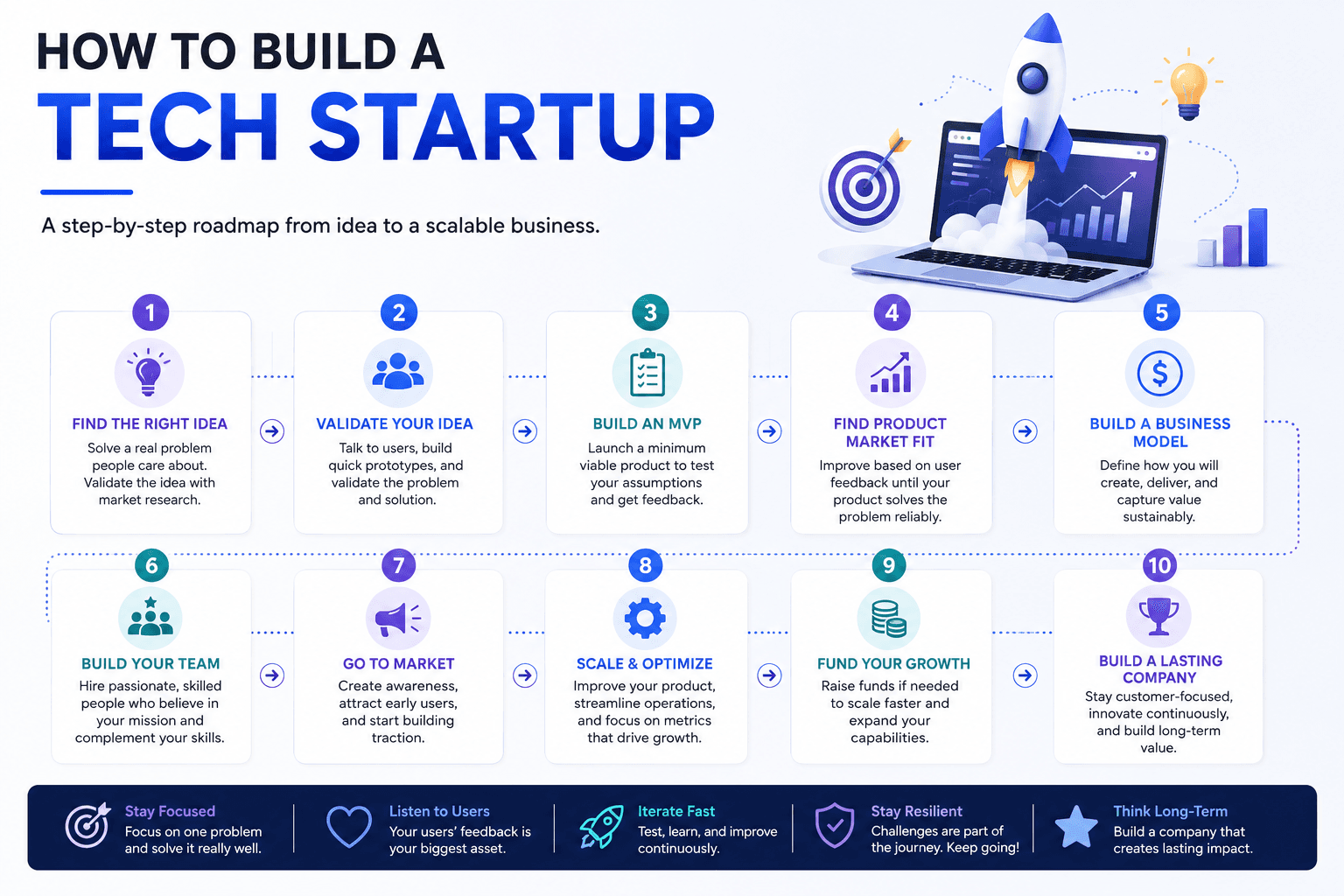
Most advice on how to build a tech startup covers either the idea stage or the scaling stage, leaving the awkward middle unaddressed: the first ninety days, when you have decided to proceed but have nothing built and no team. This period is where founders make the decisions that constrain everything afterwards, particularly around what to build first, who builds it, and what the contract says. This guide covers that stretch in sequence, from testing the problem to signing an agreement that protects you.
Weeks One to Three: Testing the Problem
The temptation at this stage is to start building, because building feels like progress and research does not. The cost of that instinct is high, since a product built on an assumption nobody tested is expensive to correct once code exists. Three weeks spent confirming that the problem is real, painful, and currently solved badly is the cheapest risk reduction available, and it frequently changes what you build rather than whether you build.
Talking to People With the Problem
Speak with people who match your intended user and ask how they handle the situation now. Existing workarounds prove demand more reliably than expressed interest does.
Looking for Evidence of Payment
People paying for an inferior solution, or spending significant time on a manual one, demonstrate willingness to pay. Enthusiasm without either signals a nice-to-have.
Mapping the Existing Alternatives
Identify what people use today, including spreadsheets and manual processes. Understanding the incumbent tells you what you must beat, which is rarely another startup.
Testing Demand Before Building
A landing page describing the solution with a signup or waitlist tests positioning cheaply. Structured idea validation produces evidence rather than opinion.
Narrowing the Target User
Broad markets are hard to reach and harder to serve. Selecting a specific initial segment makes messaging clearer and the first version substantially smaller.
Weeks Four to Six: Defining the Smallest Useful Product
The most expensive error in this period is scoping a first version around the full vision rather than around the single workflow that proves it. Founders resist cutting because every feature seems necessary, and the result is a build taking three times longer than it should, launching after the market has moved. The discipline is choosing one complete user journey, delivering it properly, and treating everything else as a backlog item awaiting evidence.
Choosing One Complete Workflow
Select the single journey delivering your core value and build it end to end. A narrow product done well beats a broad one done partially.
Writing Down What Is Excluded
Listing what the first version will not do is more useful than listing what it will. It protects scope during build and makes quotes comparable.
Setting Success Criteria in Advance
Decide what result would justify continuing, in terms of usage or revenue. Without this, you evaluate the launch on feeling rather than evidence.
Preparing a Clear Brief
Vendors price uncertainty. A structured project brief covering objectives, scope, and constraints produces accurate and comparable proposals.
Planning for Iteration After Launch
Reserve budget for the weeks after release. Founders who spend everything on version one have no capacity to act on what launch teaches them.
Weeks Seven to Nine: Choosing How to Build It
The build route determines cost, speed, and how much control you retain, and each option suits a different situation. Hiring employees is slow and expensive but builds internal capability. Freelancers are cheap and flexible but carry continuity risk. Agencies deliver faster with more structure at higher cost. A technical co-founder solves capability and commitment together but requires finding the right person, which takes longer than founders expect.
Assessing Whether You Need a Co-Founder
A technical co-founder brings commitment and continuity that contracted work does not. The search takes months, so start early or proceed with an alternative.
Weighing Freelancers Against Agencies
Freelancers cost less and carry more continuity risk. Agencies provide structure, cover, and process at higher rates. Match the choice to your tolerance for disruption.
Considering a Managed Team
For sustained build capacity without hiring, a dedicated development team provides continuity that individual contractors cannot reliably offer.
Evaluating Partners Properly
Ask about process, communication, and handover rather than only price. Working through questions to ask before hiring developers surfaces the differences that matter.
Being Realistic About Budget
Understanding typical software development cost ranges before conversations prevents scoping something neither the budget nor the timeline supports.
Weeks Ten to Twelve: Contracting and Starting Well
The contract is the last decision of this period and the one founders most often rush, having already decided who they want to work with. It is also where the expensive mistakes live, particularly around IP ownership, which does not transfer automatically in many jurisdictions simply because you paid. Getting these terms right takes days and prevents problems that surface years later during a funding round or acquisition.
Securing IP Assignment Explicitly
The agreement must assign all work product to you, covering subcontractors. Silence on ownership generally favours whoever wrote the code, not whoever paid.
Holding All Accounts Yourself
Register source control, hosting, and store accounts in your name with administrative access. Ownership without possession is not ownership in practice.
Agreeing a Change Process
Define how scope changes are raised, priced, and approved before work starts. This prevents the informal additions that quietly consume budget.
Setting Communication Expectations
Agree meeting cadence, demonstration frequency, and who decides. Ambiguity here produces the slow drift that founders notice only when a deadline passes.
Understanding the Protections That Matter
Reviewing how to protect your app idea clarifies which safeguards are worth the effort and which are largely theatre.
Frequently Asked Questions
Do I need a technical co-founder to build a tech startup?
No, though it helps. Contracted development can build and launch a first version successfully. A technical co-founder brings commitment and continuity that contracts do not, but waiting to find one delays validation that could be happening now.
How much should a first version cost?
It depends entirely on scope, which is why narrowing to one complete workflow matters so much. Founders who scope around the full vision routinely receive quotes several times what a focused first release would have cost.
Should I build with freelancers or an agency?
Freelancers cost less and carry continuity risk if they become unavailable. Agencies provide process, cover, and structure at higher rates. Choose based on how disruptive losing a contributor mid-build would be for you.
Do I own the code if I pay someone to build it?
Not automatically in many jurisdictions. Contractor-written code frequently belongs to the contractor unless the agreement explicitly assigns it. Confirm assignment before work starts, including for any subcontractors your partner engages.
How long should validation take before building?
Around three weeks of concentrated effort is usually enough to establish whether the problem is real and painful. Extending it further tends to produce diminishing returns, since remaining questions are answerable only by launching something.
What should I do in the first weeks after launch?
Watch behaviour rather than opinions, and reserve budget to act on what you see. Founders who spend everything on the first build arrive at launch with no capacity to respond to what real usage reveals.